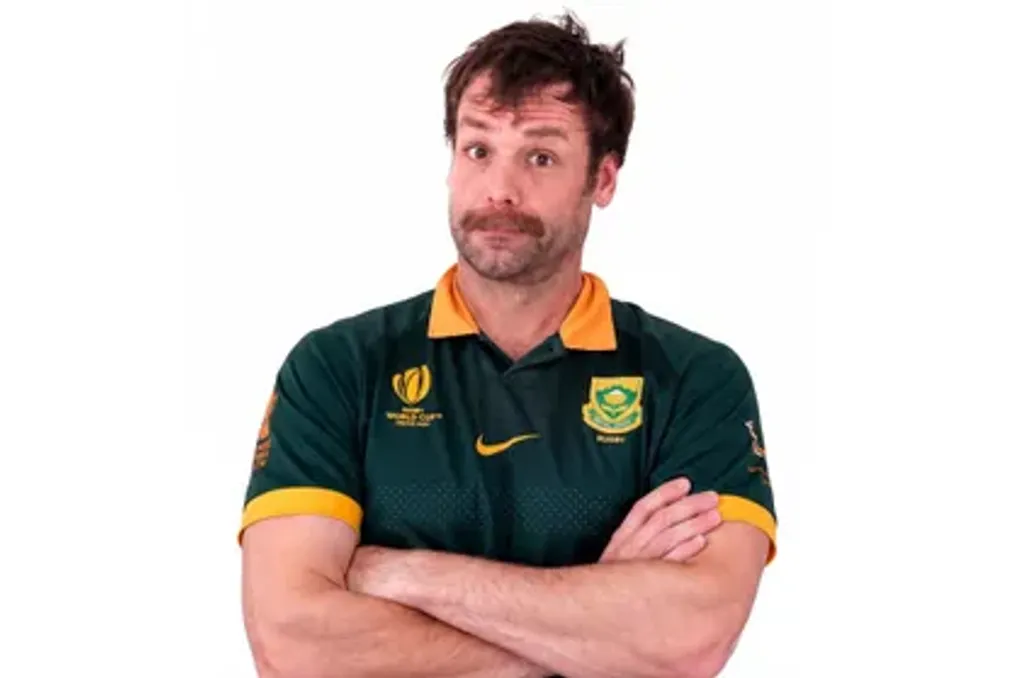
Creator of rugby_kaans, Wesley Cockerell, gains popularity on South African social media
Read more
IOL
iol.co.za

Creator of rugby_kaans, Wesley Cockerell, gains popularity on South African social media

Wesley Cockerell, the creator of the channel rugby_kaans, managed to turn personal experiences into viral fame, changing the landscape of South African rugby on TikTok and Instagram through his authentic Braai-style humor.

With a channel boasting over 63,000 followers on Instagram and 42,000 on TikTok, Cockerell became very popular during the recently concluded series of matches between South Africa and New Zealand. His unwavering sincerity sets him apart from other creators who, in his opinion, are capable of making a significant mark in the social media sphere.

However, although his witty commentary frequently appears on match days, the creation of this channel was prompted by a much darker moment. Cockerell told the publication IOL that it all started with a breakup: 'The girl dumped me, and I was just really upset for two weeks. I just kept watching these rugby clips on social media.'

He added that one time he filmed a humorous video, presumably about Jacques Furrie, and posted it first on TikTok and then on Instagram, after which he forgot about it. Two weeks later, a friend messaged him: 'Dude, you're blowing up on Instagram.'

This sudden success prompted Cockerell to continue creating content, focusing on what clearly resonated with his rapidly growing audience. 'With these clips and stuff, I started finding my own voice. I'm not pretending to be someone else; it's a character I created with a South African accent and everything else. The more I did it and the more people commented, the more I realized I had something here.'

Cockerell noted that his channel developed around phrases like 'goeie donners' and 'let's praat about it'. About three months ago, he recognized a gap in this niche and began developing his own style.

When asked what allowed him to succeed on social media, he laughed and replied that he has a talent for talking nonsense. He mentioned that his mother often asks how he comes up with all this, and she replies that he 'has been talking nonsense his whole life.' He also recalled how in high school he would sometimes forget tests, stand up, and start talking, scoring 80 or 90 percent because teachers noted that 'Wesley conducted research,' even though he was just making things up.

Unlike traditional rugby media, which focuses on objective reporting, channels like rugby_kaans fill a unique niche in the constantly changing digital landscape. Cockerell explained that his channel works because it 'takes the fun out of it and speaks more like a fan.' He emphasized that people want to discuss funny moments, not analytical details, as others who aim to be the next Nick Mallett or Shaun Burger do. People want to see 'lekker bits'—such as Cheslin Kolbe's step or Ox Nche's tackle or a functioning scrum, instead of boring monotonous point breakdowns.
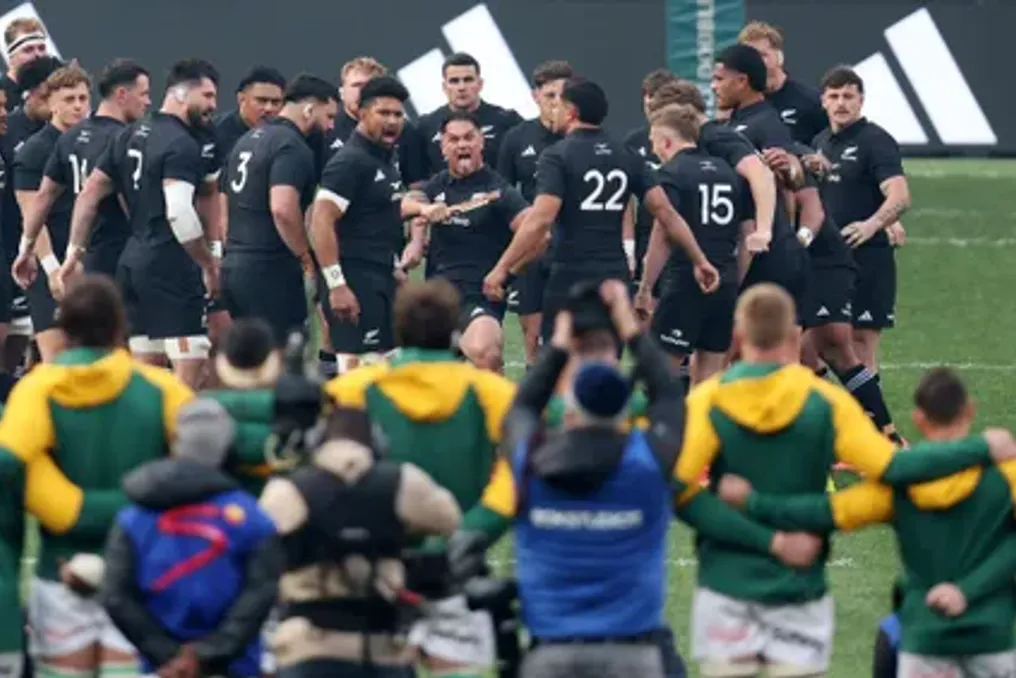

Similar stories

The rivalry between the Springboks and All Blacks remains the greatest in rugby due to mutual respect
Read more
iol.co.za

The rivalry between the Springboks and All Blacks remains the greatest in rugby due to mutual respect

Despite the rivalry between the Springboks and the All Blacks being arguably the greatest in world rugby, respect between the players and teams is maintained even after the match concludes.

Unlike many other sporting confrontations where players might avoid interacting after the game, the opposite occurs in this rivalry. Although players fight fiercely during the 80 minutes of play, and coaches sometimes exchange sharp remarks at press conferences, the atmosphere quickly normalizes after the match ends, and both teams demonstrate mutual respect.

Erasmus and ReNNy shared a beer

This rivalry between South Africa and New Zealand illustrates the essence of the sport. The Springboks coach Rassie Erasmus and his colleague from the All Blacks, Dave Rennie, although they may have tactical disagreements, set these differences aside after the final whistle and media duties.

These two coaches have repeatedly met over a pint before and after various series matches, serving as a reminder that their confrontation is based on respect, not hatred. Erasmus mentioned that they drank beer after the match and planned to meet in Cape Town.

Dave Rennie confirmed that they shared a beer immediately after the game, despite verbal sparring over the score.

This friendly relationship extends to the players. Springboks captain Siya Kolisi and All Blacks captain Ardie Savea have developed a deep friendship that goes beyond rugby. They have attended church together, and Savea's children show particular affection for the Springboks captain, calling him 'Uncle Siya.'

Kolisi emphasized that when he plays against a friend, he shows respect by giving everything he can on the field, which he believes is very important. This says a lot about what lies beneath what could be considered the most intense rivalry in international rugby.

For 80 minutes, Kolisi and Savea lead their teams into battle, ready to risk their bodies for victory. Although Kolisi delivered a strong hit to Savea in Cape Town, Savea admitted feeling it, but after the battle, respect remains.

Springboks and All Blacks share a flight

The rivalry does not need to become personal. On the contrary, the mutual respect between the players makes this spectacle special. This was demonstrated in an unusual way before the fourth and final match in Baltimore, when the Springboks and All Blacks traveled together on a charter flight from Johannesburg to Washington.

Most of the journey passed in silence, according to eighth player Jasper Wiese, but the mere fact of the joint long journey was symbolic. The silence was understandable, as one team had won while the other had lost. Despite harsh words, powerful hits, tactical battles, and continuous competition, it is still rugby, and that is why the Springboks and All Blacks rivalry will go down in history as perhaps the greatest contest on the planet outside the Rugby World Cup. Because the Boks and the All Blacks might want to destroy each other for 80 minutes, running the oval ball across the field, but when it is over, they can still share a beer, eat together, attend church, and call each other friends.

IOL Sport Podcast Discusses Tense Rugby Match Series Between Springboks and All Blacks
Read more
iol.co.za

IOL Sport Podcast Discusses Tense Rugby Match Series Between Springboks and All Blacks

IOL Sport correspondents, Zachier Adams, John Goliath, and Layton Cupman, analyzed the intense week of South African rugby in the third episode of the IOL Sport Podcast. They covered both bright victories and incidents related to aviation and verbal spats as the 'Greatest Rugby Rivalry 2026' series remains uncertain.

Return to Cape Town

The trio began the discussion with a detailed breakdown of the Springboks' triumph, who defeated New Zealand 33-26 at the DHL Stadium in Cape Town. This victory served as a response to a heavy 33-16 loss in the first match at Ellis Park. The world champions demonstrated the fierce intensity characteristic of the era of Rassie Erasmus. Goliath noted that thanks to adjustments, tactical kicking, and physical strength, the Boks team managed to disrupt the pace of the All Blacks, leveling the four-match series at 1-1 before the decisive third game.

Erasmus vs. Rooney Dispute: A Scrum War

However, the conversation quickly shifted to escalating external disputes that threaten to overshadow the match itself. New Zealand coach Dave Rooney provoked a conflict by publicly questioning the Springboks' scrum technique in Cape Town, accusing the South African squad of deliberate 'pushing' when securing the ball. Erasmus, who never shies away from confrontation, responded with fierce defense of his forwards. As Cupman pointed out during the discussion, the series is beginning to suffer from this 'artificially created drama.' Meanwhile, Boks scrum guru Dan Human insists that their focus is solely on advancing, not on playing for the sake of play. The podcast team urged both sides to abandon theatricality. Cupman aptly observed that it is time to silence the noise and let the great rugby rivalry speak for itself.

The Airlink Flight Saga

The drama was not limited to the coaching sidelines. Adams and Goliath discussed the strange story of the Airlink flight, which dominated weekend headlines. An ultra-low flight over the DHL stadium caused panic on social media, leading to an immediate investigation by the South African Civil Aviation Authority (SACAA). Consequently, Airlink was forced to suddenly withdraw its application for the planned third flight before the upcoming Johannesburg match while compliance checks are underway. The panel agreed that while iconic flights over the stadium evoke warm memories of 1995, the subsequent safety issue became an unnecessary distraction for the team striving for series victory.

All Eyes on FNB Stadium

Looking ahead to the third match at the FNB Stadium in Soweto, the IOL Sport team painted a picture of a finely balanced battlefield. The All Blacks, acting as a 'wounded beast,' are expected to arrive in Johannesburg seeking revenge. However, history shows that underestimating the critically positioned Springboks squad is a dangerous gamble. Since the series is in doubt, and external intrigues have finally subsided, the conclusion of the IOL Sport Podcast is clear: the talk is over. Saturday afternoon in Soweto is the time for rugby to be the main event.

Popular