Five Mysterious Aspects of the Ramayana That Remain Unsolved
Read more
Aaj Tak
www.aajtak.in

Five Mysterious Aspects of the Ramayana That Remain Unsolved

Most people are familiar with the story of the Ramayana, which narrates the life journey of Lord Rama and Goddess Sita. However, this great epic contains a number of mysteries known only to a few. This review presents five such enigmas associated with the Ramayana.

The Sister of Lord Rama and His Brothers

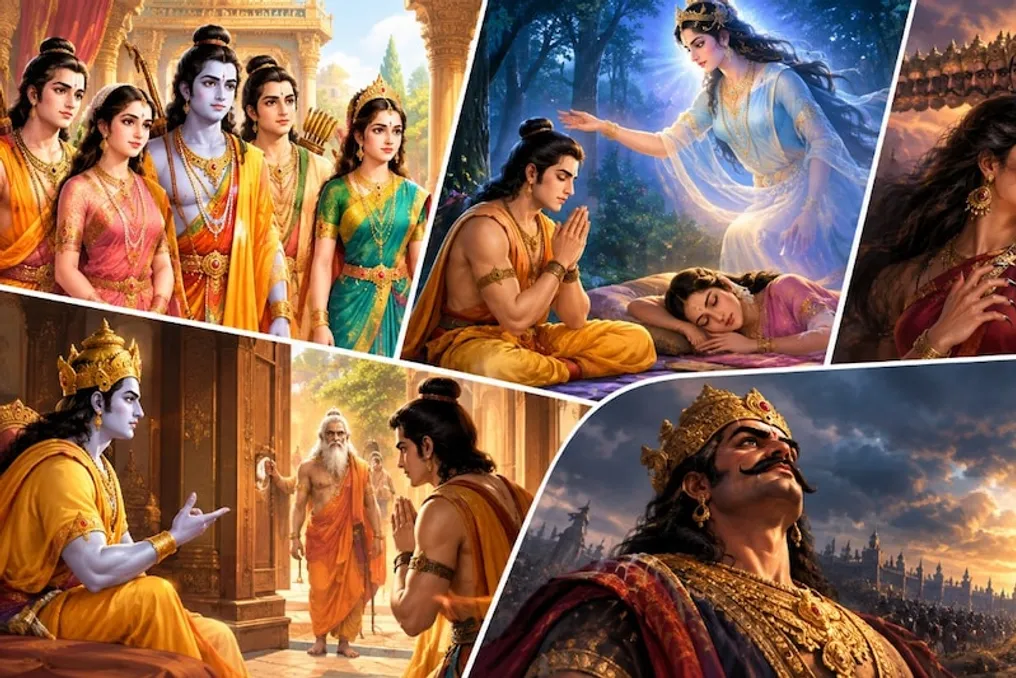
Everyone knows the story of Lord Shri Rama and his three brothers, but few know about the existence of Rama's sister named Shanta. According to legends, Shanta was older than all the brothers, and her mother was named Kaushalya. When King Rompad from the Ang region requested help from King Dasharatha because he had no offspring, Dasharatha gave his daughter Shanta into guardianship. After this, King Rompad raised Shanta like a princess, fulfilling all parental duties towards her.

Lakshmana is Also Known as 'Gudakesha'

It is said that during the 14-year exile, Lakshmana never slept, protecting his brother Rama and sister-in-law Sita. This is why he received the nickname 'Gudakesha'. According to one version, on the first night of exile, when Rama and Sita were sleeping, the Goddess of Sleep appeared before Lakshmana. He asked her for a blessing so that he would not have to sleep for 14 years to constantly guard his brother and sister-in-law. The Goddess of Sleep agreed to his request, but the condition was that someone else must sleep in his place for these 14 years. As a result, Lakshmana's wife, Urmila, took responsibility for sleeping instead of him. It is believed that Urmila slept for 14 years, making the sacrifice of Lakshmana and his wife Urmila extremely significant in the Ramayana.

Shurpanka Desired Ravana's Death

It may seem surprising, but Ravana's sister, Shurpanka, wanted to be the cause of his demise. Although there are different versions of this event in various traditions and folk tales of the Ramayana, one version states that Ravana killed Shurpanka's husband, Vidutjiva. Because of this, Shurpanka was extremely angry at Ravana and mentally cursed him, wishing for death to come to him through a woman.

Rama Had to Forsake Lakshmana

According to a story from the Uttarakanda of the Ramayana, Shri Rama had to renounce his beloved younger brother Lakshmana. This happened after the victory over Lanka, when Shri Rama had already become the king of Ayodhya. One day, the god Yama came to Rama for an important discussion. Before starting the conversation, he demanded a promise from Rama: while they talked, no third person should enter the room. If anyone violated this rule, Rama had to fatally punish them. Rama instructed Lakshmana to guard the entrance and prevent anyone from entering. After some time, the sage Durvasa arrived, who asked Lakshmana to inform Rama of his arrival. Lakshmana asked him to wait because Rama was speaking with Yama. Durvasa became angry and stated that if he was not allowed to see Rama immediately, he would curse all of Ayodhya. To save the residents of Ayodhya, Lakshmana felt it necessary to sacrifice himself and informed Rama about Durvasa's arrival. Rama found himself in a difficult position because he needed to keep his promise and simultaneously could not allow Lakshmana to be punished. He sought advice from his teacher Vasishtha. Guru Vasishtha explained that abandoning a dear person is akin to taking away life. After this, Rama reluctantly renounced Lakshmana. According to legend, Lakshmana died by drowning to uphold Rama's promise.

Ravana Knew He Would Die at the Hands of Rama

Ravana was considered extremely powerful and educated. According to the plot of the Ramayana, when he learned that Rama was going to attack Lanka because of Sita's abduction, many of his relatives and supporters advised him to return Sita and avoid war. However, Ravana did not listen to them. Some traditions also claim that Ravana knew that Rama was not an ordinary man. He said that if Rama and Lakshmana were ordinary men, he could easily deal with them. But if they were truly gods, then death at their hands would bring him liberation. With this belief, Ravana chose the path of war instead of surrendering to Rama.
Similar stories

Review of the song 'Jai Jai Ram' from the film 'Ramayana': Critics note the use of an old melody and question the originality of the project.
Read more
www.aajtak.in

Review of the song 'Jai Jai Ram' from the film 'Ramayana': Critics note the use of an old melody and question the originality of the project.

The film 'Ramayana', with a budget of 4000 crore, created by Nitesh Tiwari, generates high expectations as it tells a story familiar to all in India, connected to the deep faith of millions of people. Consequently, when the first track 'Jai Jai Ram' was released on the auspicious occasion of Ganpati Chaturthi, public interest was extremely high.

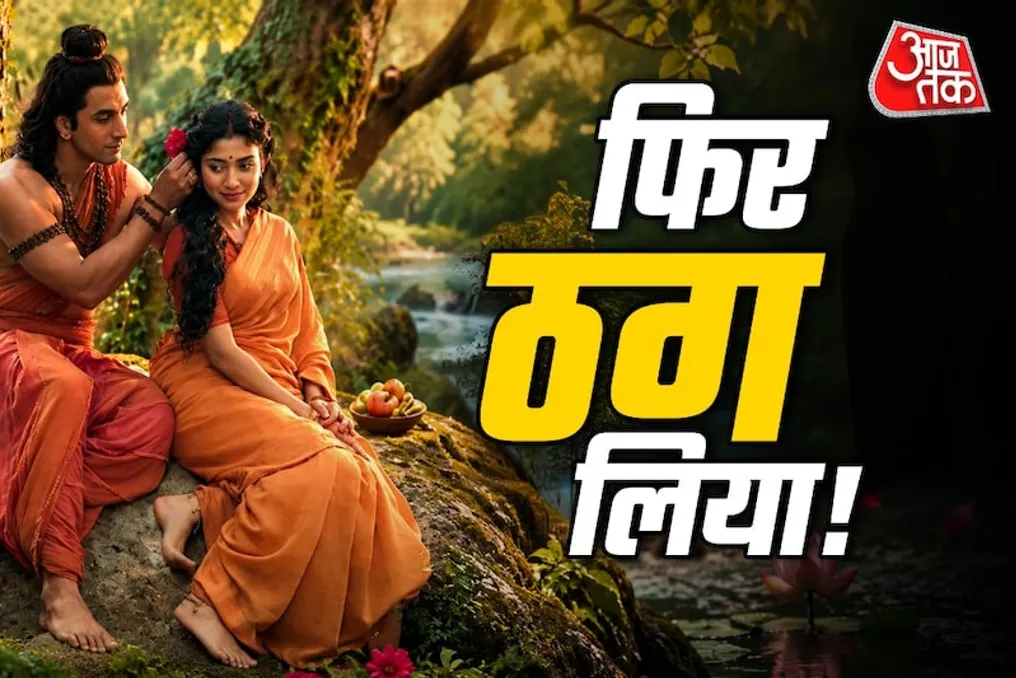
The combination of music by A.R. Rahman, vocals by Arijit Singh and Shreya Ghoshal, and lyrics by Dr. Kumar Vishwas presents a powerful musical project. The song brings a feeling of peace to the listener from its very first moments. Majestic scenes are visually presented: the love story of Rama and Sita, their wedding, the streets of Ayodhya, the people scattering flowers, and Rama's warlike appearance. The pairing of Ranbir Kapoor and Sai Pallavi looks harmonious on screen.

However, the question of the material's novelty arises. The strength of the song is also its weakness: the familiar melody 'Ram Siya Ram... Siya Ram Jai Jai Ram' instantly evokes memories of childhood and those feelings that people have been accustomed to for years.

This same melody was popular thanks to a 1975 song performed by Jaspal Singh and composed by Ravindra Jain. A dilemma emerges: does the listener like the song itself, or are it their personal emotions associated with this old melody that make them love it?

The reviewer believes that 'Jai Jai Ram' falls slightly short in this regard. Although he does not claim that the entire song is unoriginal or copied, the moment heard in childhood evokes strong emotions. In that case, the song is not perceived as 'Ramayana' as performed by Ranbir.

With such a huge budget of 4000 crore, a large cast, and the involvement of a composer like A.R. Rahman, it was expected that the musical component would possess its own unique characteristic. However, relying on an old melody makes the song feel more like a remake.

Furthermore, just like in the teaser and trailer, almost all key moments of the story are included in the song: from Sita's courtship to the marriage of Rama and Sita, preparations for coronation, and the sacrifice of Lakshmana and Bharata. This is more like a brief overview of the entire 'Ramayana' than a song. This tendency to display everything at once was also observed in the film's promotional materials, where a more gradual unfolding of events might have been more effective.

While giving the audience a song for Ganpati Chaturthi is a good gesture, this gift lacks the sufficient original touch from the creators that the public expects from this film. Despite Rama played by Ranbir, Sita by Sai Pallavi, and the entire world potentially being new, upon listening to the music, listeners return to the image of the old Rama.

Perhaps this is the main paradox of 'Jai Jai Ram': the song sends shivers down the spine but does not sound like the film's own voice. If the same devotion, the same feelings, and the same connection were evoked by a completely new melody, then the first track of this 'Ramayana' would be worth much more.

Sunny Deol to play Hanuman in 'Ramayana': Massive fire sequence created in Lanka
Read more
www.aajtak.in

Sunny Deol to play Hanuman in 'Ramayana': Massive fire sequence created in Lanka

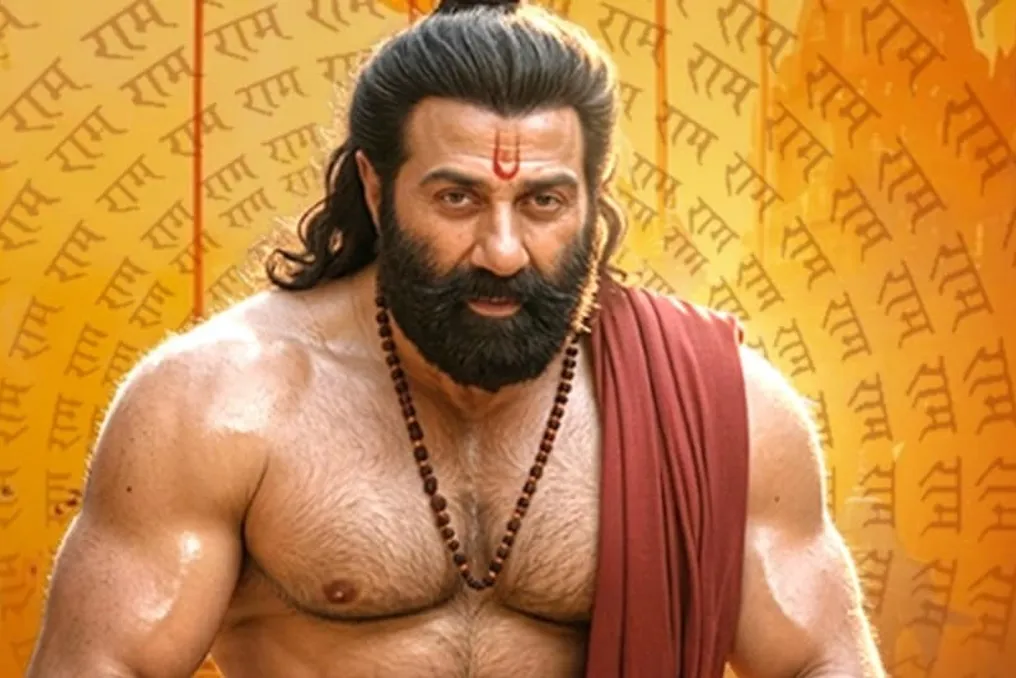
Fan interest in the film 'Ramayana' featuring Ranbir Kapoor is constantly growing, with new discussions emerging daily about how the characters will look. However, the greatest anticipation surrounds the portrayal of Hanuman by Sunny Deol.

Although the creators are keeping Sunny Deol's depiction of Hanuman a secret for now, information has surfaced that has intensified the excitement among fans. According to available data, an extremely grand fire scene has been prepared for the episode where Hanuman arrives in Lanka. The creation of this single episode took the team about two months.

In 'Ramayana', directed by Nitish Tiwari, Sunny Deol embodies the figure of Lord Hanuman. Ranbir Kapoor will also participate in the film as Lord Rama, Sai Pallavi as Mother Sita, and Yash as Ravana. The film is being prepared on a very large scale, and the creators aim not to leave any gaps in the visual aspect. This is evidenced by the scene depicting Hanuman's arrival in Lanka.

Information about this scene was published by Rishabh Tyagi, who called it the biggest fire sequence of his life. He reported that the team worked on the shot where Hanuman heads to Lanka. According to him, it is one of the most massive fire sequences ever filmed in Indian cinema, taking about two months to shoot.

For this fragment, which may only last a few minutes or even less for viewers, the creators invested two months of meticulous work. When the image of Hanuman, portrayed by a star of Sunny Deol's caliber, appears in such a huge format for the first time, the audience's attention will inevitably be drawn to this episode.

Rishabh Tyagi also noted that this episode is highly technological. He emphasized that developing the scene was a very ambitious task and belongs to the most technologically advanced in the history of Indian cinema. So far, trailers and promotional materials for the film have only shown small snippets of various Ramayana characters, but the creators have not fully revealed Sunny Deol's portrayal of Hanuman. This is why there is constant discussion about Sunny's Hanuman character on social media.

Currently, it is unclear whether this massive Lanka episode will be shown in 'Ramayana: Part 1' or 'Part 2'. According to current speculation, Sunny Deol might appear at the end of the first part. Furthermore, his role in the second part is expected to be significantly more significant. If this happens, Sunny's appearance as Hanuman in the first part could become one of the most significant cinematic moments of the film.

In 'Ramayana', Ranbir Kapoor plays Lord Rama, Sai Pallavi portrays Mother Sita, and Yash plays Ravana. The film is overseen by Nitish Tiwari and is being prepared as one of the largest projects in Indian cinema. The film's visual scale and use of VFX are drawing the most interest. Thus, such a large fire sequence involving Hanuman and Lanka can make the film's visual presentation even more outstanding.

There is also important news regarding the release of 'Ramayana'. The film will be released worldwide on November 6th, and in India, it will appear in theaters on November 8th, coinciding with the Diwali festival. It is said that during the premiere, the film will compete with the popular Hollywood monster movie 'Godzilla Minus One'. For now, fans are primarily waiting to see Sunny Deol as Hanuman on screen. If this grand fire sequence, created after two months of work, turns out to be as magnificent as claimed, Sunny Deol's appearance could enter the list of the most discussed scenes in 'Ramayana'.

The Story of King Poundrak Who Claimed to Be Krishna and Challenged God
Read more
www.aajtak.in

The Story of King Poundrak Who Claimed to Be Krishna and Challenged God

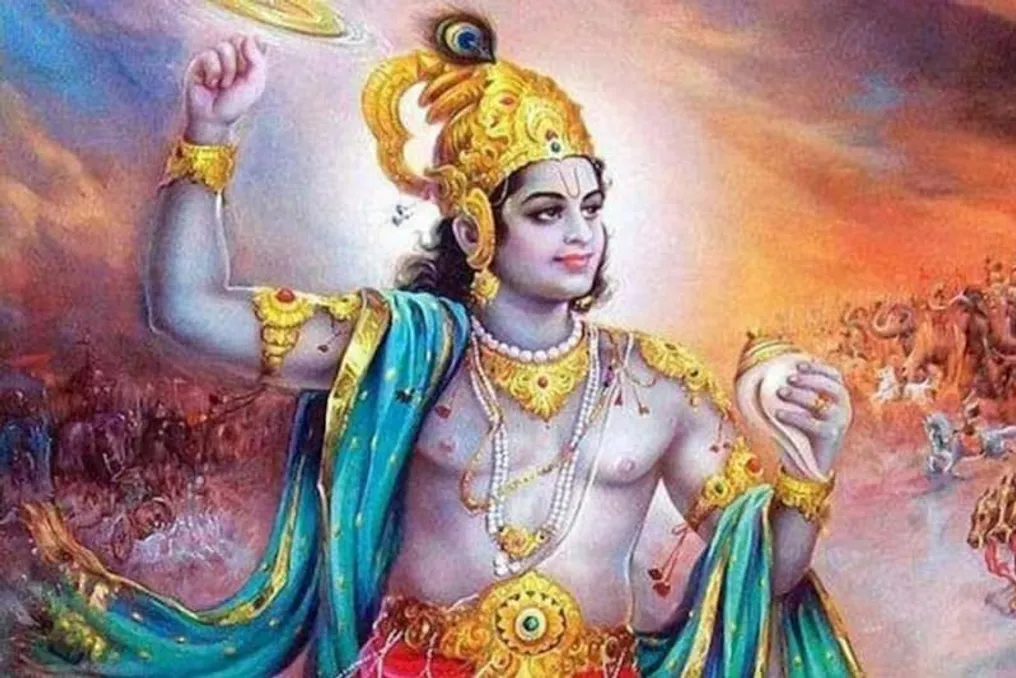
Lord Shri Krishna is considered an incarnation of Lord Vishnu. Born as the son of Vasudeva and Devaki in the Dwapara Yuga, Krishna was known for his extraordinary intellect, valor, and divine powers. He possessed divine weapons and ornaments such as the Sudarshana Chakra, Kaustubha Mani, and Panchajanya Shankha. However, during the Mahabharata period, there existed a king who claimed to be the real Krishna and even challenged him to battle.

Krishna Janmashtami 2026:

According to mythological tales, there was a king named Poundrak who claimed to be the true form of Lord Shri Krishna. It is also said that his father's name was Vasudeva. Based on this fact, Poundrak began promoting himself as Vasudeva and the real Krishna. Gradually, some sycophants around him also supported his delusion, constantly convincing him that he was the real Vasudeva and that Shri Krishna was assuming his form to mislead people.

Adopting the Form of Krishna

To prove himself as the real Krishna, Poundrak started adopting attire similar to Shri Krishna. He wore a peacock feather, a yellow garment (Pitambara), and kept items resembling Krishna's divine symbols with him. According to the stories, he also had replicas of the Sudarshana Chakra and Kaustubha Mani made. He propagated in his kingdom and surrounding areas that he was the real Krishna, thereby attempting to spread confusion about his identity among the people.

Poundrak Sent a Message to Krishna

It is said that at one point, Poundrak's ego grew so much that he sent a message to Lord Shri Krishna. He claimed that he was the real Vasudeva and that Shri Krishna should stop assuming his form. Poundrak issued a challenge to Shri Krishna: either renounce his divine symbols and identity, or fight with him. When Poundrak's message reached Shri Krishna, he accepted the challenge.

When the Real and Fake Krishna Met Face to Face

On the battlefield, when Lord Shri Krishna and Poundrak faced each other, Poundrak was completely dressed like Shri Krishna. He tried to appear like Krishna through the peacock feather, Pitambara, and other symbols. However, no one can become like another merely by changing clothes. The difference between Poundrak's imitation and Shri Krishna's divinity became clearly apparent during the battle.

Poundrak's End by the Sudarshana Chakra

According to mythological tales, Lord Shri Krishna used his Sudarshana Chakra in the battle and killed Poundrak. Thus, Poundrak, who claimed to be the real Krishna, met his end. The stories further mention that Poundrak's associate, Kashi Naresh, chose the path of war against Shri Krishna after his death, although he too ultimately faced defeat.

What Does Poundrak's Story Teach?

This saga of Poundrak and Shri Krishna illustrates the consequences of ego and illusion. By imitating others, Poundrak drifted away from his true identity. Meanwhile, the sycophants around him further fueled his arrogance. This story teaches that a person should move forward by recognizing their own qualities and abilities instead of imitating others. An identity based on false ego and pretense cannot last long.

Popular