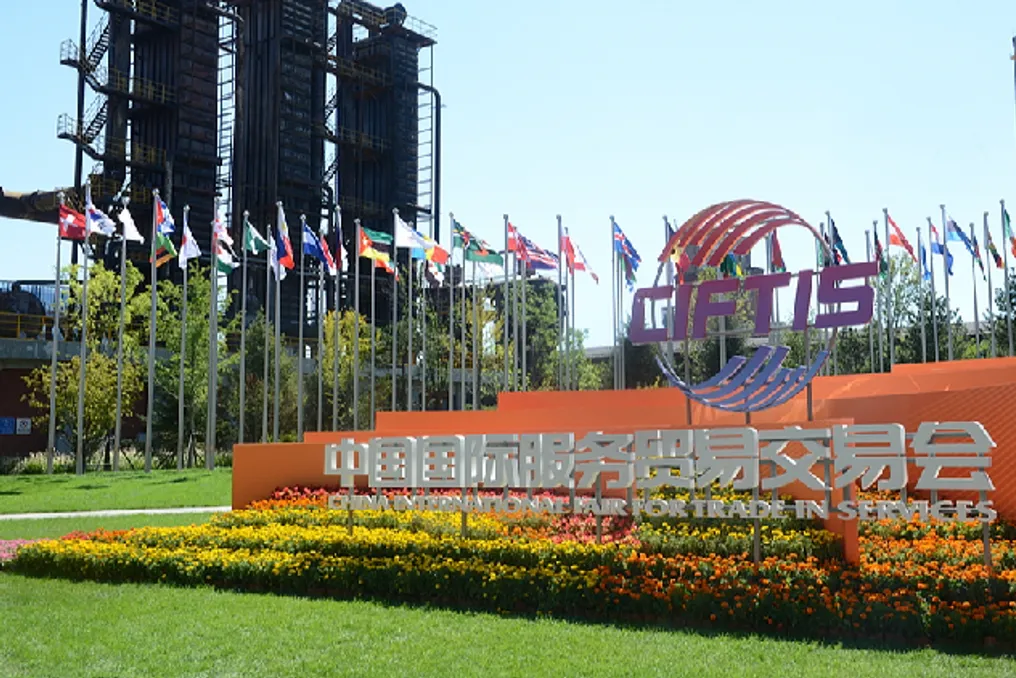
The China International Fair for Trade in Services (CIFTIS) 2026 concluded in Beijing on Sunday, showcasing over 1200 achievements. This highlighted the growing significance of technological and science-intensive services in China's rapidly evolving services trade sector.
Over five days, the event attracted more than 1830 companies and institutions, along with over 116,000 professional visitors, representing a 3.7% increase compared to last year. By noon on Sunday, the main exhibition area recorded nearly 420,000 visits, exceeding the previous edition's figures by 36.6%.
Furthermore, the exhibition hosted approximately 200 forums, business matching sessions, and promotional events. In total, over 1200 results were achieved across seven categories, including six cooperation agreements signed between the Norwegian delegation, this year's guest of honor, and Chinese companies and institutions.
Beyond the statistics, the exhibition demonstrated a broader shift in China's services trade: moving from traditional, labor-intensive services to technology-based solutions, and from simple product export to providing expertise and services to foreign markets.
From Products to Services
One of the main highlights of this year's CIFTIS was the opening of the exhibition zone dedicated to examples of 'Chinese services.' Here, it was demonstrated how Chinese firms are expanding beyond goods export by offering services tailored to international demand.
An example was a foreign service platform built on China's BeiDou satellite navigation system. This platform signifies a transition from exporting BeiDou-related equipment to providing operational services that help countries develop their digital infrastructure.
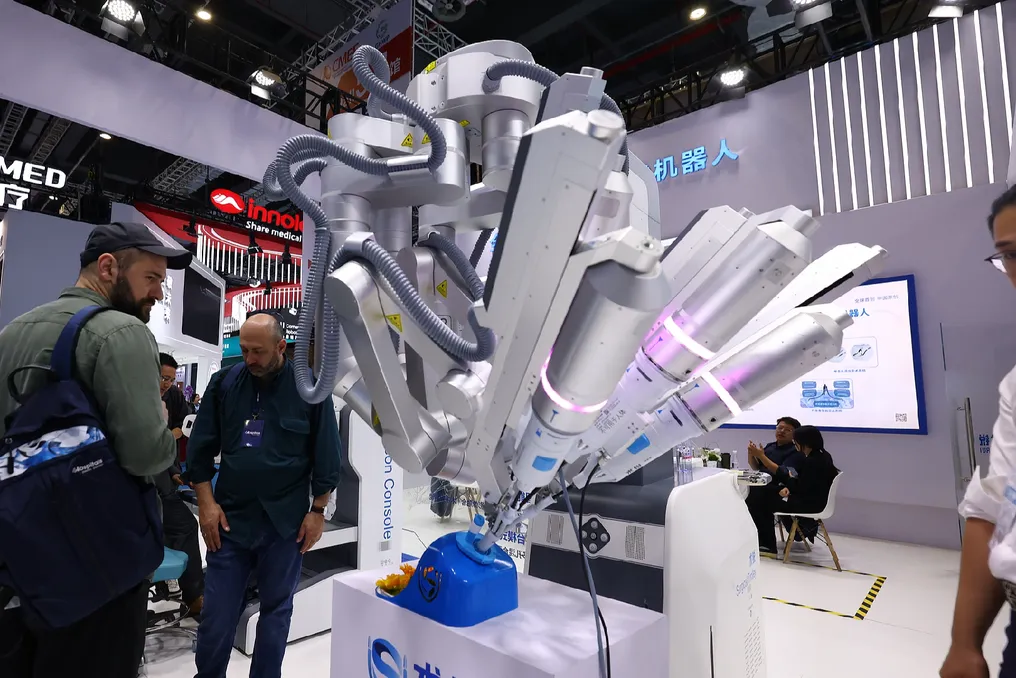
Another featured product was a domestically developed welding robot capable of being used in hazardous environments such as shipbuilding, marine engineering, and nuclear energy. Instead of simply selling equipment, the company also provides customized solutions and auxiliary services based on the needs of various foreign markets.
Moreover, among more than 140 innovative cases presented in the new zone, nearly 40% focused on artificial intelligence, large language models, and AI agents. Visitors also learned about new services, such as AI-assisted healthcare, intelligent question-and-answer systems, and services aimed at supporting healthy aging, reflecting a change in the structure of Chinese exports.
Previously, China's services trade was closely linked to sectors like tourism, transportation, and business process outsourcing—areas heavily dependent on resources and labor. CIFTIS 2026, conversely, emphasized the growing competitive advantage in technologically enabled, science-intensive services, where AI, digital technologies, and scenario-based innovations are becoming increasingly important.
Official data indicates that in the first half of 2026, the export of AI-related products from China exceeded $480 billion, a 47.3% increase compared to the same period last year. The export of science-intensive services surpassed 800 billion yuan ($119 billion), accounting for 53.5% of the total services export volume.
Henning Kristoffersen, Commercial Counselor at the Norwegian Embassy in China, noted that China's rapid technological progress and its innovation ecosystem left a deep impression on him. He stated: 'What is impressive about China is the astonishing speed of high-tech development,' adding that China's service offerings are also improving in the fields of consumption, technology, and manufacturing.
Supporting Chinese Companies Entering Global Markets
This year's CIFTIS was also aimed at strengthening services that assist Chinese firms in expanding overseas. For the first time, a dedicated zone was created at the exhibition for tours and promotional activities focused on supporting companies' entry into international markets.
Professional service providers in areas such as finance, law, accounting, intellectual property, advertising, and human resources conducted over 40 sessions. The goal was to consolidate services that companies previously had to seek separately, thereby creating a more integrated support system for businesses entering international markets.
In recent years, Chinese companies have been increasing their presence in global markets, making service support increasingly vital. Zhou Mi, a researcher from the China Academy of International Trade and Economic Cooperation, believes that China needs to develop more globally competitive service providers with a deep understanding of target markets and international regulations.
At the state level, according to Zhou Mi, China should enhance consistency between domestic and international norms, including World Trade Organization frameworks for trade in services and bilateral free trade agreements. He noted that such efforts could help Chinese companies reduce the costs of entering foreign markets and adapt more effectively to various regulatory conditions.
He also stressed that China's focus is not only on export but also on ensuring the complementarity of imports and exports. According to him, China's current trade structure supports its goals of promoting green, low-carbon, and smart development worldwide, and China's economic growth will also create more opportunities for the rest of the world.