China is transforming its vision of technological partnership with BRICS nations into tangible projects covering artificial intelligence (AI), digital sectors, intelligent manufacturing, and human resource development.
At the 18th BRICS Summit in New Delhi on September 13, Chinese President Xi Jinping presented five proposals to deepen cooperation within BRICS. These proposals concern areas such as open and inclusive AI, digital industries, smart manufacturing, and the training of scientific and technical personnel.
In the field of AI, a platform developed by the Yunnan branch of China Mobile is exploring opportunities to enhance the accessibility of AI services across national borders. This platform, which received a bronze award at the BRICS Industrial Innovation Competition 2026, was presented in Kunming, Yunnan Province, southwestern China, in April.
The 'AI Caiyun Intelligent Agent Digital Intelligence Platform' integrates the functionality of large language models, including Jiutian, DeepSeek, Doubao, and Tongyi Qianwen. It offers over twenty AI functions, which include document composition, meeting minutes recording, AI-generated image and video creation, and Yunnan dialect recognition. The platform's proprietary Yunnan dialect recognition function demonstrates an accuracy of 90%.
The platform operates on a demand model, allowing users to select desired models and access specific AI capabilities. Its goal is to create a secure, efficient, and comprehensive ecosystem of cross-border AI services for BRICS and BRICS Plus countries, while simultaneously reducing technical barriers and costs for businesses implementing AI. By June, the platform had over 500,000 users in Yunnan, covering nine sectors such as healthcare, education, finance, and public services.
China is also creating new avenues for interaction in the digital industry. In June, a BRICS digital industry cooperation ecosystem hub was launched in the Xinjiang Uyghur Autonomous Region in northwestern China. This is the second such hub in China after Shiamen, and it is intended to strengthen digital interaction with Central Asian and Eurasian countries.
This hub aims to connect Chinese digital technologies and industrial resources with external demand, exploring a model that combines research and development in eastern China, industrial integration in Xinjiang, and the provision of digital services to western markets. The main objective is to transition from geographical connectivity to digital connectivity.
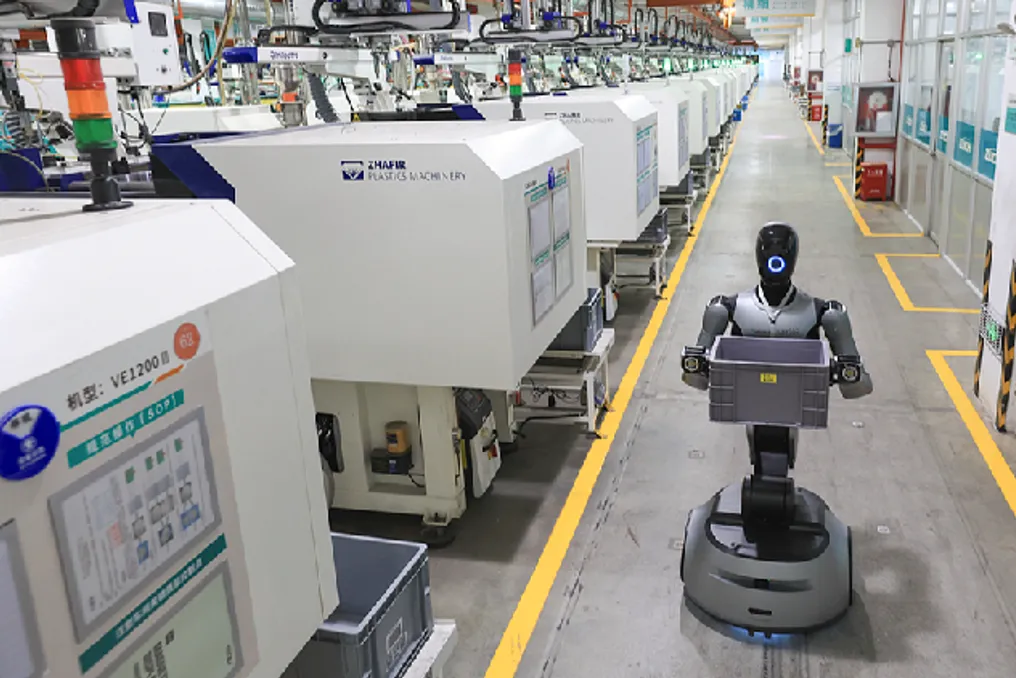
In manufacturing, China is stimulating cooperation around the concept of smart factories. In May, a forum on smart factory development was held in Shiamen, Fujian Province, in eastern China, under the BRICS Partnership for the New Industrial Revolution. The forum focused on jointly developing a new ecosystem for smart factories and strengthening cooperation on technology, standards, personnel, and capital.
The aim is to help the manufacturing industries of BRICS and BRICS Plus countries achieve a higher level of complexity, digitalization, and transition to green development.
Human capital development is another important area. At the BRICS Engineering Conference 2025 in Shenzhen, southern China, Chinese and international engineering organizations jointly initiated the creation of the BRICS Federation of Engineering Organizations. This initiative includes the Harbin Polytechnic Institute, the China Association for Science and Technology, as well as engineering organizations from Russia and Brazil, and 48 other engineering organizations, universities, and enterprises from BRICS countries.
The initiative calls for cooperation in engineering education, professional growth, and capacity building, including improving compatibility between engineering standards. Furthermore, a BRICS youth exchange program on innovation and entrepreneurship is scheduled for October in Shiamen. The ten-day program will gather young specialists in science and technology from BRICS countries for training, site visits, case discussions, and project presentations.
Thus, China's contribution to BRICS technological cooperation is being shaped across various sectors—from AI platforms and digital infrastructure to smart factories and engineering education. These initiatives are creating channels for the movement of technology, experience, and talent across borders, fostering a more open and inclusive ecosystem for innovation and common development.