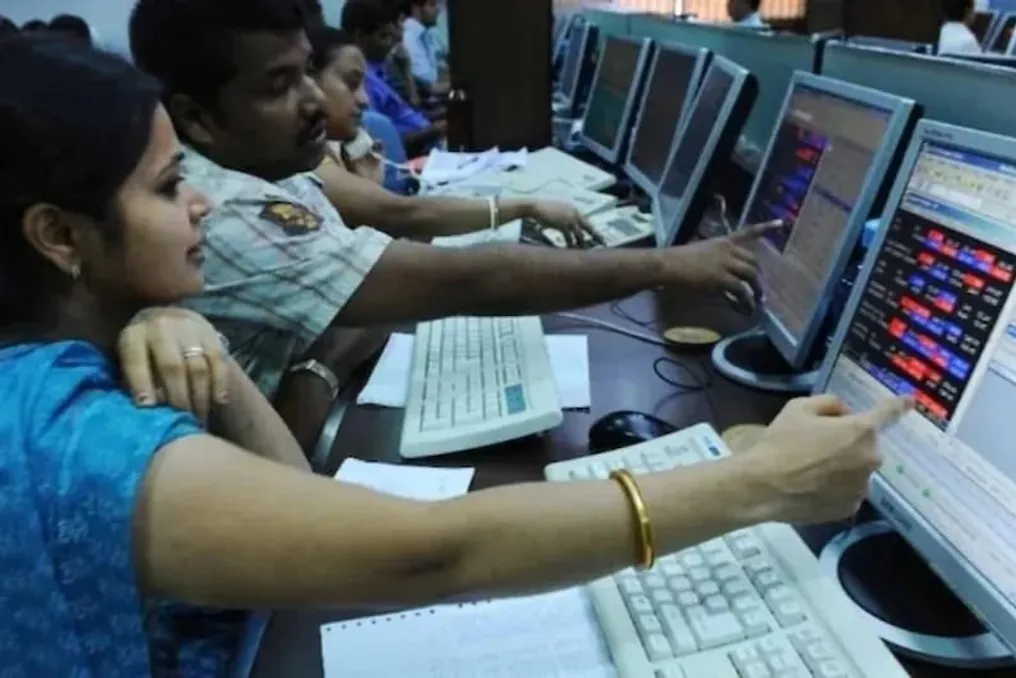
Last week, the Indian stock market experienced a significant decline. Trading was suspended on Monday due to the Ganesh Chaturthi holiday. Meanwhile, global markets, from the US to Japan, witnessed serious turmoil.
Sharp declines were recorded in American markets, including the Dow Jones and Nasdaq, which closed in negative territory. Consequently, analysts are examining what signals are being received for Sensex-Nifty from foreign markets such as Japan, Hong Kong, and South Korea.
During the last trading day, American stock markets appeared extremely unstable, showing fluctuations from opening to closing. The most significant factor contributing to the decline in the US market was the aggressive sell-off of artificial intelligence (AI) related stocks. Shares of major AI companies collapsed. Stocks of firms like Samsung, Nvidia chip manufacturer, SoftBank, and semiconductor companies fell by 4% to 10%.
Due to the crash in AI stocks, the Nasdaq index dropped by one percent but ultimately closed at 26,186, losing 147 points. As for the Dow Jones, a substantial drop was also noted, with the index ending trading at 52,421, down by 152 points. Furthermore, the S&P 500 closed in negative territory, losing 37 points.
Not only did American markets show a sharp decline; chaos reigned in many Asian markets on Monday as well. During trading, the Japanese Nikkei fell by more than 500 points, the Korean KOSPI by more than 250 points, and the Taiwanese stock market by 322 points.
The Indian stock market will open today after the holiday. Analysis of external signals indicates that although negative signals are coming from America, many Asian markets, as well as Gift Nifty, point towards a possible acceleration of Sensex-Nifty on Tuesday.
At the time of writing, Gift Nifty, considered a key indicator for the Indian stock market, was trading up by more than 60 points. Additionally, the Japanese Nikkei recovered after a sharp fall on Monday, showing a rise of about 600 points. There was also an increase in the South Korean KOSPI index. The UK's FTSE-100 index was also trading in positive territory.
Last week, the Indian stock market experienced a significant downturn. Throughout the week, both major indices, Sensex and Nifty, were in a decline of more than 2%. By the end-of-week trading results, the Sensex BSE, comprising 30 stocks, closed at 74,781, down by 120 points, while the NSE Nifty finished at 23,398, losing 80 points.