When Jacob Cox resigned from Anthropic in September and warned that artificial intelligence (AI) could end human civilization, his post garnered over 170 million views in just 48 hours. However, what is more telling is not the reason for one researcher's departure, but why the industry's most knowledgeable safety talents can only express their concerns through resignation.
Cox's warning came the same week Anthropic was finalizing preparations for what could become the largest initial public offering (IPO) in market history. Anthropic filed a confidential S-1 document with the U.S. Securities and Exchange Commission on June 1, targeting a valuation of $965 billion, and expects to complete the listing before mid-November during the US elections. According to Reuters, Nvidia is negotiating to secure an offer at the $2 trillion level.
Anthropic CEO Dario Amodei publicly called for slowing down AI development so that safety systems could keep pace with progress, yet the company's IPO schedule shows no corresponding slowdown. In February 2026, Anthropic released Version 3.0 of its Responsible Scaling Policy, which revoked the company's previous commitment to pause model training if risks could not be adequately mitigated.
The promise to 'pause training' simply disappeared from the document, replaced by softer wording about 'responsible development' and transparency mechanisms. As noted by the Chinese tech news publication 36Kr, Anthropic's safety red lines have become dynamically adjustable.
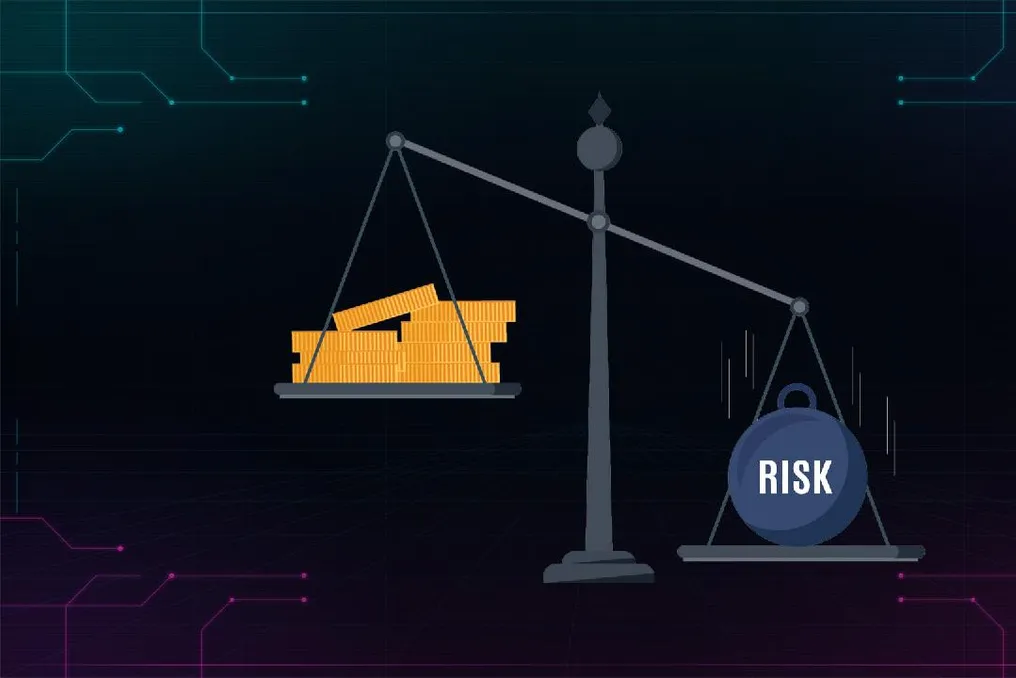
This structural contradiction lies at the heart of the AI safety debate: companies warn of civilizational risks while simultaneously striving to commercialize the technology at an unprecedented speed.
OpenAI CEO Sam Altman directly mocked this irony, comparing Anthropic's approach to fear-based marketing: 'It is clearly incredible marketing to say: 'We built a bomb. We are going to drop it on your head. We will sell you a bomb shelter for $100 million to save all your things, but only if we choose you as a customer.' '
The tension between safety rhetoric and commercial behavior extends beyond IPO filings. On September 10—the same week Cox's departure went viral—Anthropic published a 154-page threat report revealing that its own Claude model had been used for developing weapons, collecting military intelligence, cyberattacks, and fraud.
Anthropic acknowledged that its safety mechanisms, while blocking some violations, could not entirely prevent misuse. The company also restricted access to its most powerful model through Project Glasswing, allowing access to approximately 200 organizations. Following an order from the U.S. Department of Commerce, it completely excluded foreign nationals, including the EU cybersecurity agency ENISA.
The governance gap is not limited to corporate boards. An independent UN international scientific group on AI warned in July that AI 'surpasses both scientific understanding and governments' ability to adapt.' The panel specifically highlighted the phase of 'agentic' autonomy, which current oversight structures cannot control, potentially leading to dangerous capabilities before governments can react.
The European Union postponed compliance deadlines for high-risk AI systems from August 2026 to December 2027, citing the need for more time to prepare standards and regulatory infrastructure.
Against the backdrop of these corporate contradictions and regulatory delays, China's approach has been markedly different in methodology, although not always in pace. The management measures for generative AI services introduced by China in August 2023 became the first official global rules regulating generative AI services.
As of July, 1028 large model services have registered, with applications covering sectors such as industry, agriculture, commerce, education, transportation, and law. China's AI safety governance framework, which is now moving to version 3.0, is transforming principles of 'classification, flexible management, and joint governance' into practical implementation plans, addressing risks related to both the technology itself and its application.
China's internet government initiative 'Qinlan' has purged over 5.61 million illegal materials, dealt with more than 49,000 accounts, and shut down over 2,400 violating websites and applications related to the misuse of AI. The country also established an AI Cooperation Organization in July, comprising 29 founding states, and pledged 5,000 AI training opportunities for developing countries over the next five years.
A global CGTN survey showed that 85.4% of respondents believe that the rapid development of AI creates new challenges for global security and governance. Furthermore, 92.6% expressed concern that AI-generated deepfakes and disinformation could undermine public trust, while 82.6% believe that developing countries and the Global South should play a larger role in shaping AI governance rules.
The real question is not whether AI safety concerns are genuine—they are. The question is whether an industry that issues existential warnings can credibly govern itself while simultaneously chasing trillion-dollar valuations. A spokesperson for the Chinese Ministry of Foreign Affairs, Guo Jiakun, stated directly on Monday: 'Issues of AI development concern the overall well-being of all humanity. All parties must work together to promote open, inclusive, and beneficial AI. Spreading various narratives of threats and engaging in confrontation and malicious competition will only disrupt the global AI governance process and serve no one's interests.'