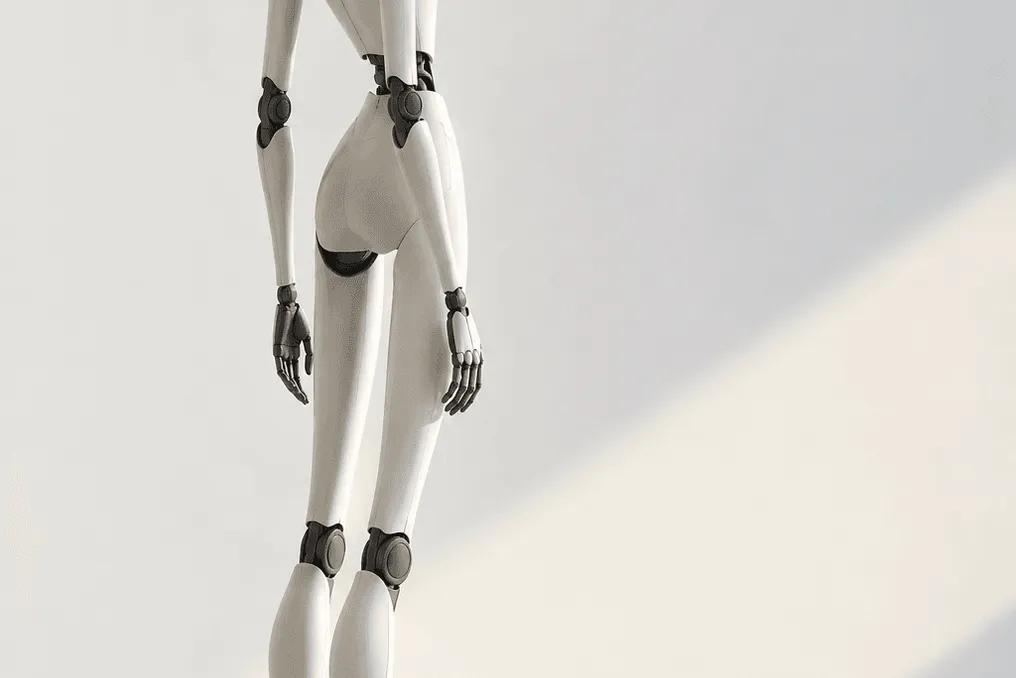
Unitree has released the G1+ model, which is an updated version of its G1 humanoid featuring six enhancements. This new version maintains the platform's price segment while improving mobility, sensing capabilities, and constant power options.
The standard G1+ model is available for approximately 95,000 yuan including tax. Information regarding the cost of the G1+ EDU variant, intended for research purposes, has not yet been published and can be requested through the sales department. This kit is an upgrade to the hardware and interaction for the G1 body line and differs from Unitree's separate release of the global language model UnifoLM.
In terms of mobility, the G1+ received an additional neck section with two degrees of freedom, allowing the head to tilt approximately from -25° to 36° and rotate by ±110°. This ensures more natural head movements during conversations and inspections. The motor units have been upgraded in both the torso and limbs: torque in the shoulders and waist increased by about 110%, while heat dissipation decreased by 72% at comparable torque. Torque in the arms increased by about 43%, and heat dissipation decreased by 30%. Additionally, hip motors reduced heat dissipation by about 28% at the same torque level.
The design continues to utilize high-speed synchronous permanent magnet inner rotor motors with low inertia, local air cooling, industrial cross-roller bearings on output shafts, and dual encoders.
The perception system integrates a stereo pair with a 60 mm baseline, 2-megapixel resolution, and a field of view of about 110°×80°, as well as a wide-angle monochrome camera with 1920×1080 resolution, a 3D LiDAR, and a belly camera providing depth and spatial coverage. The head is equipped with five touch-sensitive points for voice activation and gesture unlocking. For long-range sound, a six-microphone array located in a four-front and two-rear configuration is used, supporting sound arrival direction detection, noise cancellation, and echo suppression, along with optional support for a wireless microphone and two built-in 10W waist speakers.
An external DC power port of 54.6 V / 5.7 A is provided at the back for extended demonstrations and laboratory work, supplementing the existing Series 13 battery with hot-swappable 9,000 mAh capacity, rated for about two hours of operation.
When standing, the dimensions are approximately 1340×450×200 mm, and the weight is about 35 kg, while the device folds down to 690×450×300 mm. The standard model includes 25 joint motors: 2 in the head, 6 in each leg, 1 in the waist, and 5 in each arm, and it can carry a payload of about 3 kg in its arms. The EDU variant expands to a set with 25+45 degrees of freedom, an optional three-degree-of-freedom waist, and dexterous arms with seven degrees of freedom and two additional wrist axes capable of supporting a payload of about 4 kg. It also includes multi-vendor high-computing modules and an 18-month warranty compared to eight months for the standard model.
The system includes Wi-Fi 6, Bluetooth 5.2, an octa-core processor, over-the-air (OTA) updates, and a portable remote control. No data on independent lab durability or outdoor autonomy was provided upon launch.