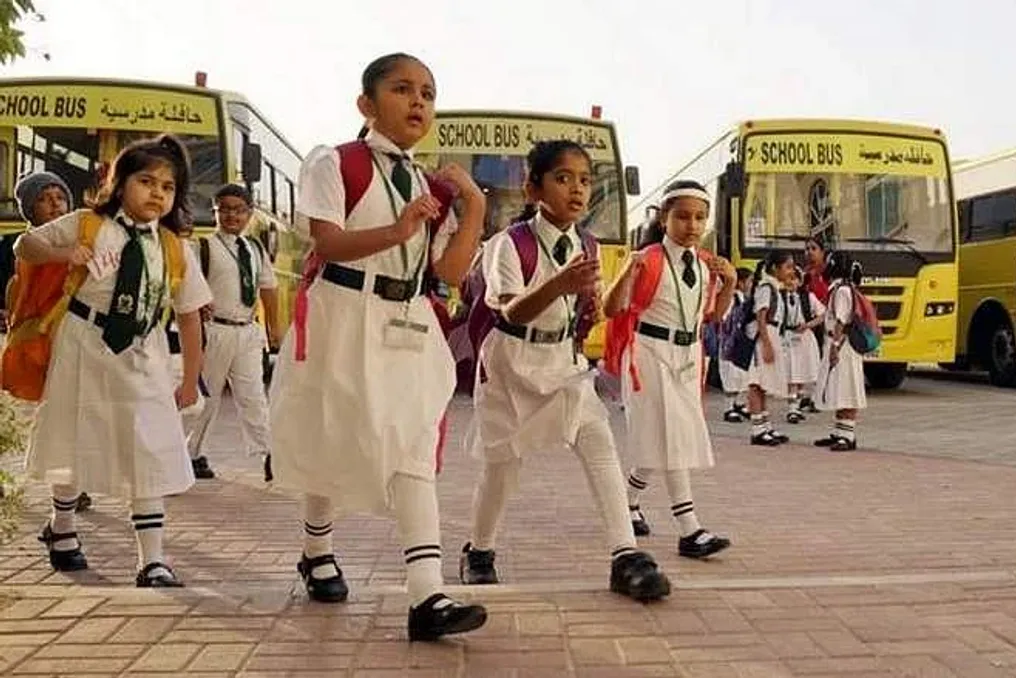
With the start of the 2026-27 academic year, schools across the United Arab Emirates (UAE) are once again emphasizing student appearance standards, uniform requirements, and healthy eating choices. Some campuses are introducing restrictions on extreme hairstyles, hoodies, and the consumption of energy drinks.
Despite variations in rule enforcement among schools, educational leaders assert that these measures are aimed not so much at punishment as at fostering a focused learning environment and supporting students' health and well-being.
Among the implemented measures are restrictions on hairstyles, including cuts where parts of the head are shaved with a razor or blade while other areas remain long, as well as a ban on long hair for male students. Schools have also prohibited students from wearing hoodies on school grounds, aiming to standardize uniforms and maintain what they describe as an appropriate learning atmosphere. Furthermore, some schools have expanded restrictions on food and beverages allowed on campus, clarifying the list of prohibited items.
At Credence High School, CEO and Director Dipika Tapar Singh stated that the school operates under a clear Uniform Policy and Code of Conduct, which regulate appearance and hairstyles. She noted that the policy includes clear guidelines for appropriate appearance and hairstyles, prohibiting extreme or shaved styles. Although the school uniform has a hood, students are forbidden from wearing it during classes or throughout the school day. Singh added that the use of the hood is typically limited to severe cold, especially during bus rides, and the sale or promotion of energy drinks on campus is excluded.
Singh emphasized that these norms exist to strengthen discipline, equality, and a sense of shared identity among students, as well as to support their overall health and well-being. At GEMS Founders School, Executive Director/CEO Matthew Burfield stated that the expectations primarily related to 'belonging, well-being, and maintaining a culture of high expectations.'
Burfield noted that the school strives for every student to feel part of a community where learning, character development, and positive relationships are priorities. He explained that uniform standards contribute to building a strong sense of identity and equality, while guidelines on hairstyles and clothing support a professional learning environment. Burfield also linked the restrictions on energy drinks to student health, adding that schools collaborate with families when expectations are not met. He clarified that issues are usually resolved quickly through positive partnership with families following a constructive conversation with the student and providing guidance.
Noufal Ahmed, Founder and Managing Director of Woodlem Education, reported that his schools aim to strike a balance between student freedom and responsibility, as well as respect for established rules. He mentioned that policies regarding uniforms and personal appearance are clearly communicated to families, and teachers and the Student Conduct Committee assist in reinforcing these requirements. Ahmed stated that the school community nurtures student freedom while instilling a strong sense of responsibility, discipline, and respect for established norms. Uniform and appearance policies are detailed on the school website, and parents receive regular reminders.
At Diyafah International School in Abu Dhabi, Director Nicole Haines reported that the school does not specifically prohibit shaved hairstyles, as hairstyles can reflect personal, cultural, or religious choices. Nevertheless, the school adheres to the Abu Dhabi Department of Education and Knowledge (Adek) Code of Conduct regarding appearance and dress standards. Regarding energy drinks, they are also not permitted on campus. Haines explained that this aligns with Adek's Healthy Eating and Nutrition Policy and reflects extensive scientific data indicating potential health risks associated with energy drink consumption among children and adolescents.
Shining Star International School has implemented more detailed appearance requirements. Head of Inclusion and Child Protection Specialist Abi Daniel reported that the school's policy restricts shaved designs, extreme hairstyles, and inappropriate appearance, and also limits hoodies within the scope of uniform and appearance requirements. The school also does not allow energy drinks, high-calorie beverages, or food in its cafeteria as part of a healthy eating approach. Daniel explained that the appearance policy requires students to maintain a 'neat, modest, clean, and culturally acceptable appearance,' consistent with Adek expectations and UAE cultural values. He also added that non-compliance is addressed through awareness raising and gradual intervention. Daniel concluded that students are provided with individual or group guidance on expectations and the reasons for them, and repeated non-compliance may lead to verbal warnings, parental communication, and formal disciplinary action in accordance with ADEK Student Code of Conduct. Parents are involved throughout the process to support adherence to the rules.