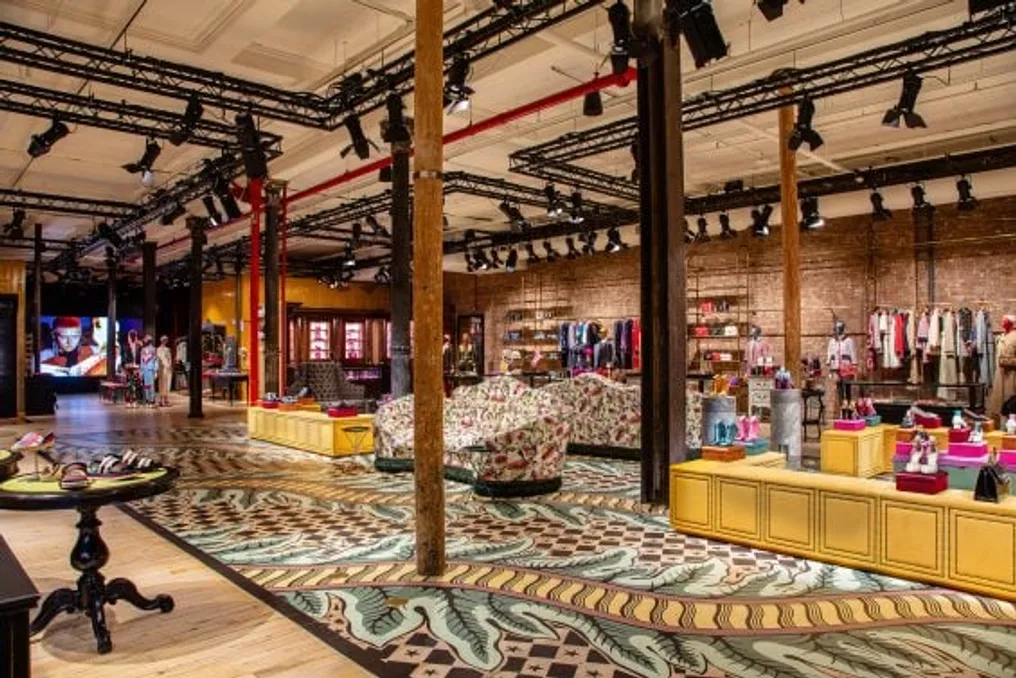
McLaren plans to transform dealerships into luxury boutiques inspired by Gucci in the US
Read more
AutoPapo
autopapo.com.br

McLaren plans to transform dealerships into luxury boutiques inspired by Gucci in the US

McLaren is implementing a plan to restructure its dealerships, transforming them into sophisticated luxury spaces, aiming to change the perception of buying a supercar from a visit to an electronics store to an experience similar to that of a high-end brand boutique like Gucci.

During a confidential meeting with its dealer network in the United States, the British automaker presented this change, replacing the current minimalist environments with high-standard locations. Each dealer will be charged a minimum investment of R$ 5 million to carry out the renovation.

Sources from Automotive News, who attended the meeting anonymously, indicated that the new concept should evoke the aesthetic of sales points from brands such as Gucci, Louis Vuitton, and Burberry. The design will abandon the clinical white predominant in current showrooms.

The new concept envisions a central reception area where vehicles will be displayed on islands, in addition to private rooms dedicated to closing deals. Wood finishes, earthy tones, and warm lighting will be incorporated, complemented by papaya orange details, a color the brand recovered from its race tracks.

One of the interviewed dealers clarified that the purpose of this transformation is not to alienate customers interested in technical specifications such as engine, gearbox, and carbon fiber, but rather to attract buyers who place as much importance on the store experience as they do on the car's technical data. Additionally, it is expected that after-sales service capacity will increase by at least 25%.

In terms of visual identity, the McLaren name will adopt a retro typography inspired by the letters of the gas station maintained by Bruce McLaren's family in New Zealand. The Speedmark symbol will become three-dimensional and appear more frequently, separate from the main logo.

With financial support from CYVN Holdings, based in Abu Dhabi, McLaren is intensely focused on the United States, a market responsible for more than half of its global sales. Currently, the brand has 27 dealerships in the country, registering about 300 new cars annually. Furthermore, the company plans to establish five proprietary centers in New York, Miami, Dallas, Los Angeles, and Las Vegas, focusing more on events, customization, and brand culture than strictly on sales.

The future catalog promises at least one annual launch until 2028, including a four-door SUV, a front-engined grand tourer, and a series of exclusive supercars linked to McLaren's history. The W1 hypercar, equipped with 1,275 hp and costing US$ 2.1 million (approximately R$ 10.86 million), already has a waiting list.

The next announced model is the P34, a mid-engine hybrid coupe, scheduled for release between August and September 2027, at the end of Northern Hemisphere summer. This vehicle will feature an internally developed biturbo V6 engine, generating 821 hp and 110.6 kgfm. Meeting participants described the P34 as having a wedge-shaped front inspired by the McLaren F1, tempered glass covering the engine, and seats upholstered in Nappa and aniline leather. Its estimated starting price is US$ 313 thousand (about R$ 1.62 million), with a forecast of one thousand units in the first year, which represents almost 50% more than the approximately 2,200 global deliveries recorded in 2025.

Similar stories

McLaren invests £450 million in British manufacturing, contrasting with the overall industry trend
Read more
iol.co.za

McLaren invests £450 million in British manufacturing, contrasting with the overall industry trend

McLaren is investing £450 million in its technology center in Woking and plans to create around 1000 jobs. This move is one of the most notable investment projects in the UK automotive sector this year, especially given the overall negative trajectory of the industry.

The investments are focused on the McLaren technology center in Woking, Surrey, which is near the company's vehicle production site. According to available data, some of these positions will also be distributed to the satellite manufacturing facility in Sheffield. It is important to note that these funds are directed specifically towards expanding production capacity and research and development, rather than just upgrading the headquarters or marketing campaigns.

The new 1000 vacancies will include both permanent employees and contract and agency staff, potentially increasing McLaren's current workforce of approximately 2500 people by about 40%.

The funding comes from CYVN Holdings, an investment firm supported by the Abu Dhabi government. This firm acquired McLaren's automotive business from Mumtalakat in Bahrain last year and committed to allocating $2 billion over five years to revitalize the division, which was reporting record annual losses before the acquisition.

Under the new management and with Nick Collins as CEO, who previously held senior positions at JLR, McLaren is now pursuing a broader product strategy that extends beyond the traditional niche of high-performance sports cars. The possibility of launching an SUV is also being considered following the company's merger with the British electric vehicle startup Forseven.

Adverse backdrop for manufacturing

The significance of McLaren's story lies in its contrast with the state of the rest of the automotive manufacturing in the UK. According to the Society of Motor Manufacturers and Traders (SMMT), vehicle production in the UK fell by 7.5% in the first half of 2026, dropping below 386,000 units. Exports decreased by 5.6%, and domestic market output fell by more than 13%. Production of electrified models, which accounts for almost 40% of the total volume, also declined by 8.6% year-on-year.

SMMT CEO Mike Hughes described the industry as being under 'intense pressure' from a weak global market, trade disputes, and uncompetitive costs. Nevertheless, the sector continues to generate over £85 billion in turnover and supports around 188,000 manufacturing jobs across the country.

This challenging background became even clearer after Jaguar Land Rover announced plans to cut around 4000 jobs, which is nearly 10% of its global workforce, in response to falling sales. Aston Martin and Bentley have also reduced staff over the past year due to a sharp decline in demand in China. Global player Volkswagen announced a reduction of 100,000 jobs and intends to halve its model lineup by 2030. Concurrently, Chinese manufacturers are rapidly gaining market share in the UK: only the brands Chery Omoda and Jaecoo, according to reports, have increased their share of new car sales in the UK from approximately 3% to almost 8% in a year.

Why this signal matters

For manufacturing observers, McLaren's investment stands out as a rare exception in a sector generally characterized by restructuring. It demonstrates that with strong owner support and a convincing product strategy, British automotive production sites can still attract fresh capital instead of facing closure or downsizing, despite persistent difficulties in the trade and pricing environment.

The presence of a supply chain component in Sheffield also suggests that the benefits may slightly extend beyond Woking, affecting parts of the domestic supply base while many suppliers face risks due to order reductions from OEMs elsewhere.

Whether McLaren's move becomes a genuine positive example or an isolated case will depend on the quality of implementation, the speed of hiring, the launch of an expanded product range (including a possible SUV), and whether CYVN's five-year commitment of $2 billion is met at the established pace. However, at present, in the landscape of British manufacturing, where job cuts and production declines dominate, McLaren's decision to increase capacity rather than reduce it is a noteworthy indicator to watch.

Popular