India will export electricity to Nepal to support post-flood recovery
Read more
Noticias ao Minuto
noticiasaominuto.com

India will export electricity to Nepal to support post-flood recovery

The Ministry of Energy announced that India will provide Nepal with up to 600 megawatts of electricity daily for 18 hours until the end of the year.

According to the statement, this decision will help Nepal meet its energy needs during this difficult period and strengthen the long-standing and close energy cooperation between India and Nepal.

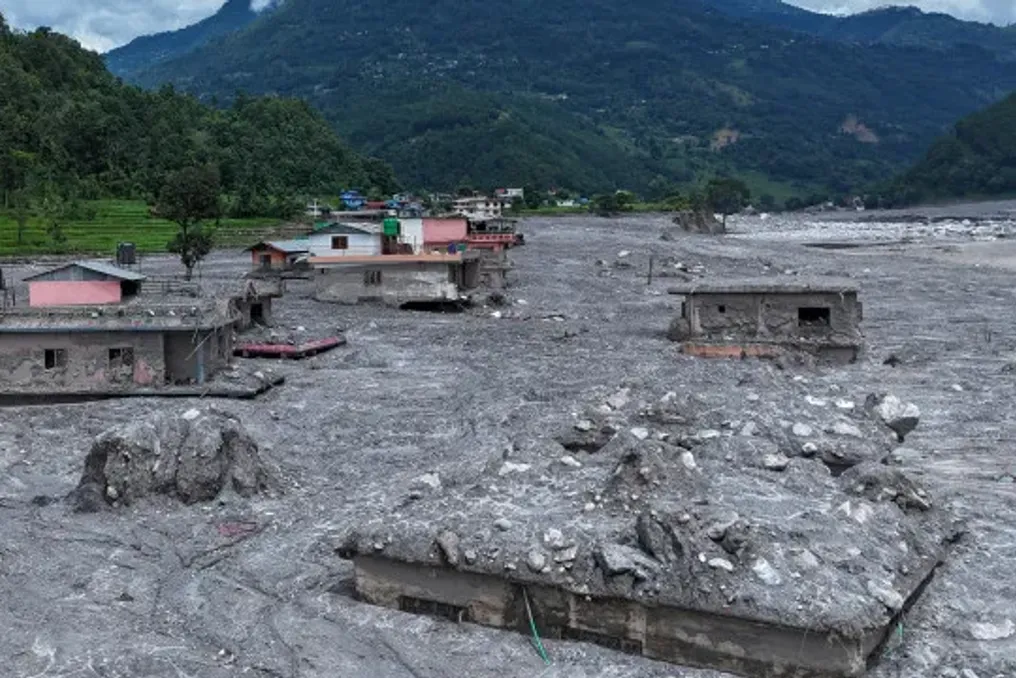
The disaster that occurred on August 26 due to the collapse of a glacier and rocks on the border between China and Nepal resulted in the deaths of over 1,400 people in both countries. More than 5,300 people remain missing in Nepal, including hundreds of workers from various hydropower projects.

Under the announced agreement, the volume of supplied electricity will be reviewed in December, starting from January 2027.

Before the turn of the millennium, four out of five Nepalese residents lacked access to electricity, according to the International Energy Agency (IEA). However, since then, the construction of numerous dams has allowed almost all 30 million residents of the country to be connected to the power grid.

Hydropower has also become one of the key factors in Nepal's exports to India and Bangladesh. Following floods that affected at least 12 hydropower projects last month, authorities suspended electricity exports.
Similar stories

India Approves Export of 654 MW of Electricity to Nepal for 18 Hours Daily Until End of December 2026
Read more
business-standard.com

India Approves Export of 654 MW of Electricity to Nepal for 18 Hours Daily Until End of December 2026

The Ministry of Energy announced that the government has granted permission to transmit 654 megawatts (MW) of electricity to the Nepal Electricity Corporation for 18 hours every day until the end of December 2026.

The ministry's statement specified that the approval includes an export of up to 600 MW via the Musaffarpur-Dhalkebara 400-kilovolt two-circuit line, as well as up to 54 MW via the Tanakpur-Mahendranagar 132-kilovolt single-circuit line. It was also noted that the volume of exported power will be reviewed in December 2026 starting from January 2027.

The ministry added that recent floods have caused serious damage to hydropower infrastructure in Nepal, leading to a reduction in domestic generation capacity and creating an additional need for electricity.

According to the statement, this permission will help Nepal meet its energy needs during this difficult period and will strengthen the long-standing and close energy cooperation between India and Nepal. The ministry emphasized India's commitment to supporting Nepal and strengthening bilateral interaction in the energy sector.

As a result of sudden floods in the Trishuli and Lende Khola river basins, significant damage was inflicted on local infrastructure on August 26, leading to the shutdown of power plants in Nepal and a loss of 550 MW of its capacity. Previously, the country had an installed and operational generation capacity of 4200 MW.

A high-ranking official from the Ministry of Energy told Business Standard that the decrease in hydropower flow from Nepal to India is unlikely to have a noticeable impact on New Delhi's domestic supply. Furthermore, the impact of the flash floods and damage to hydro projects on India's power system is minimal and fully manageable.

Uzbekistan aims to increase electrical equipment exports to $5 billion by 2030
Read more
podrobno.uz

Uzbekistan aims to increase electrical equipment exports to $5 billion by 2030

Uzbekistan plans to significantly boost the export of electrical engineering products, setting a goal of reaching $5 billion by 2030. Furthermore, it is planned to increase the total production volume in this industry and related sectors to $11 billion.

This information was presented during a presentation on the development of the electrical engineering industry and the stimulation of competitive product output for President Shavkat Mirziyoyev. Previously, production in this sector increased from 4.7 trillion soums in 2018 to 43.1 trillion soums, and exports exceeded $1 billion. Currently, Uzbek products are supplied to 65 different countries.

In the first seven months of 2026 alone, the industry produced goods worth 30 trillion soums and exported products worth $706 million. As part of supporting enterprises that purchase copper raw materials, it is stipulated that they will cover 25% of the cost, while the remaining 75% will be covered by Uzsanoatexport. $50 million will be allocated for the implementation of these measures.

International brands willing to invest at least $50 million will also receive support in the form of tax incentives and access to ready-made production facilities with necessary infrastructure. It should be noted that Uzbekistan and Serbia previously agreed on an Action Plan for industrial cooperation for the period 2026–2028, in which the production of electrical engineering products was defined as one of the key areas of cooperation.

Popular