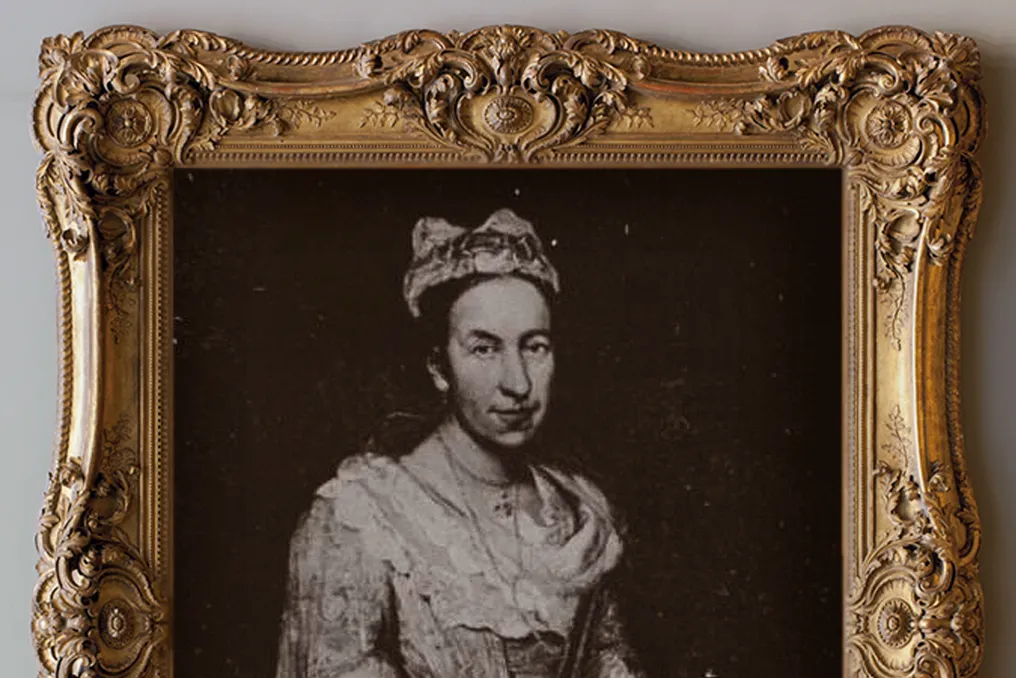
The theft of works of art in Nazi Germany was not merely an accidental act by military marauders; it constituted official government policy. This practice, known as Nazi looting, involved the discovery and seizure of art collections, libraries, ceramics, and jewelry from museums and the homes of wealthy families, predominantly Jewish ones.
For many years, thousands of pieces were removed, subsequently either destroyed, sold at auctions, or sent to secret hiding places, leaving the whereabouts of many undetermined. Consequently, even more than 80 years after the end of World War II, many of these works remain unfound and unreturned to their rightful owners.
Recently, one such painting resurfaced in a highly unusual manner: it was spotted in a listing for coastal property in Argentina. The owners posted a photograph of the mansion online, where a painting of a woman was visible in the living room, above a green sofa.
The Dutch newspaper Algemeen Dagblad discovered that this work is 'Portrait of a Lady' by Italian artist Giacomo Ceruti, which was stolen from a private art gallery in Amsterdam belonging to the Jew Jacques Goodsticker. Goodsticker fled the Netherlands after the country's occupation by German troops in 1940 and died in a shipwreck while escaping with his family. It is estimated that over a thousand pieces were stolen from his collection, of which only 200 have been recovered to date.
The painting found in Argentina was created in the 18th century, and there had been no information about its location since the war ended. The painting is valued at over 1 million Brazilian reais. It is now known that the 'Portrait of a Lady' was in the home of Patricia Cadgien, daughter of Nazi officer Friedrich Cadgien, who oversaw Nazi looting and fled to Argentina after the war, like many other officers. He died in 1978 without being convicted of war crimes.
After learning of the artwork's location, Argentine police began an investigation at the house, but the painting was no longer there, nor was it present in the online property listings. Instead, they discovered drawings and documents presumably related to World War II, which are now under study.
Cadgien and his wife were accused of concealing the painting. The case reached an Argentine court, which returned the work and ruled that the painting should be given back to Marie von Zacher, the sole surviving heir of Jacques Goodsticker. To avoid criminal prosecution for concealing the painting, Cadgien agreed to return the artwork and donate over $3,000 USD. This decision was unprecedented for the Argentine judicial system, which had never before returned works stolen by the Nazis.