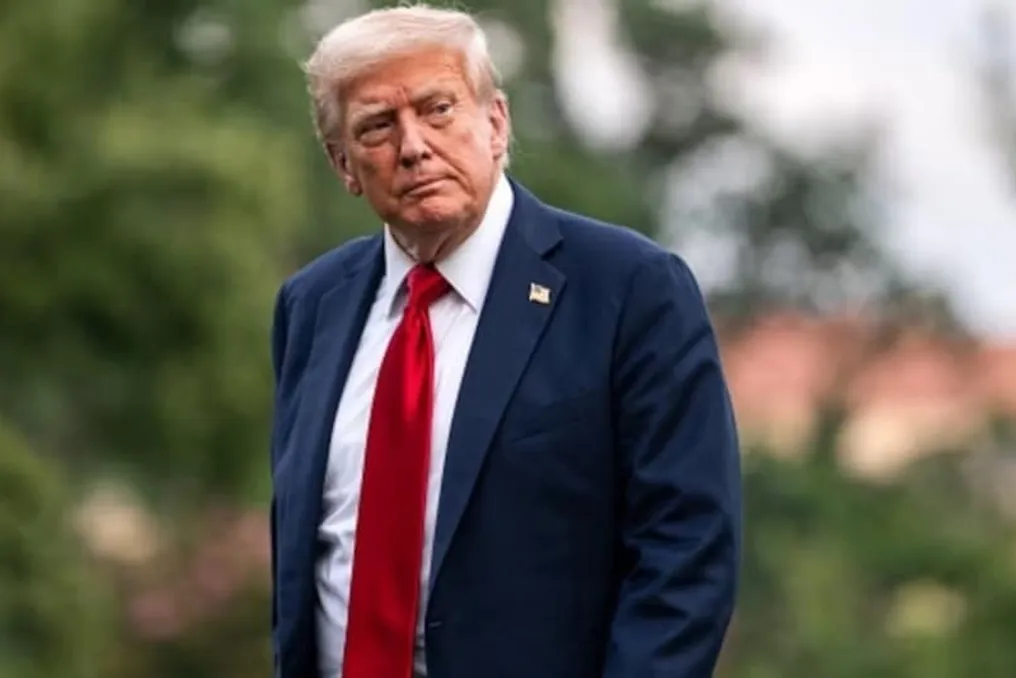
US President Donald Trump made a statement on Truth Social demanding that countries utilizing the vital oil supply route through the Strait of Hormuz compensate for the costs associated with ensuring its security. He emphasized that America is acting not only in its own interests but also for the energy security of the entire world.
Trump stated that despite the escalating military crisis with Iran, the flow of oil through the waterway continues. He added that after this conflict concludes, global nations must reimburse America for these expenses.
In his address on Truth Social, Trump made it clear that oil supplies from Hormuz are continuous. He insisted that all countries in the world that have provided no assistance to America will have to pay after the current confrontation ends. In Trump's view, America assumes this responsibility for security across many generations, surpassing its own interests.
This statement by President Trump directly contradicts Iran's assertion of complete control over traffic on this strategic waterway. Iranian officials claim that all vessels passing through the waterway are obliged to follow routes and rules established by Tehran. However, Washington completely rejects this Iranian claim. Due to attacks on commercial vessels and Iranian restrictions, movement through Hormuz has significantly decreased compared to pre-war levels.
Diplomatic efforts to resolve this tension suffered a major blow when Oman postponed an important meeting between Iran and Gulf countries. This meeting was intended to focus on the management and functioning of the strategic waterway. Oman's Foreign Minister Bader Al-Sabidi announced that the meeting was suspended to reach a consensus, and a new date has not been set. Iran, meanwhile, stated that the postponement was at the request of regional states.
Parallel to the warning about Hormuz, Trump suggested that Iran is very eager to conclude a diplomatic agreement with Washington. He noted that the 'unsuccessful nation' is striving for a deal very quickly and impatiently. He clarified, however, that the final decision on involving America in negotiations remains with him, although he hinted at the full readiness of the US for dialogue.
The uncertainty surrounding Hormuz has directly impacted energy markets. Following the weekend events, as trading resumed on Monday, crude oil prices rose by more than 4 percent. Although this rise slightly weakened during the American trading session, the tension also affected the domestic fuel market in the US, where the average retail price for diesel fuel exceeded $6.23 per gallon according to background data.
The tension was not limited to Hormuz; there was also a separate attack on Saudi Arabia's East-West pipeline. This pipeline is critically important for the export of Gulf countries' oil, as it allows them to bypass Hormuz. Traders estimate that if this pipeline remains closed for a long time, it could affect 4 percent of global oil supplies. Damage from fire has been confirmed by satellite imagery.
After the US, Iran also issued a new warning to vessel operators. Tehran published a list of 77 vessels allegedly violating its operating protocols in Hormuz. Iran sternly warned that in the future, vessels failing to comply with the rules could be fined, detained, or permanently confiscated, creating an atmosphere of fear among international shipping companies.
Military tensions spread not only to the Persian Gulf but also to Saudi Arabia, where new attacks by Iranian-backed Yemeni Houthis have begun. The Houthis claimed they launched dozens of missiles and drones at the military airbase in Khamis Mushait in southern Saudi Arabia. The Houthis assert that they targeted aircraft hangars, radar systems, runways, and ammunition depots in response to Saudi Arabian airstrikes in Yemen. Saudi Arabian officials declared a state of emergency in four southern cities, including Khamis Mushait.
The large-scale humanitarian crisis in Yemen has deepened due to new Houthi attacks and ground fighting. According to the International Organization for Migration (IOM), 82 thousand Yemeni citizens have been forced to leave their homes since the beginning of this month.