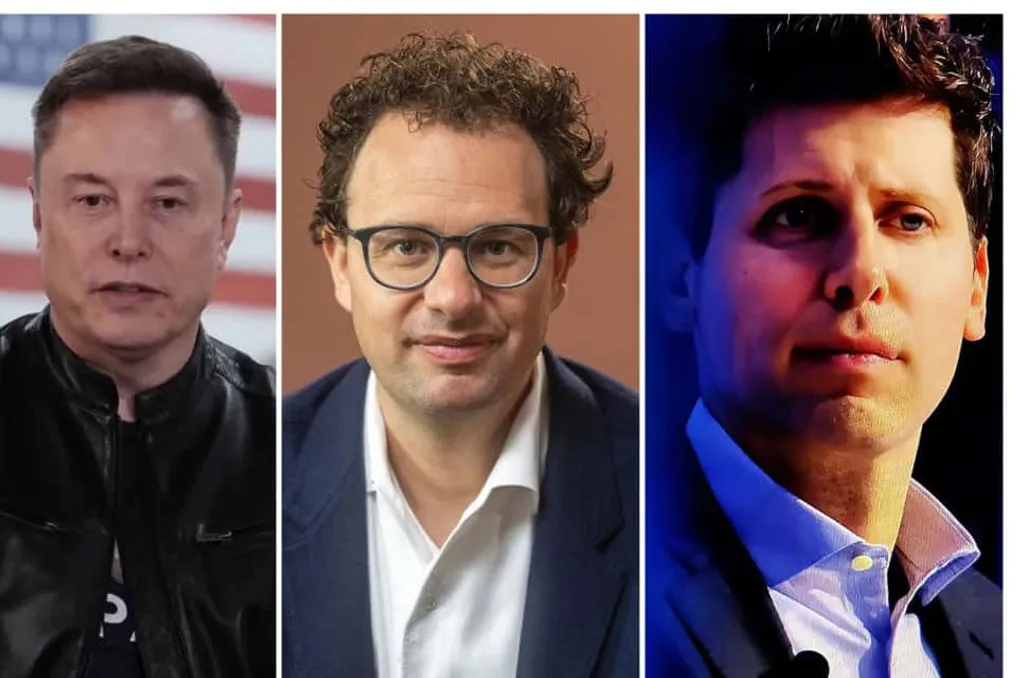
Sam Altman, CEO of OpenAI, confirmed that the company will not conduct its Initial Public Offering (IPO) in 2026. The executive explained that several pending issues must be resolved before the company can be listed on the Stock Exchange, covering crucial topics of Artificial Intelligence (AI) safety and development.
Although some previous reports suggested 2027 as a potential new window for the IPO, Altman did not ratify this date. When questioned by Fortune about the possibility of postponing the 2026 IPO to 2027, he merely stated that the capital opening would not happen that year.
Altman emphasized: 'I would say no in 2026. We have a lot to do.' Among the priorities mentioned by the CEO are meeting AI safety and alignment requirements, as well as establishing how industry companies and governments can collaborate given technological progress.
In another part of the interview, the executive considered an IPO at this time a 'poorly advised' choice and stressed that OpenAI is not under pressure to go public. According to Altman, the company plans to do so only when the business is properly prepared and when the social context regarding technology is deemed appropriate.
Altman's stance comes amid intensifying discussions about the inherent risks of more sophisticated AI models. Recently, a researcher from Anthropic left the organization and expressed public criticism of the rapid pace of technological development. Shortly after, Dario Amodei, CEO of Anthropic, argued that AI labs should slow down the advancement of their models so that safety mechanisms can keep up with the increase in capabilities.
Altman showed agreement with this suggestion, stating that the subject was already being debated internally at OpenAI. Anthropic itself recently released a report detailing the misuse of its models, describing attempts to use AI in activities related to virus research, military development, surveillance, and other potentially dangerous uses.
For Altman, this situation signals a moment when it is imperative for governments and corporations to debate how to manage increasingly competent systems. He commented to Fortune: 'This was clearly a week where many more people are dealing with the issues we have ahead of us,' adding that the debate was essential given the arrival of extremely capable models and the need to resolve high-risk issues.
More information about the OpenAI IPO
OpenAI's capital opening had been seen as one of the most significant events in the technology market. The company had even confidentially presented documentation for a possible public offering in June, as reported by Fortune.
Previous reports indicated that the operation could value the company at US$1 trillion (approximately R$5.3 trillion). However, this expectation decreased as doubts grew about AI safety and the effects of rapid model advancement.
The postponement also directs more attention to Anthropic, which continued with its own plans for a public offering. According to Reuters, the company is still evaluating the possibility of starting the stock sale process in October.
Thus, OpenAI's decision occurs at an atypical time for the sector: while major AI companies continue to invest heavily in developing increasingly powerful models, their own leaders have begun to publicly advocate for greater caution regarding the speed of this advancement.
Altman also suggested that OpenAI and other leading companies in the segment may be about to announce an agreement to reduce AI development and cooperate on safety issues.