iPhone Duo launch may prompt Samsung to accelerate the Galaxy Z TriFold 2
Read more
Tecnoblog
tecnoblog.net

iPhone Duo launch may prompt Samsung to accelerate the Galaxy Z TriFold 2

Samsung, although seen as a potential leader in the foldable smartphone market, might have its schedule altered following Apple's recent announcement of the iPhone Duo. This could push the company to bring forward the launch of the next iteration of its three-fold device, the Galaxy Z TriFold 2.

Originally slated for 2027, the release of this device could happen sooner. According to source Lanzuk, the unveiling of the iPhone Duo motivated Samsung to reassess its timeline, which also encompasses an additional project: a sliding screen phone.

Lanzuk reported that Samsung is working to make the Galaxy Z TriFold 2 lighter, thinner, and more durable compared to its first version, without a significant increase in cost. The target price is to remain around US$ 2,899 (equivalent to approximately R$ 15 thousand in direct conversion), the same price point as the first TriFold in the United States.

However, maintaining this price presents a challenge due to the rising cost of components. Rumors suggest the company operated the first generation at a loss, aiming to test the acceptance of this new product format.

The debut of the first generation of the foldable occurred in late 2025, serving as an experimental initiative by Samsung. This South Korean version was introduced a few months after the Huawei Mate XT Ultimate Design launch. However, the Galaxy Z TriFold adopted a mechanism where the screens fold inwards and included an external screen, features later incorporated by the Chinese brand in the Mate XT 2.

The device arrived in the United States in January 2026 with limited distribution and was withdrawn just three months later. Although initial stock sold out quickly, it was never officially launched in Brazil.

Technical specifications included the Snapdragon 8 Elite Mobile for Galaxy platform, a 10-inch screen when fully open, a 120 Hz refresh rate, and a 5,600 mAh battery. Samsung had already established initial contacts with suppliers to ensure the production of second-generation components.

In the initial plan, the Galaxy Z TriFold 2 was set to be part of an expanded line of foldable devices scheduled for 2027. This family would also include the Galaxy Z Fold 9, which might be wider, the Galaxy Z Fold 9 Ultra, and possibly the Galaxy Z Flip 9.

Although the future of the Flip line remains uncertain, the company might launch a sliding screen phone capable of expanding to about 7 inches, as reported by 9to5Google. A prototype of this smartphone was displayed at MWC 2026, but it is based on a concept previously presented at CES 2025, when Samsung showcased a 'rollable' screen model as an alternative to Huawei's trifold.
Similar stories

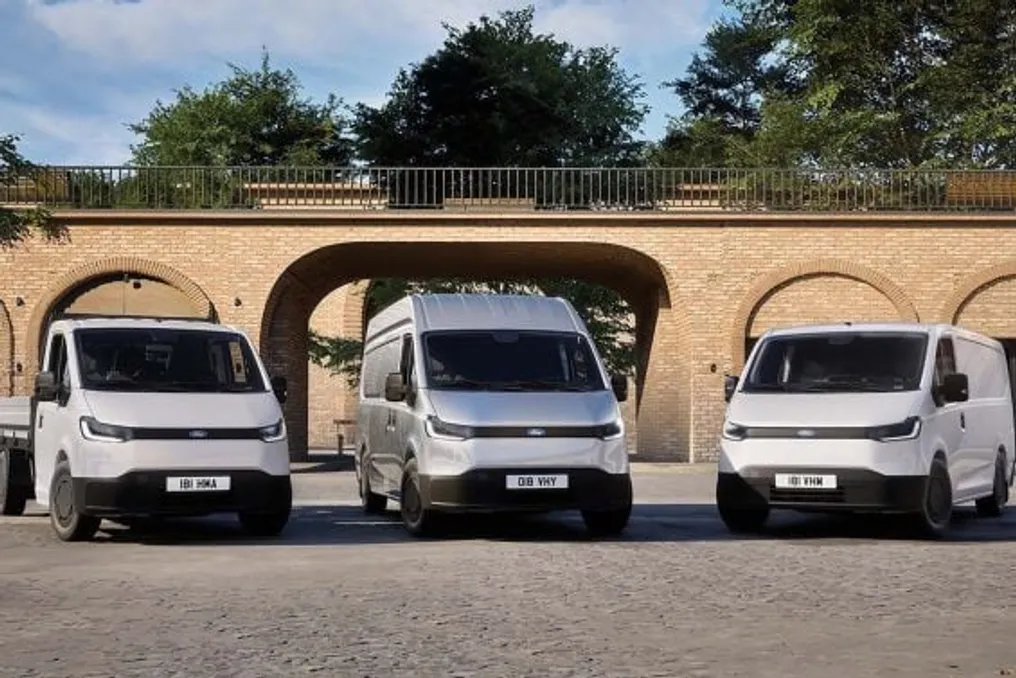
Ford confirms three versions of the electric Transit City van for the Brazilian market
Read more
autopapo.com.br

Ford confirms three versions of the electric Transit City van for the Brazilian market

Ford announced that the Transit City, an electric van designed for urban delivery services, will be available in Brazil in three distinct configurations: a standard roof panel van version, one with a high roof, and a cab-chassis option.

The model had been presented to the Brazilian market in May, and its launch is scheduled for the second half of 2026. The confirmation of these national versions occurred this Monday, the 14th, coinciding with the world premiere of the Transit City cab-chassis at the IAA Transportation 2026 event, held in Hanover, Germany.

The cab-chassis configuration offers greater commercial flexibility as it can be adapted for various types of equipment, such as refrigerated boxes or service platforms. The two van models differ only in roof height and load capacity. In Europe, where the van will also be marketed, the comparable versions are the L1H1, with a load capacity of 1,085 kg, and the L2H2, with a load capacity of 1,275 kg.

Although Ford has not yet released detailed technical specifications for the models intended for Brazil, global data presented in May indicates that the Transit City uses a 56 kWh lithium iron phosphate (LFP) battery and a 110 kW front electric motor, equivalent to 150 horsepower, providing an estimated range of 250 km.

Additionally, DC charging reaches up to 87 kW, allowing the battery to go from 10% to 80% in approximately 30 minutes. The manufacturer justifies the choice of a moderately sized battery pack due to operational use, given that most vans of this size travel less than 110 km daily, making a higher capacity system unnecessary and more costly.

Amazon receives first Mercedes-Benz eActros 600 electric trucks in Germany
Read more
autopapo.com.br

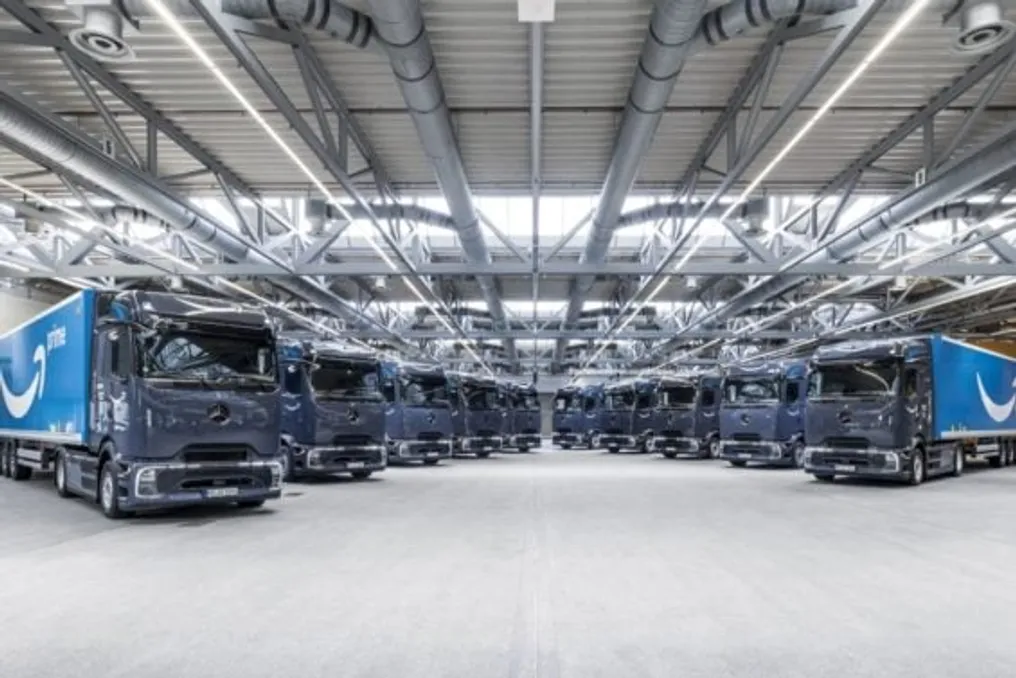
Amazon receives first Mercedes-Benz eActros 600 electric trucks in Germany

Mercedes-Benz supplied Amazon with the first 27 units of the eActros 600 electric truck in Germany. This event marks the beginning of the German phase of the retailer's largest order for battery-powered vehicles.

The two companies plan to have more than 50 of these units operating on German roads by the end of 2026. This batch is part of an agreement signed at the beginning of 2025, totaling over 200 eActros 600 units, making it the largest order for electric trucks for both Amazon and the German manufacturer.

About 140 of these vehicles were directed to the United Kingdom, where deliveries began at the end of 2025. The trucks will be primarily used for transport between distribution centers and urban areas, a phase known in the sector as the 'middle mile.'

Equipped with three lithium iron phosphate battery packs totaling 621 kWh, the eActros 600 has a declared range of 500 km without the need for intermediate recharging, supporting a gross combined weight of 40 tons. The model was recently awarded International Truck of the Year 2025.

Tests conducted by Mercedes-Benz in Europe, including evaluations under winter conditions in the northern part of the continent, showed that the truck consumes approximately 1 kWh/km. This data, obtained with an average combined weight of 36 tons, is close to the theoretical estimates released for the Tesla Semi.

To support fleet expansion, Amazon is implementing hundreds of fast DC chargers across Europe. According to the company, this infrastructure allows batteries to charge from 20% to 80% in just over an hour.

Amazon's total investment in electrification and emission reduction on the continent exceeds one billion euros (equivalent to about R$ 5.95 billion), with more than 400 million euros (approximately R$ 2.38 billion) allocated to operations in Germany.

An analysis conducted by the consultancy Frontier Economics, hired by the company, indicates that these investments have helped maintain over 35,000 jobs and could contribute up to three billion euros (about R$ 17.85 billion) to the German economy.

Andreas Marschner, Vice President of Sustainable Operations at Amazon, characterized the delivery as a milestone in the electrification of the company's transport network, emphasizing that the technology, already applied in the final stage of deliveries, now covers longer routes.

Stina Fagerman, President of Mercedes-Benz Trucks European Customer Region, stated that Amazon's choice demonstrates confidence in the brand's technology and signals that the electrification of heavy transport is no longer just a promise.

In Brazil, the eActros 600 is not yet available for sale. Mercedes-Benz Brazil has been conducting tests with the first-generation eActros 300 and 400 versions since 2024, using them in fleets of clients such as Suzano, Braspress, and Expresso Nepomuceno, in addition to integrating them into the internal logistics of the factory located in São Bernardo do Campo.

Popular