The Japanese probe Hayabusa2 carried out an innovative experiment by directing lasers at the asteroid Torifune during a rapid flyby at a speed of about 5 km/s. This unprecedented test, conducted by the Japan Aerospace Exploration Agency (JAXA), demonstrated the capability to measure the distance to an asteroid while the probe passes by it at high speed.
The data obtained can significantly improve calculations regarding the position, velocity, and orbit of these celestial objects. Furthermore, this information may be useful for planetary defense, helping to better understand potential threats from heavenly bodies that could collide with Earth.
The experiment took place on July 5, 2026, when Hayabusa2 passed by Torifune. The probe hit the asteroid twice, a few seconds before the point of closest approach, at distances of 20 kilometers and 15 kilometers, respectively.
The relative velocity during this encounter was approximately 5 km/s. According to JAXA, this was the first demonstration of such measurements during a fast flyby past an asteroid.
The LiDAR instrument directs a laser beam at the object and records the time it takes for the reflected light to return. This time interval allows for distance calculation. The method is useful because even in the absence of an atmosphere, it is difficult to distinguish a small object close to the probe from a larger one further away.
In the case of Torifune, the laser struck a very small area of the surface, and the team is currently trying to precisely determine where the shots occurred.
A single measurement shows the distance to the asteroid at a specific moment in time. When data is collected at different points along the trajectory, it can be combined with tracking data of the probe for a more accurate determination of the object's position and velocity.
JAXA explained: 'If distance data can be obtained at different times, it can be combined with probe tracking data to determine the position and velocity of the celestial body with high accuracy, thereby increasing the accuracy of its orbital predictions.'
This knowledge is important both for space exploration and for planetary defense, which includes understanding and responding to possible collisions with Earth's celestial bodies.
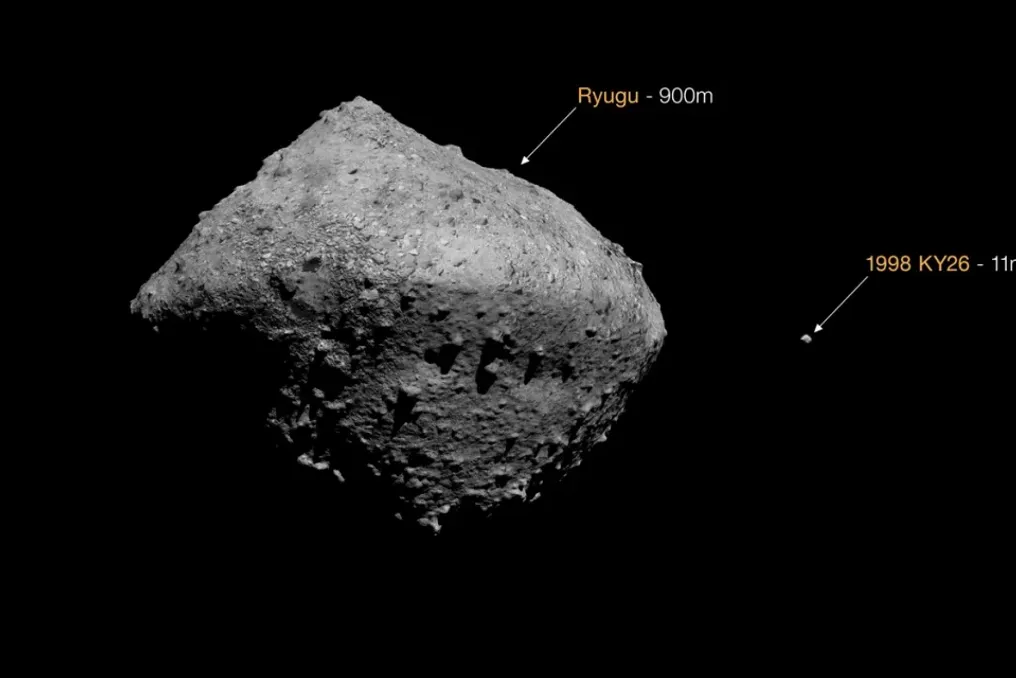
Hayabusa2 previously gained recognition for visiting the asteroid Ryugu, where it collected samples and returned them to Earth. The mission continued after the material transfer and received new tasks.