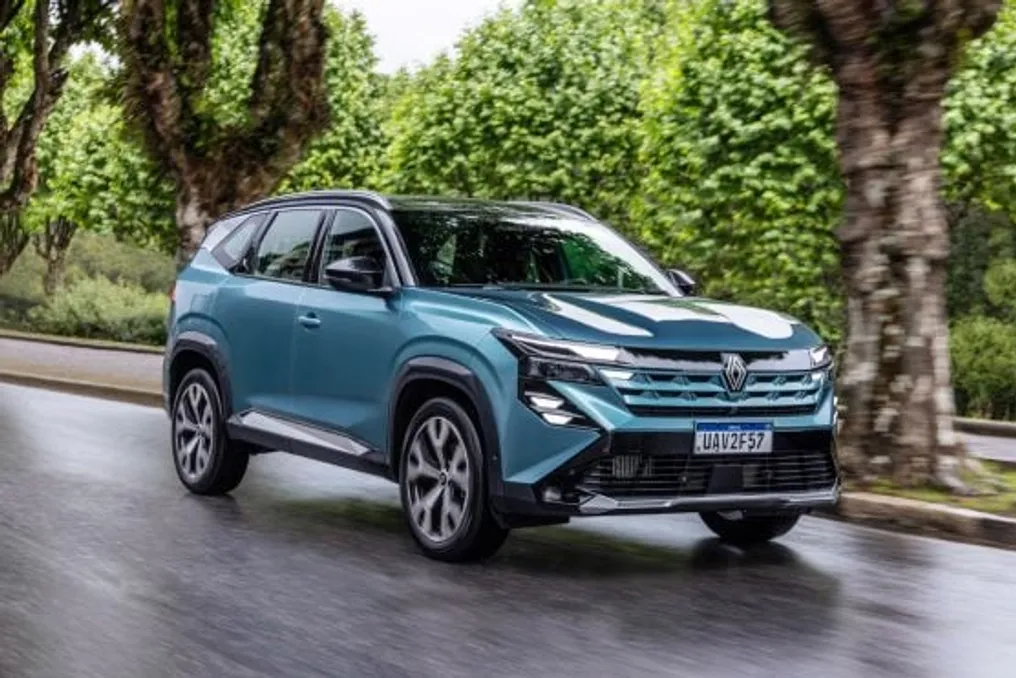
The Renault Boreal will undergo a power reduction in the Brazilian market. The 1.3 turbo flex engine of this mid-size SUV will drop from 163 hp to 160 hp, while maintaining stable torque at 27.5 kgfm. This change aims to meet the requirements of the new phase of the Motor Vehicle Air Pollution Control Program, known as Proconve L8.
The confirmation of this modification was made by Ariel Montenegro, president of Renault Geely Brazil, during the presentation of the Niagara pickup truck. This new adjustment will first be introduced in the pickup, scheduled for November, and will reach the Boreal in the transition to the 2027 line.
According to Renault, the sole purpose of this recalibration is to reduce emissions, with no connection to the Industrialized Products Tax (IPI) brackets. The manufacturer has not yet disclosed the new emission indices nor detailed how this adjustment will impact fuel consumption.
This is the second time the engine has lost power in Brazil. When initially launched in 2019 in the Captur, the 1.3 turbo was imported from Spain and delivered 170 hp. In 2025, with the start of domestic manufacturing by Horse—an engine company in which Renault holds a joint venture with Chinese Geely—at the São José dos Pinhais (PR) plant, the power was reduced to 163 hp. Now, a third adjustment is reducing the power to 160 hp.
The torque remained unchanged. The Boreal is also produced at the São José dos Pinhais plant, where its production began the previous year.
The Boreal's case is not unique; Proconve L8 raised pollutant emission standards, forcing manufacturers to recalibrate engines sold in the country, which manifests as a drop in horsepower in some technical specifications. According to the regulation schedule, this stage is valid for new models starting in January 2025 and covers all national production until 2027.
The Niagara pickup uses exactly the same mechanical assembly, already configured with 160 hp and 27.5 kgfm. It is assembled in Santa Isabel, Argentina, receiving engines manufactured in Paraná, which standardizes the specification of both vehicles in South America. Derived from the same platform as the Boreal, the Niagara will compete against models such as Fiat Toro, Ram Rampage, and Ford Maverick, offering front-wheel drive and 4x4 options. Renault has already confirmed that the model will feature a hybrid version in 2027. It was not clarified whether the new calibration will pave the way for the Boreal to also receive four-wheel drive.