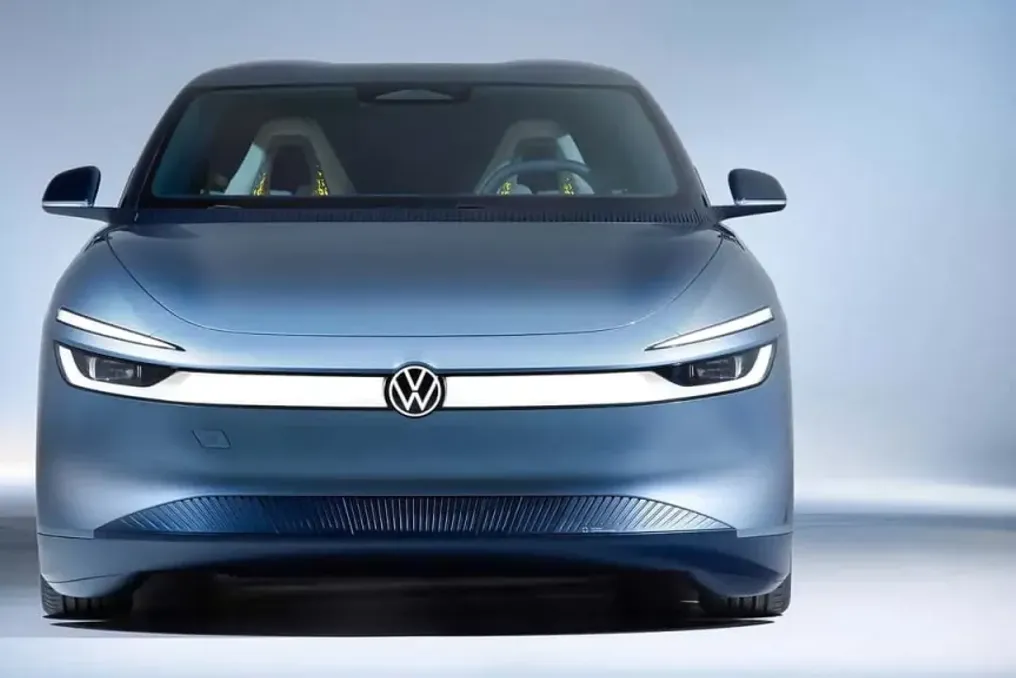
Volkswagen launches electric concept Mission Efficiency with 1,278 km range
Read more
Olhar Digital
olhardigital.com.br

Volkswagen launches electric concept Mission Efficiency with 1,278 km range

Volkswagen presented the Mission Efficiency, a concept vehicle developed to illustrate the potential for efficiency in electric cars by minimizing dependence on large batteries. This prototype managed to travel a distance of 1,278 km between Wolfsburg, Germany, and Vienna, Austria, using only a single recharge during the journey.

The vehicle's design results from combining optimizations such as weight reduction, the adoption of extreme aerodynamics, and improved energy management. Built on the MEB+ platform and sharing elements with the ID. Polo, the prototype demonstrates how reducing losses can significantly increase the range of an electric car.

The lines of the Mission Efficiency recall the 2013 XL1 model, maintaining the teardrop shape with a very narrow rear section. With a drag coefficient of 0.158, Volkswagen stated that this has become the most aerodynamic automobile authorized for public road circulation ever manufactured.

Engineering details include three active cooling vents that operate in five distinct modes to manage airflow. The rear wheels are equipped with near-total covers, and specific wheel deflectors help mitigate turbulence. Furthermore, the floor was designed to be almost entirely closed, aiming to improve airflow under the vehicle.

Instead of implementing an entirely new propulsion system, the design utilizes existing components from the ID. Polo. The front electric motor generates 137 hp, and the NMC battery has a capacity of 54.9 kWh. In tests conducted at 68 km/h, maintaining a constant speed, without inclines, and with auxiliary systems like air conditioning turned off, the recorded consumption was 6.48 kWh/100 km. On the trip from Wolfsburg to Vienna, the Mission Efficiency consumed 7.51 kWh/100 km when accounting for recharge losses, and 6.89 kWh/100 km without these losses.

The relentless pursuit of efficiency is evident in various aspects of the car. Despite having a low roof, the interior offers a 2+2 configuration and a luggage volume of 481 liters. The rear seats accommodate passengers up to approximately 1.60 meters tall and can be folded down to create a load floor of up to 1.8 meters.

To contribute to weight and component reduction, Volkswagen opted to omit a traditional multimedia center. The driver has the option to mount a smartphone or tablet on a rail and connect it wirelessly to the car. The audio system follows a similar logic, using a portable Bluetooth speaker.

According to the manufacturer, the Mission Efficiency represents the ideal way to demonstrate Volkswagen's difference in the electric era: offering technology accessible to the general public, not just a restricted group.

Thomas Schäfer, CEO of Volkswagen, commented in a note that the front of the concept aligns with the new line of electric vehicles, which also includes the ID. Polo and the ID. Cross. Andreas Mindt, Director of Design, corroborated this information.

Currently, the Mission Efficiency remains a concept. Volkswagen displays it as proof of what can be achieved in terms of efficiency, not as a model available for purchase.

Similar stories

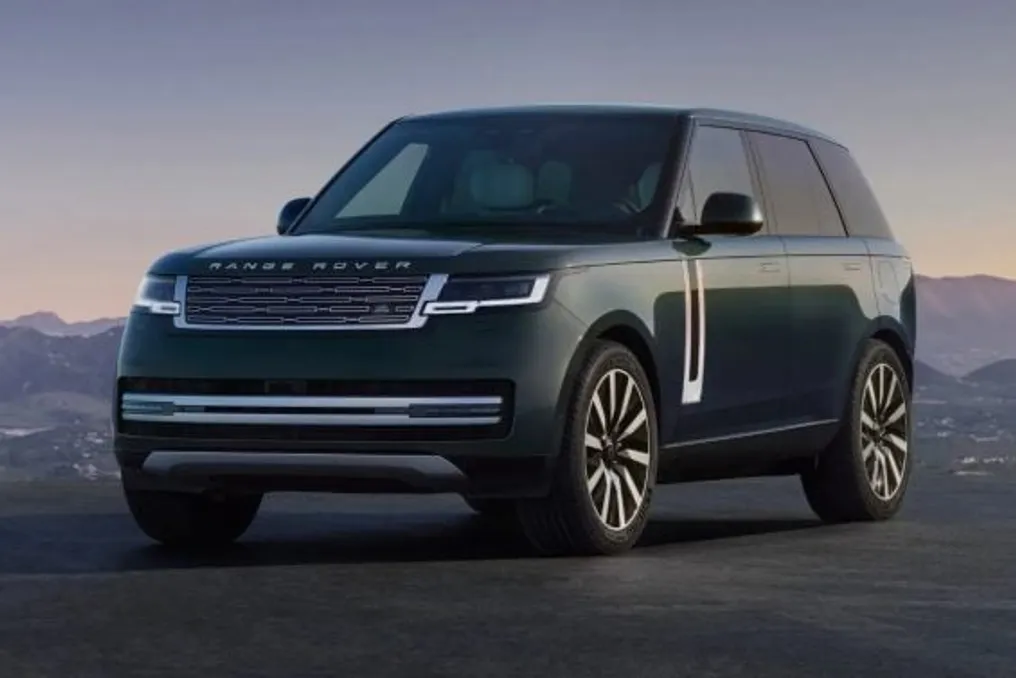
Electric Range Rover debuts while maintaining classic design, surpassing V8 performance and achieving 535 km range
Read more
autopapo.com.br

Electric Range Rover debuts while maintaining classic design, surpassing V8 performance and achieving 535 km range

Range Rover has launched the Range Rover Electric, which represents the first fully electric vehicle in the line in over half a century of its history. This luxury SUV preserves the dimensions and design of the fifth generation, introduced in 2022, without any visual changes to signal the powertrain change. The model delivers 550 hp and 86.7 kgfm, values superior to those obtained by the version equipped with a gasoline V8 engine.

The manufacturer justified the development time by stating that JLR had already been marketing electric vehicles, such as the Jaguar I-Pace, since 2018. However, it was necessary to maintain the high level of sophistication and the inherent off-road capability of a Range Rover.

The two permanent magnet motors, installed on each axle, generate 260 kW each. This configuration allows the SUV, weighing 2.9 tons, to reach 100 km/h in just 4.5 seconds, which is a tenth of a second faster than the V8 version. The all-wheel-drive system is electronically controlled, dispensing with a center differential or locks; it adjusts torque distribution between the axles according to available grip.

In terms of off-road capability, the model can traverse ramps with an inclination of up to 45 degrees and cross flooded areas up to 90 cm deep. The ground clearance is 26.2 cm, slightly lower by about 3 cm than the V8 model due to the rear drive unit.

The power source is a lithium-ion battery with a usable capacity of 118.5 kWh, composed of 344 prismatic cells and operating under an 800-volt architecture. At DC charging stations with up to 350 kW power, charging from 10% to 80% takes approximately 22 minutes. Furthermore, the manufacturer reports that ten minutes of recharging can recover up to 220 kilometers.

In AC mode, the vehicle supports up to 22 kW, completing the charge in about seven hours. The official range, measured by the WLTP cycle, is up to 600 kilometers, although the estimate for practical use is 535 kilometers. Both the battery and the propulsion system have an eight-year or 160,000-kilometer warranty.

The technological package of the Range Rover Electric includes features such as remote diagnostics and remote software updates, while retaining the pneumatic suspension and Terrain Response system present in other versions.

Manufactured in Solihull, UK, along with the combustion and hybrid models, the electric version is already available for orders in specific markets in HSE, Autobiography, and SV configurations, with the first deliveries scheduled for 2027. In the UK, starting prices are £154,070, equivalent to about R$ 1.06 million at the current exchange rate. For the Brazilian market, JLR has not yet released a launch forecast; the national configurator remains restricted to the Autobiography and SV versions, costing R$ 1,773,950 and R$ 2,137,950 respectively, both with internal combustion engines.

Martin Limpert, Global Managing Director of Range Rover, reported that approximately 80,000 people registered to receive information about the new model before its launch. Of this group, 70% were not brand customers, and only 20% owned an electric vehicle. It is important to note that the Electric will not replace the other powertrain options, as plug-in hybrids and the V8 remain in the catalog, with no defined discontinuation date.

Xiaomi Skynomad N90 Max EV achieved 1230 km on a single charge and full tank
Read more
www.aajtak.in

Xiaomi Skynomad N90 Max EV achieved 1230 km on a single charge and full tank

The main problem with electric vehicles is the limited range, while gasoline cars have the problem of fuel consumption. In response to these challenges, the company Range Extender has introduced a vehicle that solves both problems. This car was developed by Xiaomi and presented in the Chinese market.

This refers to the Xiaomi Skynomad N90 Max SUV (Xiaomi Skynomad N90 Max EREV). Recently, the company released a video demonstrating how this SUV covered a distance of 1230 kilometers on one charge and a full tank.

The Skynomad N90 Max Range Extender EV was tested on a route from Shanghai to Beijing with four passengers. During the trip, the car carried an additional load of 50 kilograms, and the climate control system was set to 24 degrees Celsius. The vehicle operated in eco-mode with priority given to electric drive. Tire pressure was set to 2.9 bar, and the energy recovery system efficiency was 80 percent.

The video of this trip was shared by Xu Jieyun, Deputy General Manager of Strategic Marketing. He reported that the average speed of the vehicle on the highway was 104 kilometers per hour. Driving was performed using Xiaomi's hyper-autonomous driving technology. The pure electric range of the Skynomad N90 Max is 323.6 kilometers, which corresponds to 69.7 percent of the power claimed by the company.

The route ran from the 5G Future Center in Shanghai to the Xiaomi production complex in Beijing, covering a total distance of 1230 kilometers. After completing the trip, the vehicle had a remaining range of 54 kilometers, meaning that with a full tank and a full charge, the car can cover a total distance of 1284 kilometers. This figure represents 75.3 percent of the range claimed by the company.

The Skynomad N90 Max is a full-size SUV with a length of 5285 mm and a wheelbase of 3080 mm. It is equipped with a 1.5-liter turbocharged engine that functions as a generator to charge the 76 kWh battery. This vehicle was introduced in China and is currently accepting pre-orders; the official launch is scheduled for September.

Popular