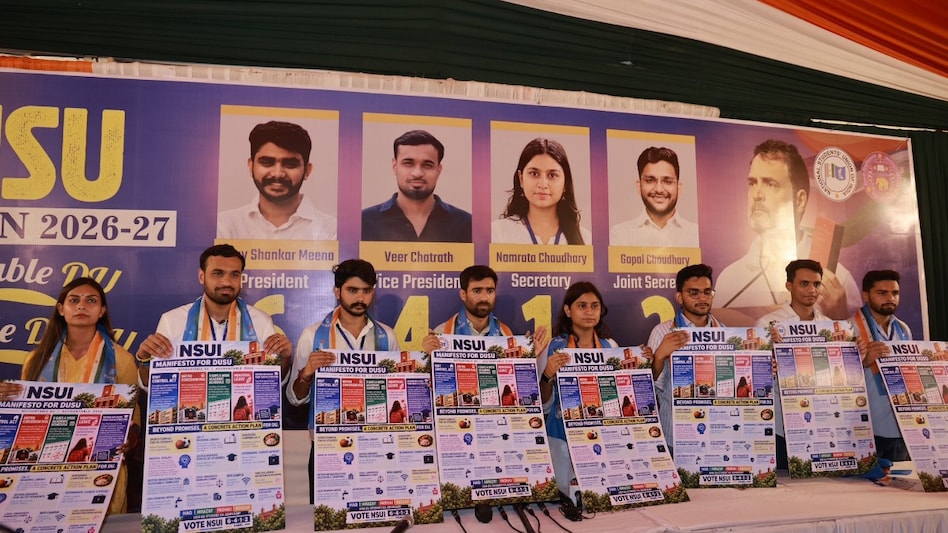
In connection with the upcoming 2026 elections for the Delhi University Student Union (DUSU), the organizations ABVP and NSUI have presented their program documents. Both associations included a number of important issues concerning students in their programs, including housing, campus safety, education, employment, and basic amenities.
However, the priorities of these two organizations differ. ABVP focused on issues of accommodation and safety, while NSUI emphasized accountability, student rights, and affordable education.
ABVP published its program on September 13, presenting it based on four pillars: housing, participation, trust, and results. The main issue was ensuring safe and affordable student housing. The organization proposed building new hostels and ensuring sufficient places for female students. It was also suggested to create a separate department and a hotline for student housing issues.
The ABVP program also contains a point about checking the safety of hostels and PG accommodations, as well as strict adherence to fire safety regulations. Furthermore, it is planned to improve conditions such as cleanliness, access to drinking water, and internet. To ensure the safety of female students, it was proposed to strengthen campus patrolling, install 'pink booths,' and provide enough security personnel, as well as improve lighting on the campus grounds.
The ABVP program also provides for the placement of common rooms and vending machines with sanitary pads for female students. It proposes providing opportunities for consultations with female doctors in medical centers, as well as training female students in self-defense methods.
Regarding education, ABVP demanded timely release of exam results and proposed conducting supplementary exams. It also promised to give students the opportunity to review their graded notebooks, ensure transparency in internal assessment, and issue diplomas promptly.
In the field of employment, ABVP plans to hold job fairs, expand partnerships with industrial and research institutes, and focus on training, internships, and digital skills related to artificial intelligence.
NSUI presented its program on September 14 under the title 'Accountable DU | Accountable DUSU'. Key themes in it were student rights, education, housing, safety, basic amenities, mental health, social justice, and employment.
NSUI insists on providing students with affordable PG and rented apartment accommodation, proposing the creation of a DU portal for verification. It also stated its intention to effectively enforce rent control rules.
On transport issues, NSUI demands that students be provided with an inexpensive metro pass. It proposed introducing a five-day academic week and making changes to the four-year bachelor's degree course. It was also suggested to open libraries 24 hours a day for students.
NSUI promised to provide subsidized 24-hour cafeterias, as well as improve sports facilities. Special attention is paid to ensuring Wi-Fi and clean drinking water on campus. For female students, it was proposed to grant two days off per month. In the field of mental health, strengthening counseling services and implementing a zero-tolerance policy towards sexual harassment are planned.
Furthermore, NSUI announced plans to increase scholarships and financial aid for students from SC and ST castes, as well as expanding opportunities for internships, career counseling, and employment.
Both the ABVP and NSUI programs have many common themes: both associations put student housing, safety, education, basic amenities, and employment at the forefront. However, their emphases differ. ABVP focused on housing, safety, student participation, and examination results, whereas NSUI placed greater importance on accountability, student rights, affordable education, and transport.
NSUI also launched a campaign called 'What happened to your promise?', within which the organization raised issues regarding housing, metro passes, campus amenities, and the right of students to protest and self-expression. This campaign is expected to intensify soon, as candidates from both organizations campaign in colleges to promote their promises.