Uzbekistan plans construction of 11 waste-to-energy plants worth $1.56 billion
Read more
UzDaily
uzdaily.uz

Uzbekistan plans construction of 11 waste-to-energy plants worth $1.56 billion

Uzbekistan intends to implement 11 projects for electricity generation through the incineration of municipal solid waste between 2026 and 2027, with a total cost of $1.558 billion. Companies from China, Singapore, and South Korea are participating in these projects. The plan was presented to President Shavkat Mirziyoyev on September 10.

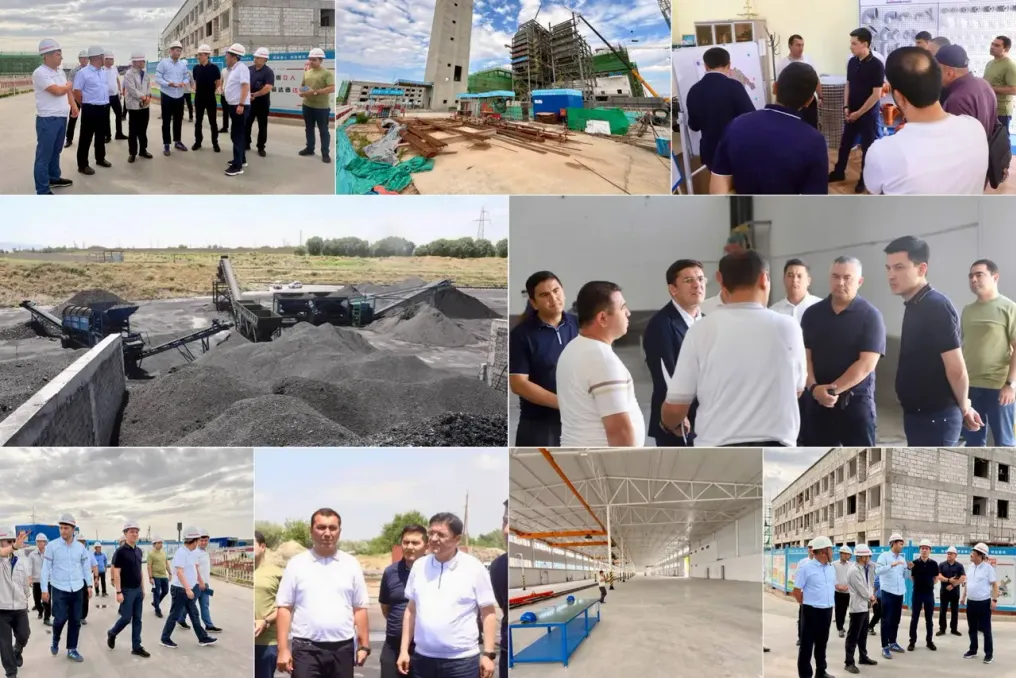
Six projects, totaling $933 million, are being implemented in collaboration with Chinese companies in the regions of Kashkadarya, Samarkand, Tashkent, Andijan, Fergana, and Namangan. As of September 1, $286.8 million has already been invested, and local goods and services procurement amounted to $76.6 million. Approximately 2,000 local workers are employed in the construction.

Two plants in the Kashkadarya and Samarkand regions are planned to start operations in 2026, while the remaining four will begin in 2027. At full capacity, these six plants will be able to process 3.6 million tons of municipal solid waste annually and generate 1.6 billion kWh of electricity.

Five additional investment projects, with a total value of $625 million, have been proposed by companies from Singapore, South Korea, and China. They are planned for the regions of Karakalpakstan, Jizzakh, Surkhandarya, Bukhara, and Khorezm.

According to Sharipbek Hasanov, Director of the Waste Management and Circular Economy Development Agency, five new plants are expected to be commissioned by the end of 2027. They will additionally process 1.9 million tons of waste annually and produce 635 million kWh of electricity. The projects are also expected to create 500 jobs, save 158 million cubic meters of natural gas annually, and reduce greenhouse gas emissions by 316,000 tons.

Hasanov discussed these figures with the Uzbekistan 24 television channel. He noted that the projects will help reduce the amount of waste sent to landfills and lessen the burden on existing dumpsites. In the future, parks and gardens are planned to be created on the former landfill sites.

Hasanov emphasized that the plants will operate using environmentally friendly technologies. Ash generated during incineration will be processed by investors to obtain value-added products, some of which are planned for export.

In October 2024, President Shavkat Mirziyoyev called the projects for recycling household waste and producing energy and products from it 'not just factories, but one of the issues that will determine our future'. In March 2025, he signed a decree on the implementation of projects for electricity generation through the incineration of municipal solid waste.

One such project is the implementation in Samarkand in collaboration with the Chinese company Shanghai SUS Environment. The SUS Environment plant in Samarkand is being built on the territory of the central landfill in the Navruz mahalla of the Khushrav massif. Fifteen hectares have been allocated for this project from the total landfill area of one hundred hectares. The foundation laying took place on July 18, 2025.

Waste-to-energy plants use thermal treatment technology for industrial and municipal waste. The heat generated during combustion is used to produce thermal and electrical energy.

Similar stories

Uzbekistan plans annual savings of $18 million by reducing gas leaks
Read more
uzdaily.uz

Uzbekistan plans annual savings of $18 million by reducing gas leaks

The Ministry of Economy and Finance of the Republic of Uzbekistan announced the introduction of a new financing mechanism that will allow the country to reduce natural gas losses and redirect the saved funds back into the system to support current repairs of the gas infrastructure.

According to the ministry, over a thousand leak sites have been discovered across the country's gas infrastructure. These leaks lead to estimated annual losses of up to 35 million cubic meters of gas, which is enough to supply approximately 12,500 households for an entire year.

To solve this problem, the ministry has concluded a grant agreement worth 10.6 million US dollars with the World Bank. This grant is not intended solely for direct repair financing; it creates a self-sustaining cycle: initially, the funds will be used to detect and eliminate leaks, after which an independent verifier will measure the exact volume of saved gas. The monetary value of this gas will be calculated and transferred to a special account, from which funds will continuously be directed toward further system repairs.

It is projected that by 2029, the project will prevent the loss of approximately 47,500 metric tons of natural gas annually, resulting in financial savings of about $18 million per year. This will allow for the preservation of additional gas reserves for residential consumers and commercial enterprises while creating a stable long-term funding source for the maintenance and modernization of the national gas transmission system.

Measures for implementing the project were approved by Cabinet of Ministers Decree No. 444 dated August 18, 2026, and project operations are scheduled for the period from 2026 to 2028.

Of the total grant of 10.6 million US dollars, 9.6 million dollars is allocated directly to infrastructure loss reduction measures. An additional 500,000 dollars is designated for strengthening institutional capacity in leak monitoring and reporting, and another 500,000 dollars will cover operational costs for the project implementation team and consultations with foreign experts.

An interdepartmental working group has been formed to coordinate the project's execution, including representatives from the Ministry of Economy and Finance, the Ministry of Energy, and the state gas transmission operator Uztransgaz.

Uzbekistan offers India five energy projects worth $3.4 billion
Read more
uzdaily.uz

Uzbekistan offers India five energy projects worth $3.4 billion

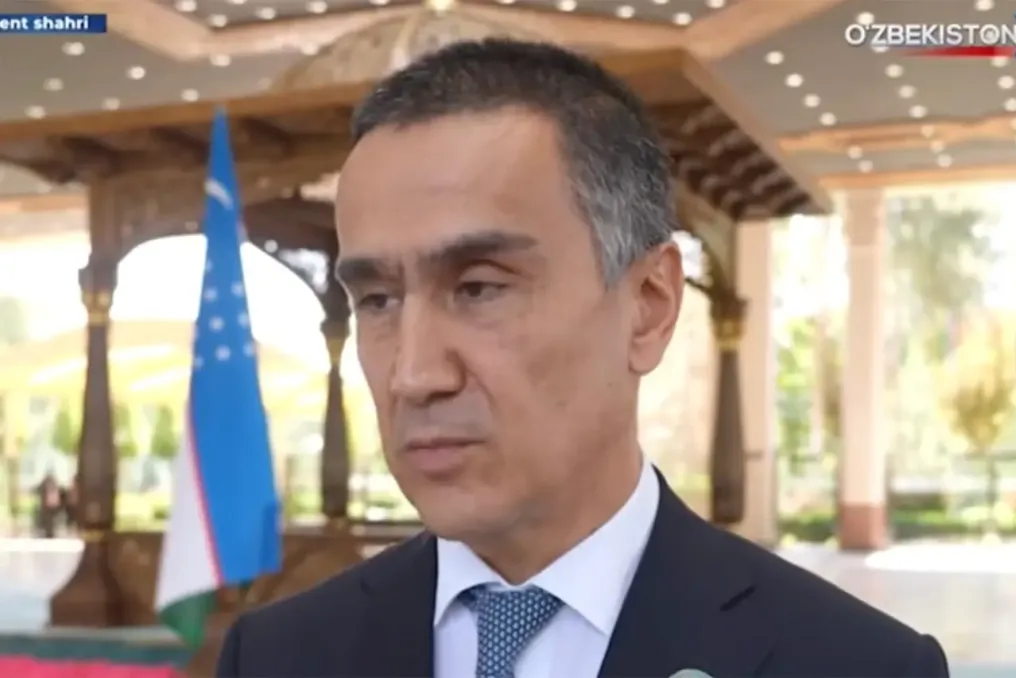
The Minister of Energy of Uzbekistan, Sherzod Khodjayev, told the O’zbekiston 24 channel that Uzbekistan has provided Indian companies with the opportunity to participate as investors in five energy projects totaling $3.4 billion.

Previously, Indian companies had already worked within Uzbekistan's energy projects as contractors, and their combined portfolio exceeds $2 billion. Now, the minister stated that Uzbekistan is considering the option of directly involving these companies in financing new initiatives.

The proposed package includes the construction of high-voltage transmission lines, hydroelectric power plants, and thermal power plants. Necessary surveys are currently being conducted for the implementation of these projects.

Specifically, the construction of pumped-storage hydroelectric power plants is planned in the Karakalpakstan and Tashkent regions. Another project involves building a thermal power plant in the Suniyordon region. Additionally, Uzbekistan proposes creating a high-voltage transmission line network across the Kamchik Pass to connect the Tashkent and Namangan regions. A separate project concerns a high-voltage transmission line between the Navoi and Tashkent regions.

The projects must pay special attention to localization. Khodjayev emphasized that the majority of jobs should be provided to Uzbek citizens. It is proposed that local companies be entrusted with at least 50% of the design work, and the share of products manufactured in Uzbekistan should reach 70%.

The minister noted that Indian companies are being considered due to their experience and technical expertise in managing large-scale energy projects. Khodjayev added: 'They have the necessary experience, whereas our teams for managing such megaprojects are not yet fully formed, so their main assistance will be precisely in these areas.'

Popular