
French company LINAGORA is considering expanding development operations in Uzbekistan
Read more
UzDaily
uzdaily.uz

French company LINAGORA is considering expanding development operations in Uzbekistan

The French technology company LINAGORA is studying the possibility of relocating part of its development operations to Uzbekistan and establishing a regional center in the country. The goal of this center will be to provide software solutions to the markets of Central Asia and CIS countries.

Discussions on this potential took place during a meeting between Uzbek representatives and LINAGORA's founder and president, Alexander Zapolsky. The negotiations were held in Paris on the sidelines of the International Space Summit.

The meeting included the Minister of Digital Technologies Sherzod Shermatov, Bobur Khodjaev, Head of the Department of Financial Technologies, Digitalization, and Artificial Intelligence of the President of Uzbekistan's Administration, as well as a representative from IT Park Uzbekistan. One of the most important issues was the possible establishment of a regional hub in Uzbekistan for the development and distribution of LINAGORA's software.

Representatives from IT Park Uzbekistan presented information on the country's human resources potential, competitive cost structure, and the opportunities within the resident company ecosystem. The parties also discussed support mechanisms available to LINAGORA in Uzbekistan and the benefits of obtaining the status of a resident of IT Park Uzbekistan. This project could contribute to attracting the French technology company and creating new high-tech jobs.

Special attention was paid to the concept of digital sovereignty and the development of open-source solutions. Prospects for using LINAGORA's products, including Twake Workplace and LinShare, in the public and private sectors of Uzbekistan were examined. These solutions allow organizations to maintain greater control over their data and digital infrastructure.

Artificial intelligence was also a subject of discussion. Representatives from IT Park Uzbekistan and LINAGORA reviewed the company's experience within the OpenLLM Europe initiative and the potential for applying open and verifiable AI models, such as LUCIE, to develop Uzbekistan's AI ecosystem.

LINAGORA was founded in 2000 and specializes in developing open-source software and digital sovereignty technologies. The company promotes the idea of a 'third digital path,' based on the principles of openness, ethics, inclusivity, and sustainable development. LINAGORA collaborates with state and private structures and has offices in France, Tunisia, Vietnam, and Canada.

The company's portfolio includes Twake Workplace for corporate communications and collaboration, LinShare for secure file sharing, and OSSA—a technological framework supporting over 500 open-source packages. LINAGORA is also participating in the European initiative OpenLLM Europe to create open and verifiable artificial intelligence models.

Potential cooperation with LINAGORA covers several areas: from transferring part of the operational activities and establishing a regional center in Uzbekistan to implementing open-source solutions and developing open AI technologies.

Similar stories

Uzbekistan and Armenia plan to strengthen industrial and transport cooperation
Read more
podrobno.uz

Uzbekistan and Armenia plan to strengthen industrial and transport cooperation

Uzbekistan and Armenia plan to deepen their interaction, aiming to develop new initiatives in the field of industrial partnership, increase trade and economic and investment ties, and strengthen transport connectivity between Central Asia and the South Caucasus.

Discussions on these areas took place on September 11 in the form of a telephone conversation between the President of Uzbekistan Shavkat Mirziyoyev and the Prime Minister of Armenia Nikol Pashinyan. During the conversation, the sides detailedly reviewed the current aspects of the development of their bilateral relations.

Significant attention was paid to developing new joint production projects. Furthermore, the critical importance of improving logistics systems and creating transport routes connecting the regions of Central Asia and the South Caucasus was emphasized.

Shavkat Mirziyoyev also expressed high appreciation for the measures being taken to accelerate the signing of a peace treaty between Armenia and Azerbaijan. In the opinion of the President of Uzbekistan, such a document will serve as a reliable basis for ensuring stability and sustainable growth in the region.

In addition, the participants agreed on a plan for future meetings, both bilateral and multilateral, including events within the framework of the UN and CIS.

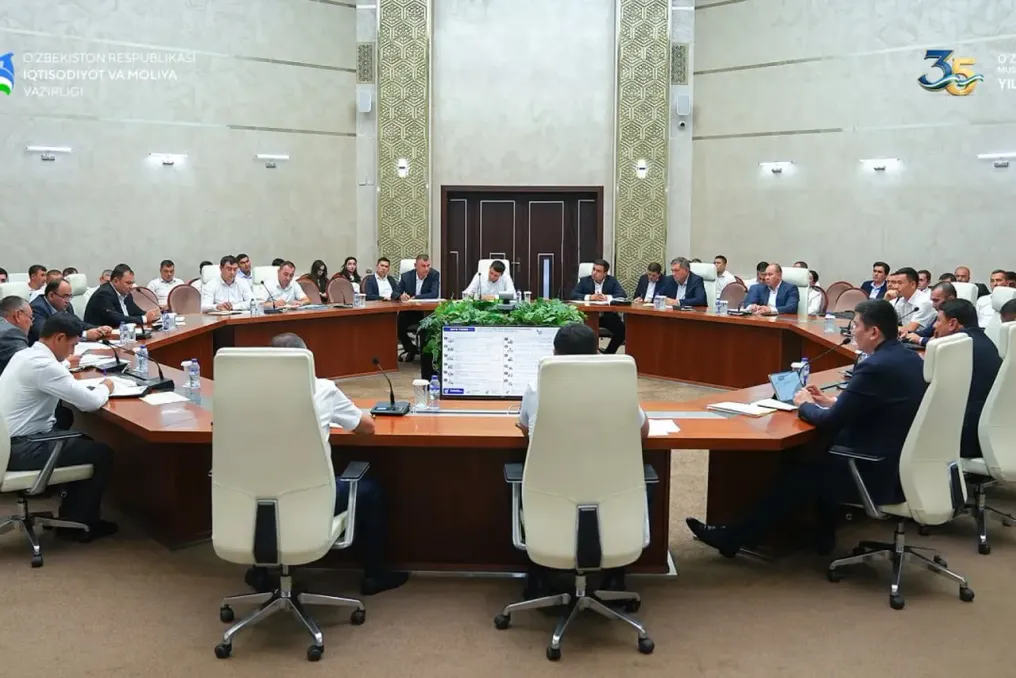
Uzbekistan held seminar on regional industry development
Read more
uzdaily.uz

Uzbekistan held seminar on regional industry development

In Tashkent, Uzbekistan, a seminar dedicated to the tasks of developing regional industry was held on September 3. The main goal of the event was to more effectively utilize existing potential and improve the work of regional industrial headquarters.

The First Deputy Minister of Economy and Finance, Ilhom Norkulov, took part in the seminar. Participants analyzed the current system of industrial development in the regions, as well as reviewed current problems and ways to solve them.

Special attention was paid to increasing the production and export potential of enterprises, implementing new projects, and determining growth directions in various regions. Topics discussed included developing industrial development plans based on data.

Participants also discussed the need for regular monitoring of enterprises, involving small companies in cooperation with large industrial giants, deep processing of local raw materials, and expanding value chain creation.

The seminar also considered proposals to increase the efficiency of using industrial zones and small industrial centers. Mechanisms for providing targeted support to exporting companies and opportunities to attract international brands to the regions were discussed.

Significant attention was given to the application of artificial intelligence technologies for forecasting and analyzing industrial development processes. Following the event, priority tasks were defined for the full realization of the regions' industrial potential.

These tasks include creating new jobs, increasing export volumes, expanding supply geography, stimulating the production of import-substituting goods, and enhancing the competitiveness of regional industry.

Popular