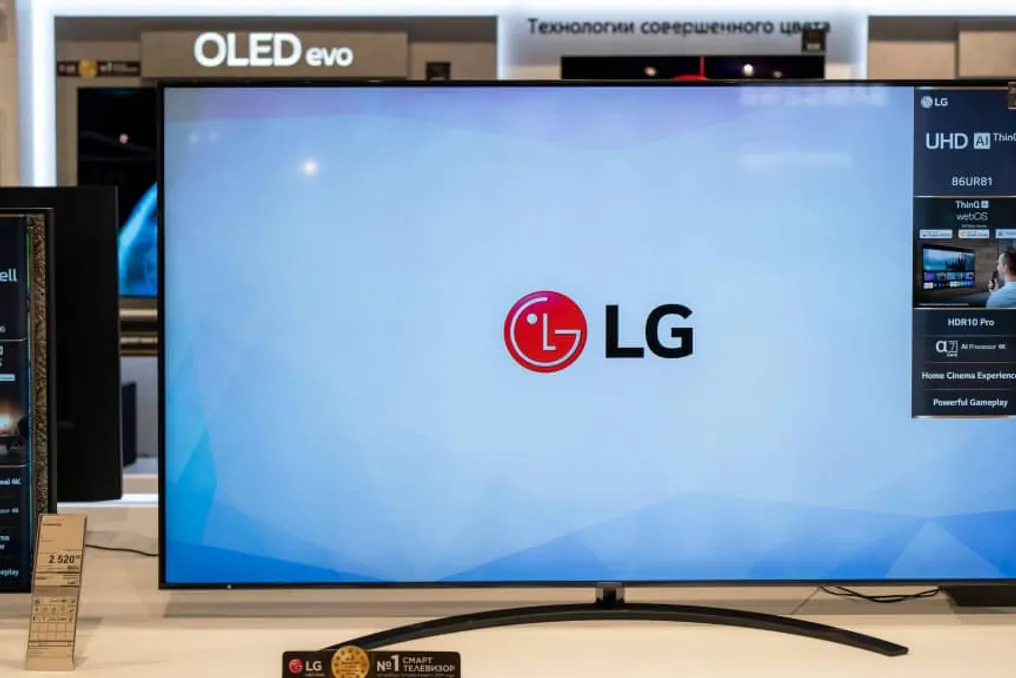
Recent tests raised questions about the ability of LG Smart TVs to monitor and collect user data, even when the devices were in standby mode. This reaction led the company to issue an official statement.
In this statement, LG emphasized that its Smart TVs 'do not continuously record or transmit conversations.' The South Korean company suggested that certain media reports may have created misunderstandings about how these devices function.
Expert analysis on privacy
The case was commented on by Leandro Alvarenga, a consultant specializing in security and privacy, who detailed the crucial points to understand about the topic, including how Brazilian legislation protects consumers regarding electronic devices with listening capabilities.
An investigation conducted by the channels Gamers Nexus and Level1Techs, along with security experts, hypothesized that LG OLED Smart TVs could perform two actions: 1) search for devices on the local network, such as watches and cell phones; and 2) record audio even in standby mode, saving the files for later transmission to servers once the internet connection was reestablished.
In response, the manufacturer declared that the microphone is only activated when the voice button on the remote control is pressed or when the command word is spoken. Furthermore, LG stated that the checking of this activation word occurs internally within the TV itself. The company added that if no command is identified, the sound is discarded without being converted into text, stored, or transmitted over the internet.
The company also specified that each command session has a maximum limit of 18 seconds, a period similar to that of the Live Recap feature present in recent Apple Watch models. Another highlighted aspect is Automatic Content Recognition (ACR), used to identify the program displayed on the screen, a function that, according to LG, is disabled by default, and whose audio data is never passed to the advertising division.
Alvarenga pointed out the need to differentiate aspects, warning that the problem does not lie only in the ability to listen, but rather in the moment the conversation is saved to a cloud and sent externally. He reinforced that although it is common to ask smart devices to perform tasks (such as turning on lights or playing music), the device needs to be listening to fulfill the command, which he considers a legal operation.
The expert stresses that abuse only occurs if the television sends this data outside and it is analyzed. LG guarantees that such sending does not occur, processing the audio locally and not forwarding domestic conversations to the cloud.
The importance of consent
Another fundamental point addressed was consent. Alvarenga warned that accepting terms of use, often without reading them, implies agreeing to various conditions. However, he stressed that the simple act of consenting does not make this consent unlimited, allowing the company to act as it wishes. Consent must be clear, informed, and aligned with the established purpose; otherwise, it can be annulled and considered abusive, subjecting the company to penalties.
The General Data Protection Law (LGPD) offers protection, but requires vigilance. In situations involving listening devices, such as Smart TVs and smartwatches, the expert questioned who granted consent for audio capture. He explained that consent cannot be extended to third parties; if the device is operating offline, only the user who consented accesses the information, but sharing with third parties or manufacturers changes the scenario.