Thanks to technological progress and internet access, observing the sky has ceased to be a privilege restricted to those with large observatories and has become a shared, real-time experience. It was with this goal that the 'Olhar Espacial' program, held last Friday (the 11th), gathered specialists to discuss the relevance of scientific outreach, present live space images, and analyze the innovations redefining contemporary astronomy.
The edition of the program was dedicated to celebrating the 'Astronomia ao Vivo' project, an initiative considered pioneering and widely recognized for bringing the public closer to the mysteries of the Universe by broadcasting the sky in real time and promoting the democratization of scientific knowledge in the country.
Participants and Topics Covered
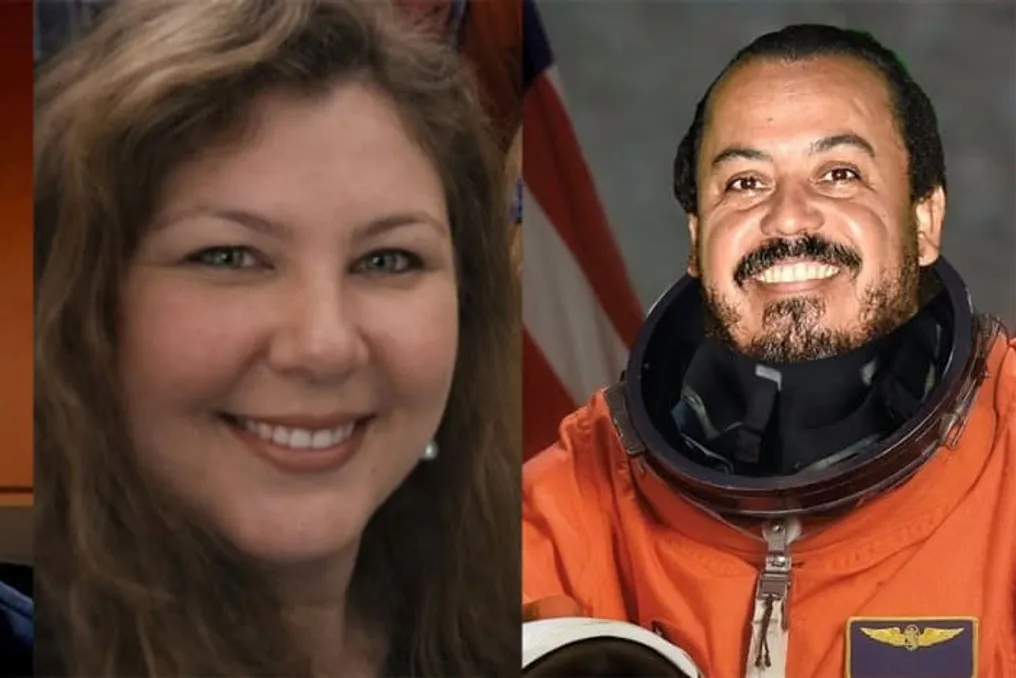
Under the guidance of Marcelo Zurita, who holds positions as president of the Paraíba Astronomy Association (APA), technical director of the Brazilian Meteor Observation Network (Bramon), and coordinator of Asteroid Day Brazil, the program featured the participation of three prominent figures in the field of scientific outreach.
During the live broadcast, in addition to revisiting the project's trajectory, the guests discussed relevant issues in the global scientific community. These included the recent registration of a new temporary 'mini-moon' of Earth, the effect of Artificial Intelligence on the spread of false astronomical information, and expectations regarding the next generation of giant telescopes.
Origins and Mission of the Project
The dynamic of the broadcast revived the interactive format that inspired a generation of space enthusiasts in Brazil. Recalling the background, Cris related that the conception of 'Astronomia ao Vivo' occurred almost by chance on Christmas night in 2012, amidst panic generated by conspiracy theories about the end of the world, according to the Mayan calendar. While she was trying to position a manual telescope in the window to observe a transit of Jupiter by the Moon, she received a test call from Domingues, which marked the group's first public test.
Created under the principle of 'sowing astronomy,' the project aimed to bring the telescope to the people, demystify complex concepts, and encourage the use of public spaces. In conversation, Zurita emphasized the project's legacy, mentioning that the initiative served as a launchpad for important names in science on the internet. He cited Sérgio Sacani, known as 'Serjão dos Foguetes,' as someone who conducted the first live broadcast on astronomy on 'Astronomia ao Vivo' and is now the biggest astronomy communicator in Brazil.
Practical Demonstrations and Celestial Phenomena
To illustrate the functioning of these live broadcasts, Domingues directed his private observatory's telescope toward the Lagoon Nebula and transmitted the image in real time to the viewers. He recalled that the purpose was always to combine impressive visuals with accessible knowledge. 'One of the things we did on Astronomia ao Vivo was to show the sky to people, to show phenomena that were happening, such as eclipses and planetary conjunctions, and to bring experts to talk and give mini-lectures.'
One of the highlights of the program was the analysis of a new and recent image of an asteroid that was momentarily captured by our planet's gravitational pull. This body, popularly called a 'mini-moon,' acts like a near-satellite, following Earth in its solar orbit for a few months before moving away again.
Zurita detailed the characteristics of this celestial body, informing that new image analyses allowed for recalculating the actual size of the space rock. 'It is an asteroid about 28 meters long that attracts attention because it is temporarily behaving as if it were orbiting Earth. It is a smaller and brighter object than previously estimated, and these images help us better understand its trajectory.'
Subsequently, the audience watched another live capture made by Domingues: the Trifid Nebula (M20), a famous structure in the constellation Sagittarius, divided into three by dust lanes. The specialist took the opportunity to explain the process of astrophotography and the work involved in obtaining colored images of space. 'To get a good photo, hours of exposure and hundreds of photographs are needed for processing and noise reduction. It takes a lot of time to get a good result.'
Challenges of Disinformation and the Future of Observation
The evolution of media and its impact on public perception of the Universe were also discussed during the broadcast. Participants pointed out that while in recent decades the challenge for communicators was refuting myths like Flat Earth or frauds about the Moon landing, today Artificial Intelligence presents an even greater obstacle: the mass production of highly realistic fake images.
Zeca Astrônomo expressed concern about the speed at which fabricated content goes viral on social media, often overshadowing true knowledge. For him, science must deal with the fact that fiction tends to be more appealing to the lay public than factual reality. 'The problem today with AI is that lies are usually much catchier than the truth. A lie is a fantastic and wonderful story, while the truth sometimes requires physics knowledge and ends up being less palatable for the public.'
Complementing the discussion, Domingues underlined the responsibility of scientists and communicators to maintain balance amid the wave of online disinformation. 'These absurdities become popular easily because often there is no one providing a counterpoint on the internet. Our job has always been precisely to bring experts to clarify these issues within our capabilities.'
In closing the edition, the participants projected the future of space observation with the emergence of new-generation instruments, such as the Nancy Grace Roman Space Telescope, scheduled for launch on August 30. This new equipment is expected to bring significant advances in the search for exoplanets—worlds outside our Solar System—and in understanding phenomena such as dark matter and energy.
Cris expressed the astronomical community's enthusiasm for the progress promised by the observatory compared to current resources, reinforcing the mission's impact by transcending mere artistic representations in the exploration of new worlds. She compared: 'I think it will be something breathtaking. If we already have these beautiful Hubble images, imagine with the expanded field of view of Roman.'
Zurita detailed the innovative role of the telescope's internal coronagraph, a feature capable of blocking the intense glare of stars to reveal surrounding exoplanets. The presenter contextualized the reach of these new lenses, recalling the mathematical relationship between the size of celestial mirrors and their effectiveness in capturing light. 'As we increase the diameter of the telescope, the light-collecting capacity increases by the square. An instrument twice as large can capture four times more light, allowing us to see extremely distant and faint objects in the Universe.'
For Zeca, the advancement of these new tools goes beyond a mere technical achievement; it touches upon the fundamental human desire to know if we are alone in the cosmos. He argued that combining larger mirrors with the analysis of different light frequencies—from ultraviolet to infrared and radio waves—functions as a true 'tomography' of the Universe, capable of revealing the exact composition of distant stars, atmospheres, and worlds.
He concluded: 'When we think we have seen everything, a new instrument comes along and shows much more. Strictly speaking, why look for exoplanets? First, because science wants to discover how the Universe works. But, for the lay public, it is wanting to know: are we alone or not? Is there more life out there? This can only be answered with all this spectral, atmospheric, and distance analysis.'