The composer Johann Sebastian Bach had twenty children from two marriages, half of whom died before reaching five years of age, which was not uncommon, given that the infant mortality rate in Germany in the 18th century approached 50%. Of the ten children who survived, four followed their father's musical career, all being boys, as girls lacked professional opportunities.
Johann Christian Bach, the youngest son, moved to London at the age of 26 in 1762 and enjoyed a privileged life. He taught the family of King George III, interacted with the young Mozart, and was an innovator in the music industry in at least two aspects: he organized some of the first ticketed public performances—something unprecedented, as concerts previously took place only at court—and initiated the first legal copyright case in music history.
The concept of copyright was novel at that time. The only intellectual property legislation existing in Europe had been enacted in England in 1710, guaranteeing fourteen years of protection, extendable by another fourteen years if the author was alive. However, this law did not cover sheet music, which was the sole means of musical distribution, as sound recordings did not yet exist.
Christian Bach sued two publishers who were publishing his works without permission, arguing that the 1710 law should also apply to compositions, not just books or plays. The judicial system accepted this argument, giving rise to a market that today reaches a historic level.
Between 2019 and 2025, record labels and large Wall Street corporations acquired copyrights for a minimum value of $23.1 billion. This amount is small compared to the values moved by these companies in other segments; for example, BlackRock, the largest of the financial giants, manages $7.7 trillion in company stocks alone, a portfolio that includes 7.9% of Apple and 7.6% of Microsoft.
For comparison, the $600 million paid by BlackRock in the last month of June for the catalog of 24,000 songs from the Canadian label Anthem—which contains hits by Britney Spears, Justin Timberlake, and Rush—represents only 0.008% of this total (although the purchase was made by Influence Media Partners, a partner of Black Rock).
Despite the enormous disparity in values, the underlying logic remains the same. A stock grants the right to a share of a company's profit, while an artist's rights provide royalties every time the music is played on Spotify, in a karaoke, or in a film. Just as healthy companies generate more profits and dividends, popular artists generate more royalties.
One notable aspect of royalties is their low sensitivity to geopolitics. Attacks by Israel and the United States on Iran caused a major impact on oil, natural gas, and fertilizer markets, but this changed little or nothing about Michael Jackson's popularity.
Investors seek diversification to protect themselves, and music constitutes a market with its own cycles, capable of thriving while others decline or vice versa. The World Intellectual Property Organization (WIPO) estimates that for every 1% change in the stock market, the return on music rights varies by only 0.07%, an unrealistic rate for other sectors.
David Bowie anticipated this trend in 1997 by launching Bowie Bonds, which were fixed-income securities where the investor lent money to the artist and received interest at the end of the term, paid with royalties. However, this was more of a passing event than a serious fund. Wall Street's interest in catalogs began to grow significantly starting in the 2010s. Between 2015 and 2016, annual investment in copyrights jumped from $100 million to $900 million, reaching billions today.
What was the decisive factor for this late change? The arrival of streaming. In the era of physical media, listeners paid only once for an item that allowed unlimited plays. In the 2000s, during the peak of piracy, they paid nothing. Currently, however, every time a track is played, the artist receives between $0.003 and $0.005 from Spotify. Calculating quickly, Taylor Swift, with an average of 47 million daily streams, earns at least $141,000 per day.
The older the artist, the more stable their fan base and, consequently, their remuneration via streaming will be. This has made it more economical and prudent to earn in music by investing in old catalogs than to risk it with new composers.
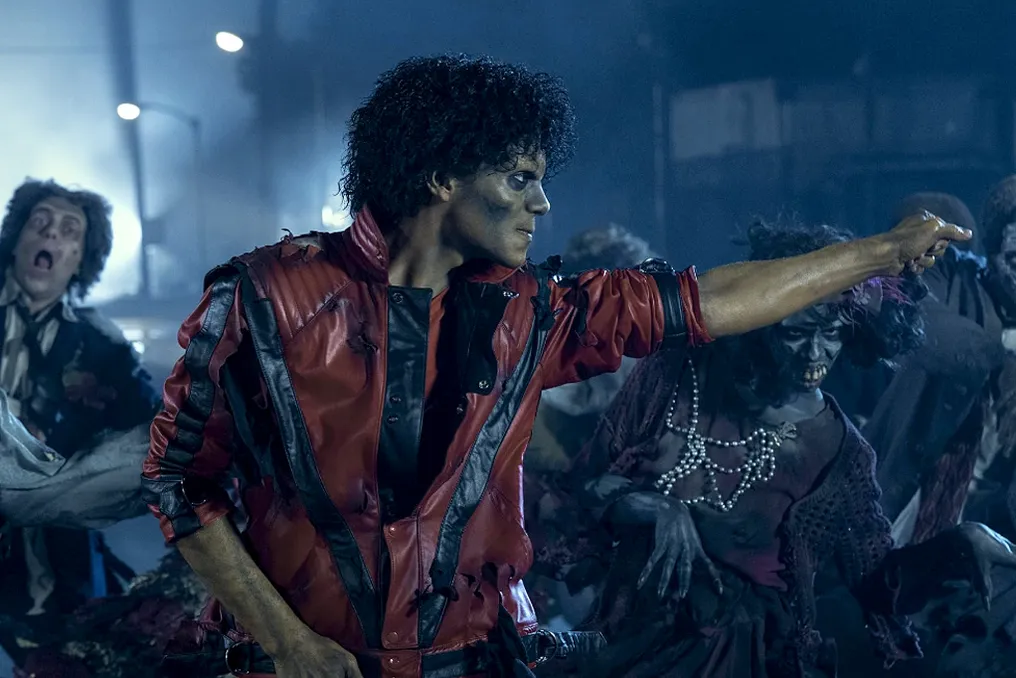
The proliferation of nostalgic biographical music films—most of which have questionable or nonexistent artistic merit—is an efficient way to capture royalties from already acquired rights. Often, the rights holder (family members and managers who manage the image of the deceased artist) cedes the rights in exchange for participation in production and profits, as happened with Michael. This was successful: four of the ten most streamed songs on Spotify in April were by Michael Jackson.
Universal paid $300 million for the rights to over 600 Bob Dylan compositions in 2020, and Sony spent $550 million for the work of Bruce Springsteen in 2021. Both were later adapted into films, which is no coincidence. Kiss sold its catalog, brand, and intellectual property to the Swedish company Pophouse for over $300 million in 2024. Furthermore, Hipgnosis Songs Fund, created by Merck Mercuriadis, former manager of Elton John, invested about $2.2 billion in acquiring rights to Justin Bieber, Shakira, Neil Young, and the band Red Hot Chili Peppers.
Critic Ted Gioia, a former Stanford professor, stated: 'If you are a musician, there has never been a better time to be dead.' He observes that in the past, Hollywood made millions from films featuring entirely new music, and families appreciated unknown songs in works like The Wizard of Oz or The Lion King.
Every nostalgic song today has been a release at some point. If the industry does not invest in emerging artists now, it will not have nostalgic successes to exploit in thirty or forty years. Wall Street reaps the rewards of past geniuses without cultivating new talent in the present. In a pop culture dominated by nostalgia, the most courageous act, ironically, is to innovate rather than rely exclusively on established assets.