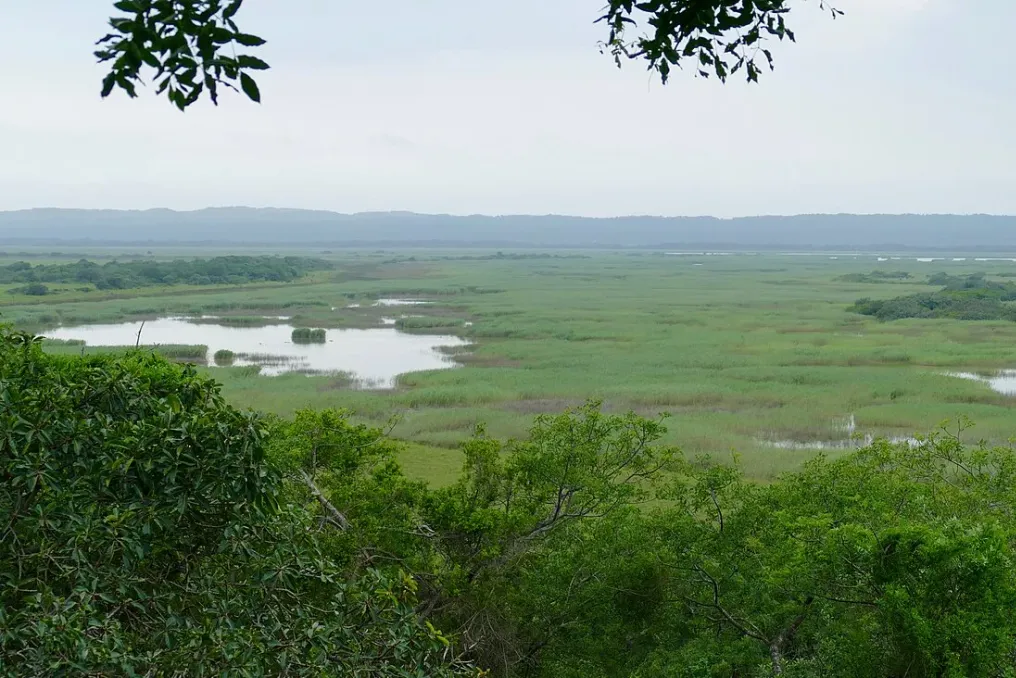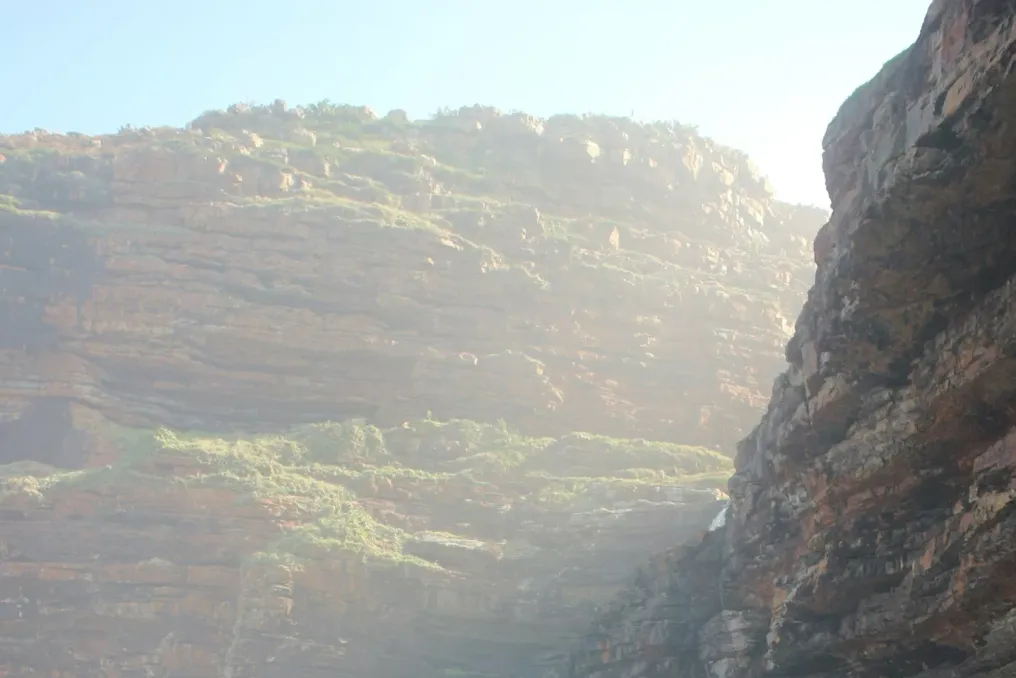
On the wild coast of South Africa, rivers do not always reach the ocean via a gentle path. In the Waterfall Bluff area, located in the Eastern Cape, one of the streams plunges over a dramatic coastal cliff, falling almost directly into the Indian Ocean.
This landscape is a signature feature of the Wild Coast: it features green grasslands, sheer cliffs, secluded beaches, and rivers cutting through the harsh landscape of Pondoland before merging with the sea. Waterfall Bluff, situated near Mbotyi and south of the Msikaba River, represents one of the most unusual natural sights in this region.
Waterfall Bluff lies along the Wild Coast in the Eastern Cape, between Port St Johns and the Mkambathi Reserve. This area is part of the rugged coastline of Pondoland, known for its steep cliffs, river gorges, and largely untouched coastal landscape.
The cliff is related to a geological feature—the Egosa fault—which forms the dramatic cliffs along this part of the coast. At Waterfall Bluff, waterfalls descend from the high coastal landscape to the ocean; according to the Pondoland Marine Reserve, the highest waterfalls reach nearly 100 meters.
The result of this phenomenon is a unique mix of fresh and saltwater: instead of flowing into a typical river mouth or estuary, the water falls off the cliffs directly into the waves below.
The waterfall at Waterfall Bluff is fed by the Mlambokhulu River, whose name roughly translates to 'great river.' This river reaches the edge of the Wild Coast cliffs before making its impressive descent to the sea.
The height of the surrounding cliffs adds special appeal to Waterfall Bluff. The Pondoland Marine Reserve describes the waterfalls here as plunging almost 100 meters directly into the ocean, making it a rare geological and coastal feature.
It should be noted that this waterfall differs from the more famous Horseshoe Falls and Mkambathi Falls, located within the nearby Mkambathi Reserve. Mkambathi itself has its own series of waterfalls, including one where the river eventually enters the ocean, whereas Waterfall Bluff belongs to the dramatic coastal waterfall landscape further along the Wild Coast.
Understanding the waterfall becomes clearer when considering the surrounding landscape. The northern parts of the Wild Coast are characterized by rivers cutting through hard coastal terrain, where they form steep cliffs upon meeting the ocean. This results in a coastline composed of deep gorges, rocky headlands, waterfalls, and small beaches hidden between the cliffs.
The nearby Mkambathi Reserve protects 7,720 hectares of this landscape, including grasslands, local forests, wetlands, river gorges, and about a 10-kilometer stretch of rugged coast. This area is also part of the Pondoland Centre of Endemism—a botanically significant region with plants found nowhere else.
The coastal reserve supports diverse wildlife and birds, and African vultures can be seen around the Msikaba gorge. However, Waterfall Bluff cannot be reached simply by parking next to a sign and walking a few meters to a viewpoint. Access requires a hike through the Wild Coast landscape, which makes the experience special.
The hiking route to Waterfall Bluff is listed as a one-way trail approximately 15.8 km long with an elevation gain of about 311 m. It is considered moderately difficult and takes about four hours, although the time may vary depending on weather conditions and the person's fitness level.
Longer routes along the Wild Coast also pass through this area. The wider Wild Coast Hiking Trail stretches for hundreds of kilometers, but tourists can cover shorter sections instead of attempting the entire journey.
Thus, for visitors staying in Mkambathi or Mbotyi, the waterfall can be part of a longer adventure on the Wild Coast, rather than just a quick stop for sightseeing.
Waterfall Bluff is surrounded by some of the most spectacular views of the Wild Coast. The nearby Mkambathi Reserve is home to a series of waterfalls, including Horseshoe Falls, Strandloper Falls, and Mkambathi Falls, as well as forested river gorges and coastal grasslands. The reserve's coastline is also near the Cathedral Stone—a characteristic pyramidal formation rising above the ocean. The overall area offers opportunities for hiking, fishing, canoeing, and wildlife viewing, although much of the landscape remains rugged and remote.
This is part of South Africa where the journey itself is part of the attraction. There are no polished promenades or bustling viewpoints. Instead, you walk through grasslands and coastal wildlife, after which the landscape suddenly opens up before you—cliffs, ocean, and falling water.
The Wild Coast has a warm, humid coastal climate, with most rainfall in Mkambathi occurring from September to February. March is usually the wettest month, and June is the driest. Strong coastal winds can also affect conditions. When hiking, always check local conditions before setting out, especially after heavy rain. River crossings, slippery ground, and exposed coastal areas can become more challenging in wet or windy weather.
Waterfall Bluff is best experienced as a wilderness experience, rather than a traditional tourist attraction. Sufficient time must be allocated to complete the route, enjoy the surrounding landscape, and, most importantly, account for possible changes in conditions.