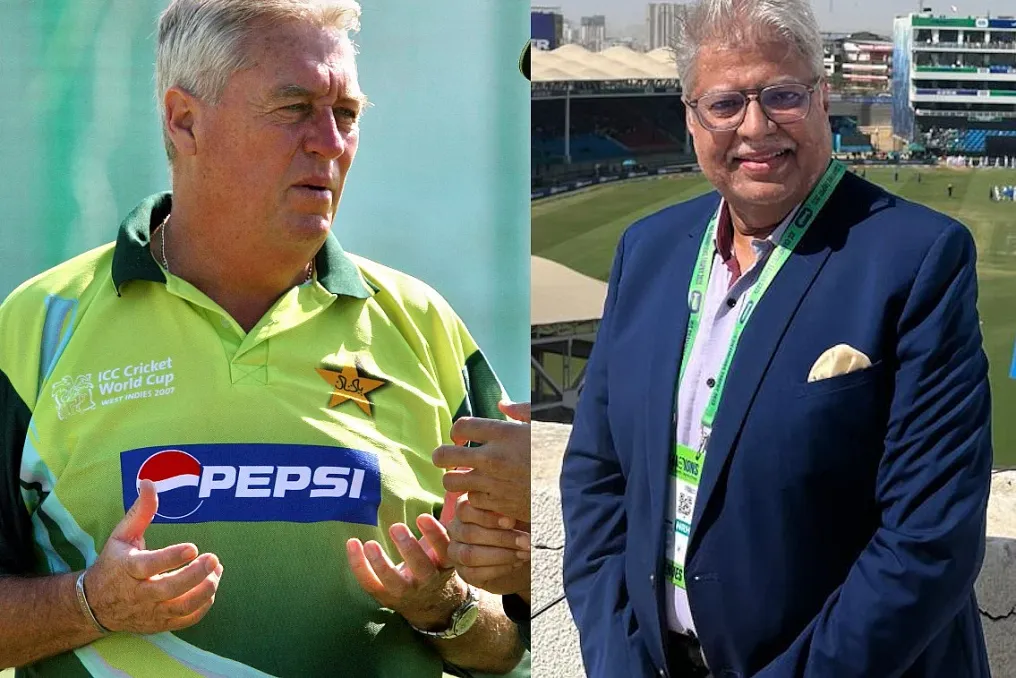
Journalist who covered Woolmer's death is not surprised by Pakistan cricket's decline
Read more
Khaleej Times
www.khaleejtimes.com

Journalist who covered Woolmer's death is not surprised by Pakistan cricket's decline

Veteran Pakistani cricket journalist Abdul Majeed Bhatti, whose life is closely tied to the high and low moments of his country's cricket journey, shows no surprise regarding the current slump in Pakistani cricket.

Bhatti, aged 63, covered the news of the passing of then-Pakistan head coach Bob Woolmer during the ICC ODI World Cup 2007. During that same period, he himself became a subject of suspicion in the eyes of global media. Throughout his forty-year career as a sports writer and commentator, Bhatti witnessed clashes of ego between two of Pakistan's greatest cricket icons—Imran Khan and Javed Miandad, as well as the rivalry between legendary players Wasim Akram and Waqar Younis.

Despite personal disagreements, all of them contributed to Pakistan becoming one of the most exciting teams to watch in the 1980s and 1990s. However, in recent years, Pakistan has rarely shown impressive results. Once a factory of world-class talent, Pakistan now struggles to assemble a squad of 11 worthy players for Test match competition.

In baseball cricket, the team is still capable of repelling any strong side, but in red-ball matches, the lack of squad depth has been fully exposed. For Bhatti, the recent defeat against England, where seven players were sent home and the head and bowling coaches were sacked mid-series due to poor performance, seemed inevitable.

He questions: why is Pakistan at the bottom of the Test cricket table, having lost 11 out of 14 matches abroad since 2023 and heavily relying on players who score points at home? And why can a country that produced such great cricketers as Imran Khan, Hanif Mohammad, Fazal Mahmood, Wasim Akram, Javed Miandad, Zaheer Abbas, Abdul Qadir, Insamul Haque, Waqar Younis, Muhammad Yusuf, Yunis Khan, Saqlain Mushtaq, Saeed Anwar, and Shoaib Akhtar not create a system for nurturing young talent?

Bhatti asserts that even in its golden days, Pakistan never had a solid player support system, yet they somehow achieved success. He told Khaleej Times: 'Look at the talents Pakistan had back then. They were essentially street cricketers. Imran Khan found people and brought them into the system. Javed Miandad saw Wasim Akram, and he was accepted.'

However, these precious finds from the streets were then polished in club cricket. 'They (Wasim and Waqar) had the advantage of playing in English club cricket. When Wasim Akram first appeared, he might not have even had proper spikes. But then he got a long-term contract in English club cricket. The same happened with Waqar Younis. Waqar got a contract with Glamorgan, and if I remember correctly, took about 100 wickets in one season,' he noted.

'This is a big difference I see between that era and today's cricket. In those days, players played four-day cricket, and that is where talent was honed. Today, this polishing process is absent because everything is being rushed. You select players for Test cricket based on red-ball performances, but they should actually play more red-ball cricket initially. Take Babar Azam. I don't know the exact statistics, but when was the last time he played in a club internal match? Maybe recently, but generally, they play too little. They save energy for T20 franchise leagues.'
Similar stories

Pakistan Coach Mike Hesson Denies Rumors of Salman Ali Agha's Refusal to Meet King Charles III
Read more
www.aajtak.in

Pakistan Coach Mike Hesson Denies Rumors of Salman Ali Agha's Refusal to Meet King Charles III

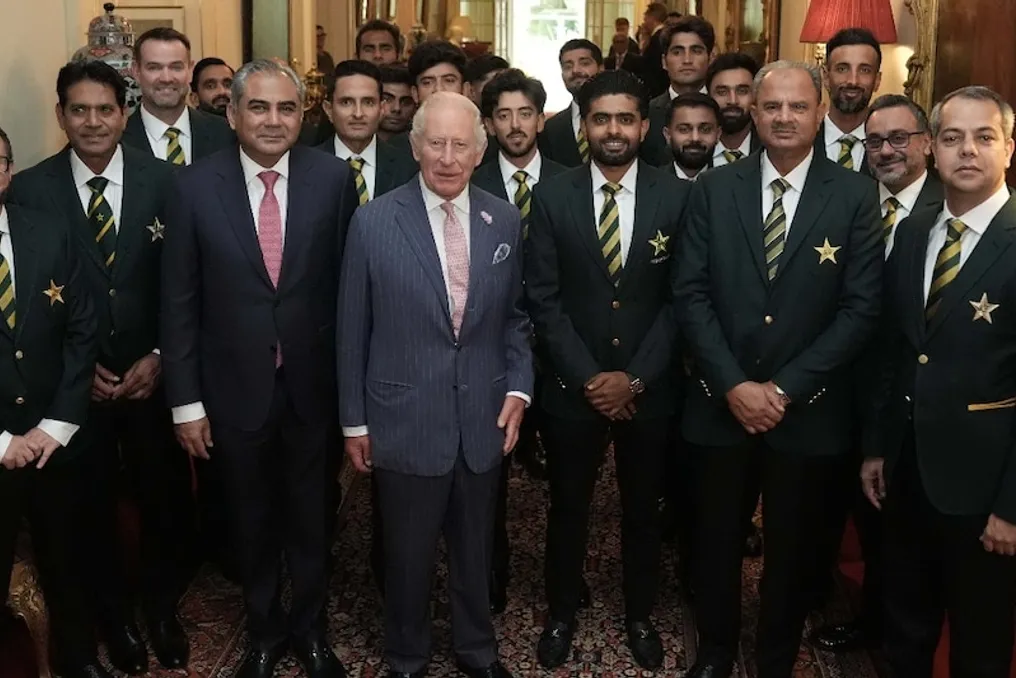
During a series of test matches between Pakistan and England, a dispute arose that has now escalated to the issue of the team players meeting with King Charles III. Mike Hesson, the interim head coach of the Pakistan Red-Ball squad, categorically rejected reports that player Salman Ali Agha refused this meeting. Hesson called the news 'unacceptable journalism.'

According to Hesson, Salman had been informed in advance that he would not be participating in the event at Buckingham Palace. It is important to note that this decision was made before Hesson arrived in England.

On Friday, clarifying the situation, Hesson stated that due to a lack of news in Pakistani cricket, people are inventing stories themselves. He specified that Salman Ali Agha, Mohammad Rizwan, and Imam-ul-Haq were released from the England team long before Hesson took over the management. All three players were notified that they would not participate in the event at Buckingham Palace, so the claim about Salman's refusal to meet King Charles has no basis.

Reacting strongly to this report, Hesson stated that someone simply fabricated a story.

Hesson also emphasized that there were no disagreements with the rest of the team members. The players who remained in the squad were initially included in the guest list for King Charles's event. Hesson himself was also on this list, as he was included as the white-ball head coach.

Thus, there were no sudden changes in the squad at the last minute. Hesson noted that the entire situation was quite simple, but someone combined various details into a bigger story.

This conflict arose during a difficult period for the Pakistani cricket team in England. In the three-match series, Pakistan lost the first two matches. In the first match, England won by a landslide, and in the second, Pakistan lost by a margin of 194 runs. Following this, the Pakistan Cricket Board (PCB) made a major decision to recall seven players from the Test squad. Among these seven players were Salman Ali Agha, Mohammad Rizwan, and Imam-ul-Haq. Concurrently, Head Coach Sarfaraz Ahmed was dismissed.

Hesson was not involved in the decision to recall the seven players. Hesson previously held the position of Pakistan's white-ball head coach. When he was tasked with leading the Red-Ball team for the third and final Test against England, Salman, Rizwan, and Imam had already been released from the team and were heading back to Pakistan. Hesson made it clear that he did not know how or why the decision to release these three players was made.

Hesson recounted that he was previously at the white-ball camp in Lahore, and then returned from Japan, where the Asian Games were held. After that, he was offered the role of leading the Pakistan national Test team. After taking charge of the team, he made some changes to the squad according to his needs. His main task now is to balance the team for the third Test against England, which will take place in Birmingham.

Popular