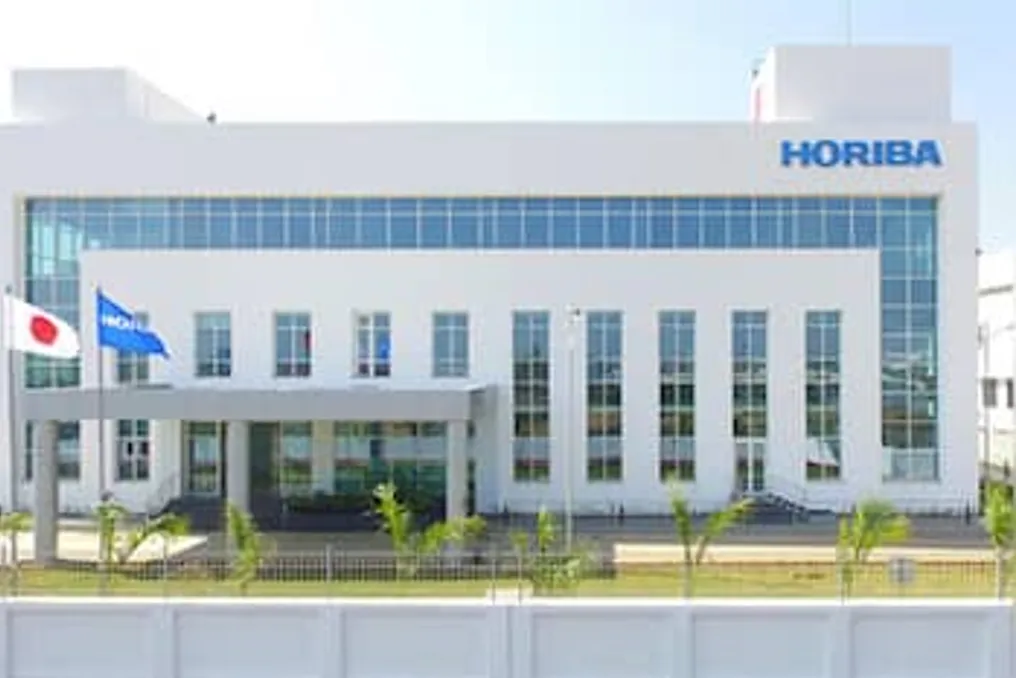
Horiba sets goal of 20 billion yen from Indian operations by 2028
Read more
Business Standard
business-standard.com

Horiba sets goal of 20 billion yen from Indian operations by 2028

Horiba, a manufacturer of Japanese precision measuring instruments and testing systems headquartered in Kyoto, announced on Monday plans to achieve revenue of 20 billion yen from its operations in India by 2028. India is becoming an increasingly significant base for the company's global roadmap in manufacturing and research.

The company marks 20 years of operation in India. In fiscal year 2025, annual turnover reached approximately 15 billion yen, with a compound annual growth rate exceeding 15 percent. Dan Horiba, Executive Officer of Horiba Ltd, Japan, stated in a release: 'Looking at our global business, India is probably the most exciting and growing energy market for us. It will certainly be a key market for the Horiba group going forward.'

He continued that India has transformed from a technology market into a base where technologies are manufactured, adapted, and further developed. 'After twenty years, our commitment to this market remains as strong as ever, and we see that India will play an even larger role in Horiba's global growth in the coming years.'

The Kyoto-based group employs over 600 staff across eight branches in India, while the company's total global workforce exceeds 9,000 people. Hideyuki Koishi, Executive Corporate Director of Horiba Ltd and Chairman of Horiba India, reported that the company's development in India has progressed from sales and service to manufacturing, and the focus is now shifting to expanding local Research and Development (R&D) to enable India to directly contribute to the group's global technological potential.

Company management noted that approximately 40 percent of Horiba India's revenue comes from products assembled or manufactured within the country. Regarding industry contribution in India, the Bio and Healthcare, and Energy and Environment segments each account for 40 percent, while the Materials and Semiconductors segment accounts for the remaining 20 percent.

In January 2026, the company acquired Pristine Deeptech, based in Gujarat, which was Horiba Group's first acquisition in India. Pristine Deeptech specializes in the research and development of lab-grown diamonds for semiconductor and quantum applications.

In the semiconductor segment, Horiba, which reportedly holds a 60 percent global market share in mass flow controllers (MFCs) used in semiconductor manufacturing processes, began local production of MFCs at its Pune facility in 2024. Company management forecasts that demand for semiconductors in the region will increase over the next three to five years as domestic commercial fabs and assembly units come online.

The company stated that as it enters a new phase, Horiba India is focused on strengthening local R&D, expanding advanced manufacturing capabilities, and reinforcing collaboration between industry, academia, and the innovation ecosystem, aiming not just to observe India's growth but to become one of the companies creating new markets and new technologies within that growth.


Similar stories

Wipro's AI Initiatives Boost Productivity Equivalent to 20,000 Employees
Read more
business-standard.com

Wipro's AI Initiatives Boost Productivity Equivalent to 20,000 Employees

Wipro's Chief Technology Officer stated that the implementation of the company's artificial intelligence initiatives has led to a productivity increase comparable to the work of twenty thousand employees. These employees were subsequently redeployed within the Indian IT company.

These statements come as India's $315 billion software services industry faces the necessity of adopting AI, which is transforming hiring processes, software development, and contract closures.

Wipro, which had approximately 243,000 employees in June, is transitioning to a 'human and AI operational model.' According to Sandhya Arun, over 100,000 employees are undergoing training and receiving certifications related to advanced AI technologies.

Arun emphasized that this does not necessarily mean replacing humans with agents, as an engineer can manage a group of such agents used in other projects or trained for different roles.

Arun's comments echo the opinion of Wipro's Chairman of the Board, Rishad Premji, expressed last week. Previously, India's largest software services exporter, Tata Consultancy Services (TCS), reported in June a slowdown in hiring as the company moves towards aligning its workforce size with the number of AI agents in its staff.

TCS plans to form a team of up to 8,900 engineers deployed at client sites, while Infosys plans for around 6,000 over the next few years. These engineers work directly with clients to accelerate AI adoption.

Wipro is also expanding its pool of client-facing engineers. Although Arun declined to state a specific target, she suggested that the number of such personnel at Wipro would be comparable to competitors.

Arun cautioned against excessive focus on the role itself, noting that the broader task is ensuring all engineers acquire the skills necessary to work effectively with AI systems. She stated that the shift in focus should be from productivity to achieving results, asserting that AI should be evaluated by its ability to improve customer experience, create new revenue streams, and assist in achieving business goals.

Wipro is the only IT company among the four Indian leaders that does not disclose AI revenue. According to Manoj Chandra Jha, a lead analyst at Nord-IQ Research, the firm is still in the early stages of AI monetization, which requires investment compared to its competitors. The real test will come when these deals start generating revenue and restoring margins.

He added that Wipro's level of investment in AI-related training and ecosystem partnerships is comparable to companies like TCS, Infosys, and HCLTech, but Wipro lags in commercialization maturity.

Japan changes military strategy and increases defense budget
Read more
uza.uz

Japan changes military strategy and increases defense budget

Japan is implementing changes to its military strategy. The Japanese Ministry of Defense has requested a defense budget of 8.9 trillion yen ($55.6 billion) for the 2027 fiscal year. This amount exceeds the figures for the current year.

Furthermore, further increases in defense spending are expected after the government, led by Prime Minister Sanae Takaichi, adopts a new national security and defense strategy.

Popular