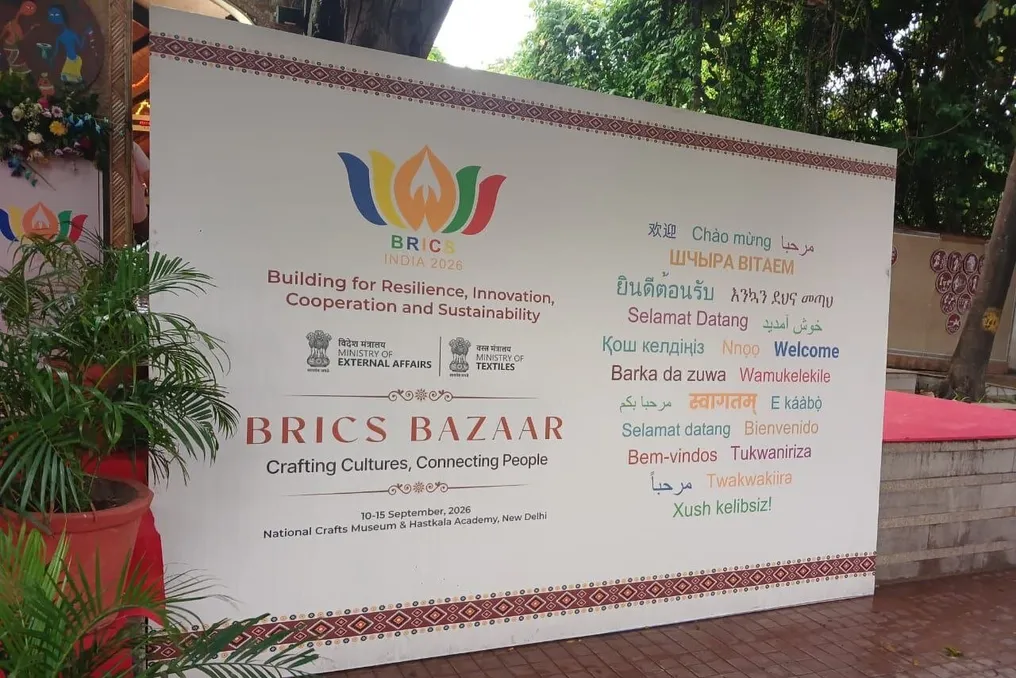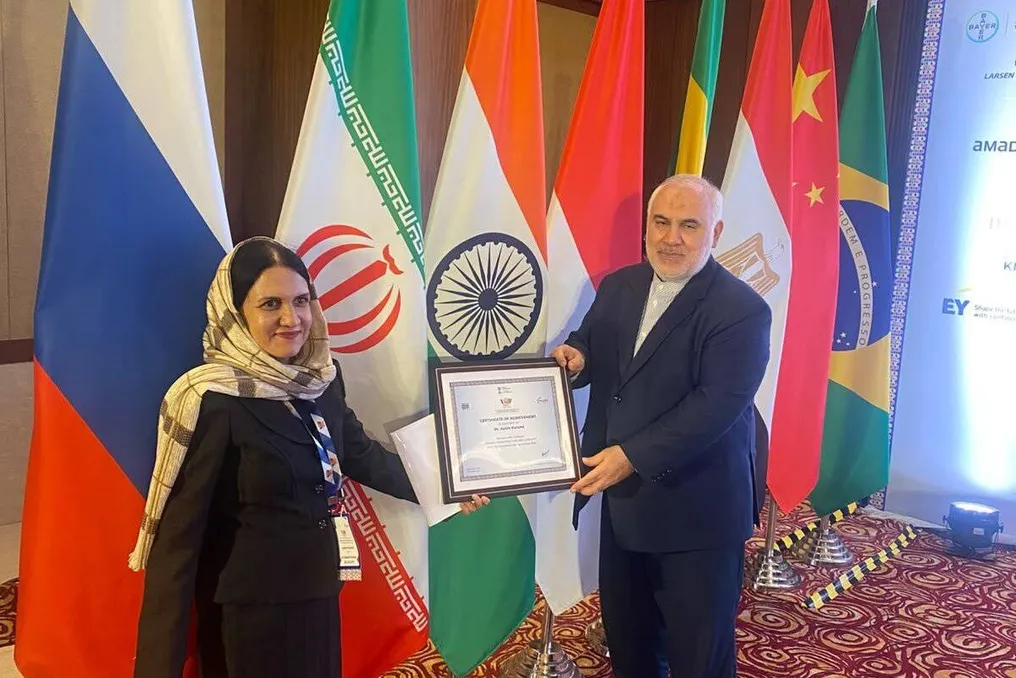
Iranian entrepreneur Azam Karami won first place in the 'Energy, Infrastructure, and Mobility' category at the BRICS Women's Startup Competition 2026. This competition, organized by the BRICS Women's Business Alliance (BRICS WBA), aims to support and accelerate the development of startups led by women in BRICS countries.
The event took place from September 9 to 11 in New Delhi, India. More than 506 projects from BRICS member countries participated, competing across six areas: 'Health and Wellness,' 'Agriculture and Food Security,' 'Education,' 'Energy and Infrastructure,' 'Trade and Digital Transformation,' and 'Sustainable Development.' Ultimately, only 18 projects advanced to the final stage.
Karami's project, titled 'Intelligent Monitoring of Railway Track and Bridge Defects Using Drones and Artificial Intelligence,' was developed to enhance safety, reduce maintenance costs, and improve efficiency in transport infrastructure management.
Karami is a lecturer at Shahid Bahonar University in Kermanshah. Previously, at the BRICS Women's Startup Competition 2024, she received an award in the 'Artificial Intelligence' category for her project 'Automatic Detection of Failures on Power Lines.'
The 2026 competition continued to highlight high-impact, women-led innovative enterprises, fostering cross-border economic integration, cooperation, and knowledge exchange within the BRICS ecosystem. This initiative provided a dynamic platform for increasing visibility, networking, and business expansion, enabling women entrepreneurs to scale their projects and interact with investors, industry leaders, and policymakers from BRICS nations.
Key objectives of the competition include promoting sustainable development, advancing economic inclusivity, strengthening BRICS market integration, supporting innovation in key sectors, enhancing entrepreneurial resilience, showcasing women-led solutions for global challenges, improving cooperation among BRICS countries, raising awareness of sustainable business practices, stimulating technology adoption and digital transformation, and bolstering local economies through global connections.
Iran Outlines Policy on Women and Family in the BRICS Women's Working Group
In July, Narges Abolkasemi, official representative of the Vice Presidency for Women and Family Affairs, detailed Iran's macro-level policy regarding women and family at the BRICS Women's Working Group (WWG), held in Kerala, India, from July 6 to 7. According to her, empowering women requires a shift from one-off measures to strategic and sustainable policies, with female entrepreneurship and economic development in Iran serving as a driving force for strengthening national resilience and family foundations.
Therefore, policies are designed and implemented with a family-centric approach, Abolkasemi quoted the IRNA agency. She also emphasized the importance of four priority areas of the meeting: promoting women's participation in governance and leadership, advancing digital and financial inclusion, strengthening women's entrepreneurship and skills development, and enhancing the role of women in combating climate change, ensuring food security, and nutrition.
Referencing Iran's experience in developing the women's entrepreneurship ecosystem, she noted that Iran focuses on creating support models for innovative, women-led enterprises, developing modern skills, and leveraging the potential of the digital economy. Iran's participation in the WWG meeting offered an excellent opportunity to share its own experience, expand joint efforts, and develop new initiatives to achieve economic justice and sustainable development among BRICS member states, Abolkasemi added.
Highlighting the significance of developing specialized cooperation among BRICS countries, the official announced Iran's readiness to utilize its scientific, political, and executive capabilities to effectively participate in developing innovative models for women's economic empowerment and expanding multilateral cooperation within BRICS. The WWG meeting was themed 'Building Resilience, Innovation, Cooperation, and Sustainability,' reflecting a human-centered approach to global cooperation.