The phase of artificial intelligence experimentation has begun, and now fast-growing startups are facing a more complex question: how to turn AI capabilities into sustainable growth, efficiency, and commercial impact? The time of easily cloned AI wrappers, high operational costs, and passive chatbots is over.
For startups already operating at a fast pace, the real opportunity lies deeper—in using AI to accelerate decision-making, automate complex workflows, and help teams accomplish more work without increasing costs and complexity.
Data shows that 55% of organizations cite faster strategic decision-making as a measurable outcome of AI investments, surpassing the 52% increase in production capacity.
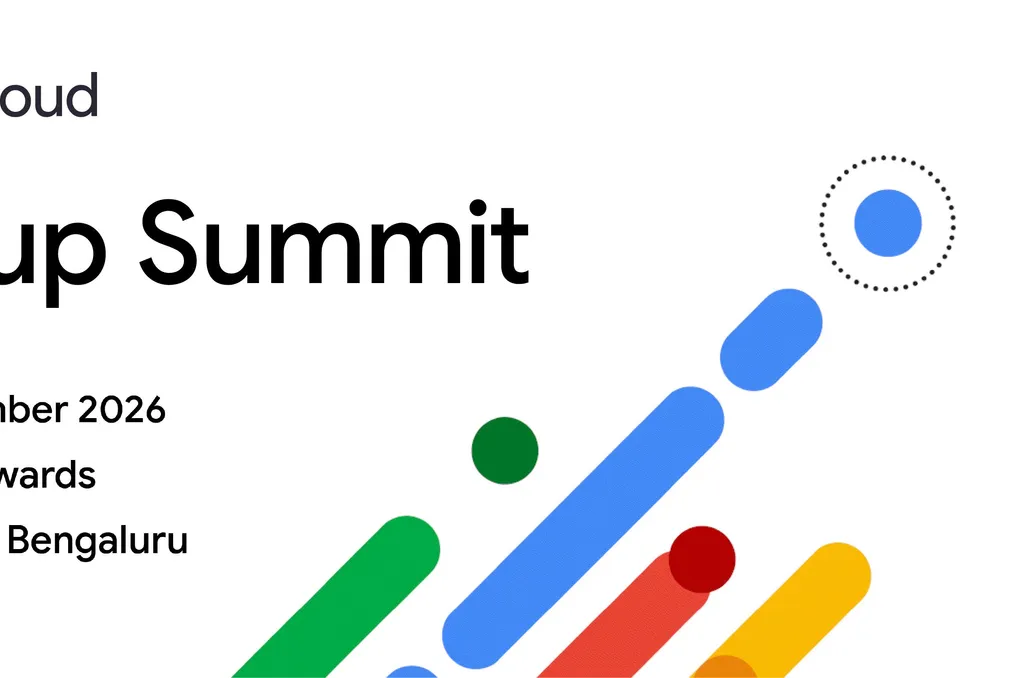
This topic, 'The Agentic Advantage,' is central to the Google Cloud Startup Summit. This closed summit, supported by the integrated Google Cloud stack, is dedicated to exploring how agentic AI can help fast-growing startups build leaner, faster, more resilient, and hard-to-replicate businesses.
The Google Cloud Startup Summit will take place on September 30th at The Ritz-Carlton hotel in Bengaluru. The event will bring together Google Cloud leaders, startup founders, investors, and specialized teams. The agenda goes beyond simple AI experimentation, focusing on a more practical question: can AI help startups scale the business itself, not just the product?
The agent advantage boils down to three business outcomes: faster strategic decision-making, greater production capacity, and a longer runway. Agentic AI allows leaders to act on real-time data, scale operations without proportionally increasing headcount, and reduce operational costs, giving fast-growing startups more room to develop, adapt, and grow.
The summit presents a multi-layered analysis of this shift through demonstrations and dialogues. Before the main sessions, attendees can explore six demo booths showcasing cutting-edge technologies from Google, its partners, and key customers.
The summit will kick off with the welcome session 'Welcome to the Agentic Era,' which will set the context for the startup ecosystem transitioning from AI pilot projects to more results-oriented implementation. The opening remarks will cover how an integrated technology stack and a clearer AI economy can help startups move beyond simply adding features and directly link AI investments to business outcomes.
One of the key evening discussions will be a 'fireside chat' on the evolution of voice AI. Instead of isolating the technology itself, the session will examine the practical challenges of scaling voice systems, including latency, stress testing, and the architecture required to serve millions of users in India.
Next, the summit moves from overview to action through the Command Center Live event, which will feature exciting demonstrations focused on agentic AI and Google's agent development ecosystem—the Antigravity CLI coding agent. Here, the transition from generating outputs to taking action becomes tangible. Instead of merely creating text or recommendations, agentic systems can analyze tasks, operate in multiple steps, and execute actions.
The Google Cloud AI ecosystem provides the foundational platform for building these intelligent applications, allowing agents to interact with enterprise data and connect across various technological environments.
As autonomous systems become more capable, the issue of trust gains equal importance. The session 'Securing the Frontier: Advancing Cloud AI with Security at the Core' will examine the fundamentals that startups must consider when deploying customer AI agents, including data privacy, security protocols, and responsible implementation.
This is particularly relevant for rapidly growing startups. The ability to experiment quickly must be combined with the ability to build securely from the start, especially as AI moves into real customer environments and workloads. This session will be led by Anil Bhasin of Wiz, Vice President for India and SAARC Region at Wiz, who will discuss the balance between speed, scale, and security in the age of agents.
The second part of the live demonstration will shift focus to generative media and voice AI, exploring how generative media can help startups increase content creation speed, automate asset pipelines, and ensure greater personalization.
The possibilities extend beyond content creation. As AI integrates into the entire creative and marketing stack, startups can potentially connect production, distribution, and customer interaction in new ways. Furthermore, an unexpected product reveal from one of the clients is anticipated, demonstrating what is possible when these capabilities move from experiments to real-world application.
The evening will conclude with a panel discussion titled 'Unpacking Startup AI Economics & Real ROI,' featuring Google Cloud leadership, venture capital partners, and startup founders. Speakers will address issues becoming increasingly important as AI moves into production environments: What is the actual cost of AI? Where does it create measurable value? How should startups approach infrastructure and hardware accelerators? What baseline level of security is necessary? And what does the return on investment in AI look like?
The summit will also review the latest advancements in Gemini, focusing on Gemini Live and Gemini 3.7 Flash, and how these capabilities can help startups create more responsive, intelligent, and differentiated AI experiences.
The summit will wrap up with the session 'Your Blueprint for the Agentic Era,' which will synthesize the evening's ideas into a practical framework for founders. The core message is not just about faster AI adoption, but about understanding where agents can create genuine leverage—whether through workflow automation, system integration, accelerated customer interaction, or changing the economics of scaling.
For startups, the agent advantage ultimately lies in making AI part of the operational model, not just the product roadmap. The next leap in AI may not come from creating another AI feature, but from rethinking how the entire business operates around intelligent systems.