De Hoop Reserve is often associated with the famous 55-kilometer Whale Trail, which crosses the territory from Potberg to Koppie Allen. However, it is not necessary to hike this route to get an idea of what makes De Hoop memorable, especially for first-time visitors. A two-day stay is enough to feel the atmosphere of this place.
The reserve is located approximately three hours' drive from Cape Town and covers an area of about 34,000 hectares in the Overberg region, where fynbos, mountains, wetlands, and coastline meet. The adjacent marine protected area extends about 5 km into the sea and protects a surprising diversity of marine life, including southern whales that return annually to the coast for birth and mating.
The key to visiting De Hoop is choosing several experiences instead of trying to do everything at once. It is necessary to allow pauses between activities and allow yourself to simply be in this place.
After checking into the Opstal area, one should not rush to fill the second half of the day with activities. De Hoop is a place where the transition from car travel to the wilderness is part of the experience, which can be a challenging task for adventure-seeking people.
The Opstal area serves as the central point of the De Hoop Collection complex, offering various accommodation options for different types of travelers: from simple rondavels and campsites to family cottages and more luxurious suites. The Fig Tree restaurant, swimming pool, tennis court, and bowls green are also located here.
Cottages in the De Hoop village and houses in Opstal offer more space and opportunities for self-catering, making them ideal for families. The cottages are designed as a home base, while the three-bedroom houses in Opstal are equipped with fully fitted kitchens and outdoor barbecue areas. Smaller suites around Opstal are better suited for couples; the Vlei suites overlook the water, and the Stable suites are located near the fig tree courtyard and close to the restaurant.
After unpacking, renting a mountain bike is recommended. There are four cycling trails in the reserve, and you can ride with or without a guide. Local animals include the bontebok, Cape mountain zebra, eland, baboons, and ostriches.
The reserve's trails offer much more than just planned activity, so it is worth looking closely. Stop occasionally to try and spot wild animals grazing nearby. If cycling is not for you, substitute it with a light walk and let the day unfold at its own pace.
At the end of the day, you can return for dinner at The Fig Tree restaurant. Thanks to De Hoop's clear sky, it is a great place for stargazing, and ending the first day without screens brings a simple satisfaction that is beneficial for the nervous system.
The real fun begins with a visit to De Hoop Vlei. If you are not ready for an additional hike, an eco-boat tour is one of the simplest ways to get acquainted with this part of the reserve. The cruise lasts about one and a half to two hours and offers the chance to see waterfowl and other wildlife, with possible sightings of otters and even hedgehogs. It is important to check for cruise availability at the reception, as they depend on water levels.
The reserve supports over 260 species of birds, and the wetlands can attract thousands of waterfowl. Therefore, if you are an ornithology enthusiast or just starting this hobby, this experience will certainly help hone your skills.
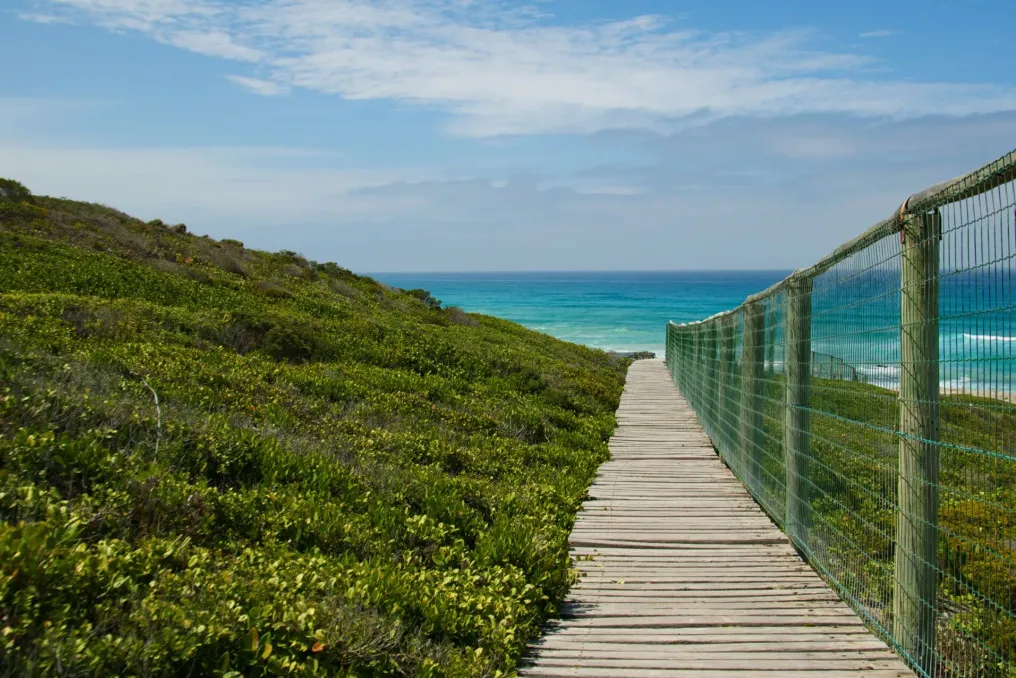
After breakfast, move slowly towards Koppie Allen and the coast. Koppie Allen is known as a whale-watching viewpoint, where visitors can choose a beach walk or a rocky shore exploration.
If conditions allow, take a swimsuit with you. And even if they don't fit, take one just in case. Who doesn't love spontaneity on vacation? Rocky pools and sheltered coastal areas are some of the reserve's simple joys, especially for families with children who enjoy exploring life between the rocks.
For a deeper immersion in the coastal environment, you can book an Interpretive Sea Safari. The tour lasts about two hours, runs along sandy beaches and coastal rock pools, during which a guide explains the marine life inhabiting the shore. This tour depends on the tides and departs about an hour before low tide, so you must check the daily schedule at the reception.
After the morning time spent on the coast, leave the second half of the day free.
If you want to see more wildlife without excessive hiking, book a Nature Drive. The two-hour open safari vehicle tour passes through wetland and fynbos landscapes, providing opportunities to spot species such as the bontebok and Cape mountain zebra. The tour concludes at sunset with snacks, ensuring a calmer second half of the day.
If you are traveling with older children or a partner who prefers more active recreation, there is another option—an organized mountain bike trip.
However, for wellness-oriented weekends, it is best to do less. The reserve is large enough that the quietness itself can be an activity.
Do not make the mistake of leaving early just because you have other plans. Have breakfast, take one last walk around the Opstal area, or take a short ride before departing. If you missed the coast the day before, a final stop in Koppie Allen will be worthwhile, especially during whale season.
If you have young children, let them run on the beach or explore the rock pools one more time. Then return to Cape Town with that slightly strange feeling that comes after leaving a place where the loudest disturbance was probably the sound of a bird singing nearby.
You do not need to conquer De Hoop. Sometimes the best way to get to know such a wild place is to slow down enough to appreciate its beauty.
The Whale Trail remains one of De Hoop's iconic attractions, but it is a serious commitment. For experienced tourists, it is a great reason to return. For everyone else, two nights in the Opstal area may be enough to understand why De Hoop deserves a spot on the short getaway list. Here you can see wildlife, stroll by the ocean, cycle through the fynbos, watch birds over the Vlei, and, in the right season, see whales from land.