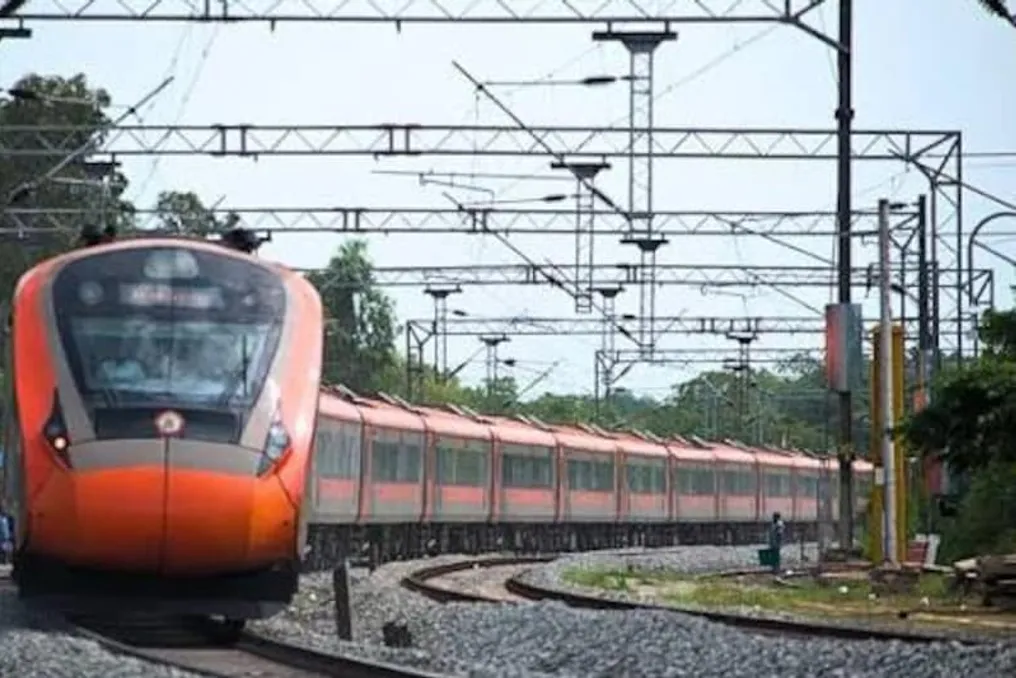
South Indian Railway Network of 5068 km Fully Electrified After 95 Years of Operation
Read more
Aaj Tak
www.aajtak.in

South Indian Railway Network of 5068 km Fully Electrified After 95 Years of Operation

Indian Railways has achieved significant progress in modernizing and improving the energy efficiency of its network. The entire broad gauge route of the Southern Railway in South India has been fully electrified.

This means that the entire Southern Railway network, spanning 5068 route kilometers, now operates on electric traction. This achievement is the culmination of a 95-year process that began in 1931.

The complete electrification of the Southern Railway was finalized with the completion of the 71-kilometer Pattukottai-Karaikudi section in Tamil Nadu state. This section was inspected on September 9, 2026, by Ganesh, the Chief Electrical Engineer of the Southern Railway.

With the completion of work on this section, the entire Southern Railway network of 5068 route kilometers can now utilize electric traction.

The journey towards implementing electric traction in the Southern Railway began about 95 years ago. The first use of electric traction was recorded on May 11, 1931, in the Madras region. Over time, the electrification process of various parts of the railway network proceeded in stages. This allowed for a gradual reduction in dependence on diesel traction and an expansion of the scope of electric traction. Now, in 2026, the entire network functions within this system.

Electric traction implies using electrical energy to move trains, whereas line electrification allows the use of an electric motor instead of a diesel locomotive. With the full electrification of the entire network, the need to change traction is eliminated.

Large-scale electrification brings substantial benefits to train operations. Previously, if the next section of the route was not electrified, a change of traction was required for further movement. If an electric locomotive powered by the overhead equipment (OHE) was present, it might have needed to be replaced by a diesel locomotive if there was no electrified section. Now, since the entire Southern Railway network has electric traction, this necessity will disappear.

Changing traction requires additional time as well as coordination at the locomotive and personnel level. Full electrification will simplify train operations, allow for more efficient use of electric locomotives, and eliminate operational obstacles, thereby increasing transportation efficiency.

For the railways, electrification is not only a simplification of movement but also an important step towards reducing dependence on fossil fuels. The Ministry of Railways called this achievement a 'big leap towards sustainable rail travel' on September 11, 2026. The availability of electric traction across the entire network will lead to reduced reliance on diesel fuel and strengthen efforts to modernize the railways.
Similar stories

Launch of designated freight corridors will increase capacity and reduce costs in the country
Read more
www.aajtak.in

Launch of designated freight corridors will increase capacity and reduce costs in the country

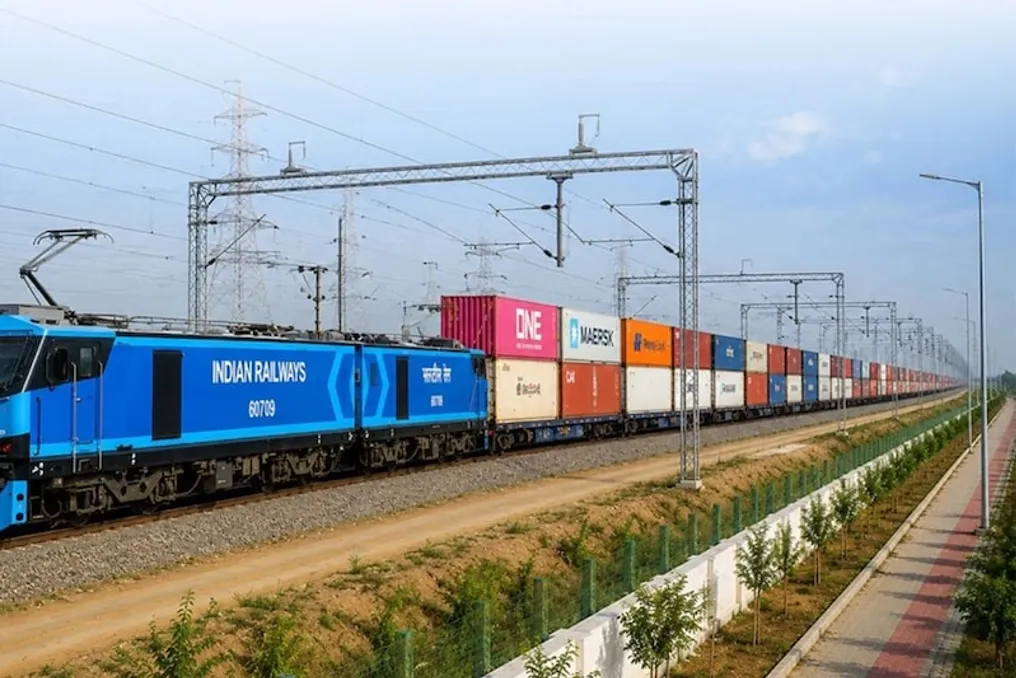
Significant changes occurred in the country's freight transport network on Tuesday. Prime Minister Narendra Modi inaugurated an important section of the Dedicated Freight Corridor (DFC) in Vadodara, after which the entire 2843-kilometer DFC network became operational. The completion of the last three sections, totaling about 326 kilometers, allowed the Western Dedicated Freight Corridor (WDFC) of 1506 kilometers to be fully commissioned.

The WDFC stretches from Jawaharlal Nehru Port (JNPT) in Navi Mumbai to Dadri near Delhi. With the launch of sections between New Sanand (N)-New Makarpura, New Umbargon-New Safle, and New Safle-JNPT, the entire network of this corridor is now operational. The final stretch from Vaitarna (Safle) to JNPT is also now available for freight trains. This connection will allow for the accelerated delivery of goods arriving from major ports such as Mumbai Port, Pipavav, Mundra, and Kandla to Delhi and major North Indian markets, in addition to JNPT.

WDFC handles the transportation of ISO containers from JNPT, Mumbai Port, Pipavav, Mundra, and Kandla to Inland Container Depots (ICDs) located in Tuglakabad, Dadri, Dhandari Kalan, and Hatuvase. Furthermore, an increase in the transport of commodities such as fertilizers, grains, salt, coal, iron ore, steel, and cement is expected.

The need for a dedicated freight corridor arose due to the prolonged congestion of the country's main railway routes with both passenger and freight trains. On key trunk lines, such as Mumbai-Delhi and Hauzra-Delhi, capacity reached 115–150 percent. Therefore, it was decided to create a separate corridor for freight trains to segregate routes for passenger and freight services and increase the speed of both types of transport.

The Eastern Dedicated Freight Corridor (EDFC) is the country's second major freight network. This corridor, spanning approximately 1337 kilometers, runs from Ludhiana in Punjab to Sonnagar in Bihar and primarily serves the coal and mineral traffic of Eastern India. Within the EDFC, there is a 936-kilometer electrified double-track section between Sonnagar and Dadri, as well as a 401-kilometer electrified single-track section between Ludhiana (Sahanewal) and Khurja.

One of the significant advantages of the full commissioning of the EDFC in October 2023 is that it bypasses many densely populated cities, including Mirzapur, Prayagraj, Kanpur, Itawu, Firozabad, Tundla, Hathras, Aligarh, Hapur, Meerut, as well as areas like Muzaffarnagar, Ambala, Rajpura, Sarhind, Doraha, and Sahanewal.

Railway company carried out large-scale work to launch the Vande Bharat train in the Western Ghats
Read more
www.aajtak.in

Railway company carried out large-scale work to launch the Vande Bharat train in the Western Ghats

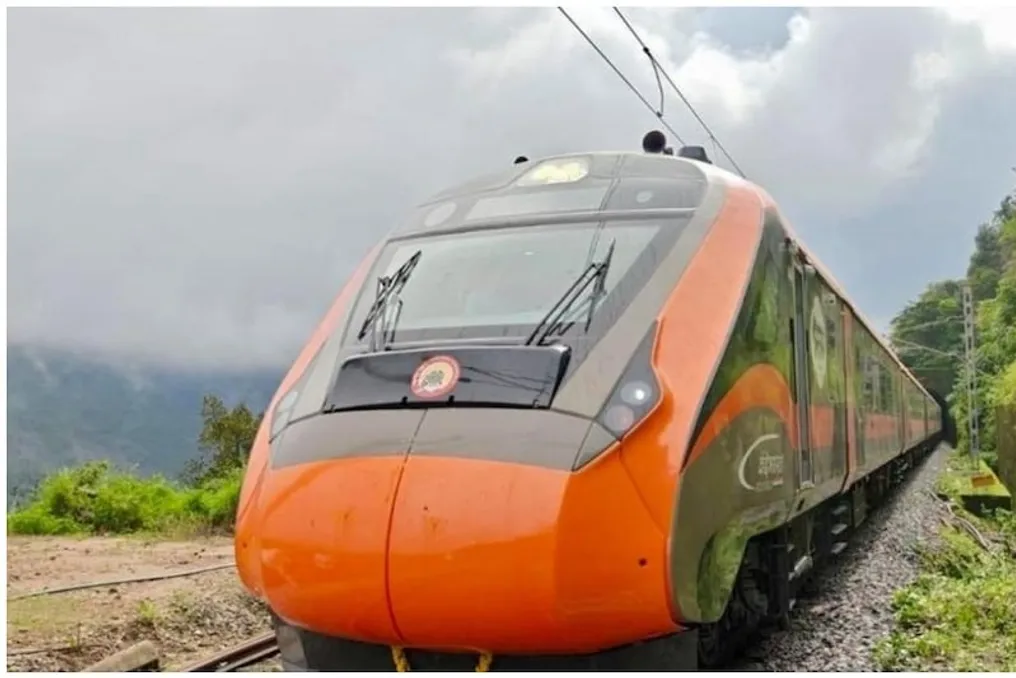
Recently, a viral video appeared on social media showing the 'Vande Bharat' train in orange and black livery looking very impressive as it passes through tunnels amidst dense forests and fog in the mountains. This video was shot by a drone during a trial run through the Western Ghats between Bangalore and Mangalore. Although the journey of the train surrounded by natural beauty looks magnificent, it is backed by complex engineering work and thorough safety testing by Indian Railways.

This section in the Western Ghats of Karnataka state is known as the Sakleshpur-Subrahmanya Road or Shiradi Ghat section. The length of this section is about 55 kilometers, but operating the 'Vande Bharat' here proved to be a challenging task for the railway. This route features 57 tunnels, 226 bridges, 108 sharp curves, and a height change of 1 meter for every 50 meters of horizontal distance (ascent or descent). Furthermore, a significant part of this section is prone to landslides.

Electrification of this sector began in December 2023 and was completed in December 2025. Overhead electrical equipment was installed over approximately 55 kilometers, and 5 switching stations were prepared. The total cost of this project amounted to about 93.5 crore rupees. Since some places in this section are difficult to access even for road transport, the railway had to deliver construction materials and equipment to the train during the electrical installation work. The mountainous landscape, tunnels, and the monsoon season significantly complicated the entire project, with work inside the tunnels becoming one of the most serious tasks.

Challenges of operating Vande Bharat on this route

After the completion of electrical installation work, movement of freight and passenger trains on this route was permitted; however, additional safety requirements arose for the 'Vande Bharat'. The 'Vande Bharat' is a self-propelled set, meaning it does not require a separate locomotive for traction; instead, motors and mechanisms are installed under the coaches and generate the necessary energy for movement. Nevertheless, considering the steep gradients in the Western Ghats section, engineers deemed it necessary to equip the 'Vande Bharat' with an Automatic Emergency Braking System (AEBS). Initially, existing 'Vande Bharat' sets did not have this system. The option of adding a separate locomotive to the set was considered, but the railway opted for installing AEBS. Thus, before commencing operation of the train on this difficult route, necessary changes were made to its braking and safety systems.

Testing the entire process, not just the train

The trial run of the 'Vande Bharat' on this route has already been completed. However, due to rain and difficult road conditions, the train moved at a controlled speed. Mechanical, electrical, operational, and safety services of Indian Railways continuously monitored the trial runs of the 'Vande Bharat'. Research Designs and Standards Organisation (RDSO) conducted performance evaluations of the train. During the tests, not only the operational condition of the train but also its behavior in emergency and operational situations was checked.

The final decision on starting the 'Vande Bharat' service between Bangalore and Mangalore remains with the railway. In the current test runs, one route lasted about 8.5 hours. Potential stops included stations such as Hassan, Sakleshpur, and Subrahmanya Road. The final decision regarding the route, stops, and schedule will only be made after receiving all necessary safety clearances. Previously, there were plans to extend the 'Vande Bharat' Bangalore-Mangalore line to Madgaon, but the final decision depends on the Railway Board. Currently, the railway's main focus is on ensuring the safe operation of the train on this challenging mountain section.

Popular