
Graham Smith predicts intense series of matches between Australia and South Africa
Read more
IOL
iol.co.za

Graham Smith predicts intense series of matches between Australia and South Africa

Graham Smith comments on the upcoming series of matches between Australia and South Africa, emphasizing the intensity of the rivalry and the approaching test matches starting on October 9th in Durban.

As the South African team rests after an epic four-match series against the All Blacks, the question arises: is the rivalry between the Proteas and Australia the greatest in cricket? It very well could be, as Australia prepares to visit South Africa at the end of this month for three ODI matches and three Test matches.

Previously, the Proteas defeated Australia in the World Test Championship (WTC) final last June, and now the Australian team aims for revenge on South African soil. Although the ODI matches start on September 24th, the main focus will be on the Test series, which begins on October 9th. Both series will take place in Durban.

Smith anticipates an exciting series between Australia and South Africa with high stakes and rich history. In an exclusive interview with IOL, Smith noted that there are many storylines between the two nations over many years. He recalled the times when the great Australian team dominated but added that South African cricket has significantly improved recently, including winning in Australia three or four times, as well as the WTC final victory achieved by the Temba [Bavuma] team.

This will be Australia's first visit to South Africa since the controversial Sandpapergate incident. Nevertheless, Smith believes that confrontations between these two countries are always sharp. He thinks the series promises to be grand—always competitive, with interesting narratives, and featuring top-class players. For him, it would be wonderful to play a Test series in South Africa involving Australia and England so that fans can actively support the game and watch competitive cricket.

Similar stories

The rivalry between the Springboks and All Blacks remains the greatest in rugby due to mutual respect
Read more
iol.co.za

The rivalry between the Springboks and All Blacks remains the greatest in rugby due to mutual respect

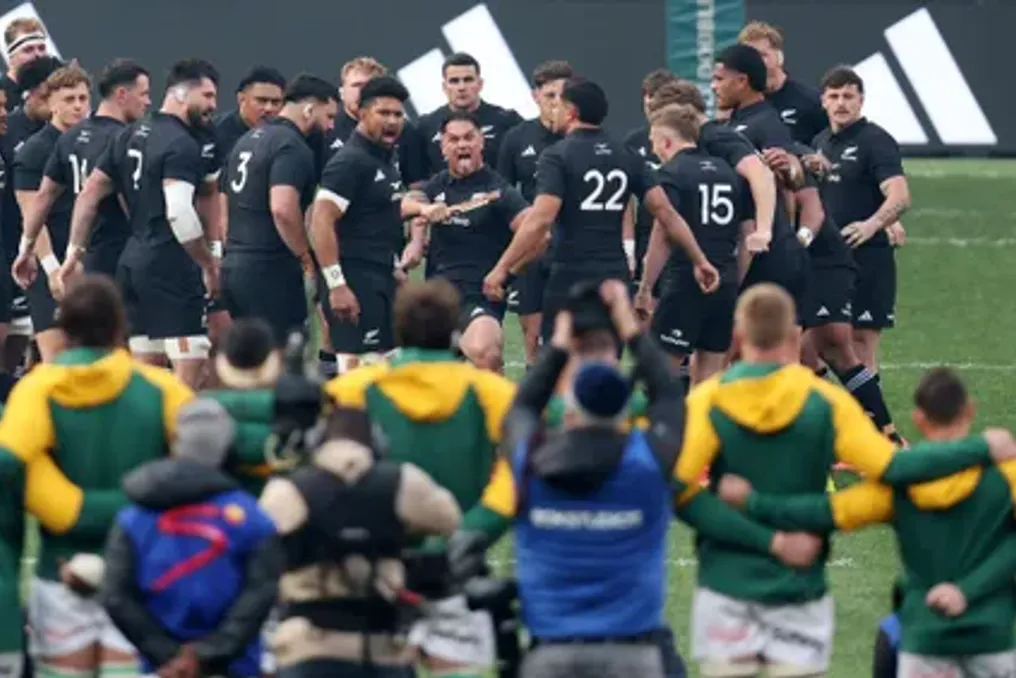
Despite the rivalry between the Springboks and the All Blacks being arguably the greatest in world rugby, respect between the players and teams is maintained even after the match concludes.

Unlike many other sporting confrontations where players might avoid interacting after the game, the opposite occurs in this rivalry. Although players fight fiercely during the 80 minutes of play, and coaches sometimes exchange sharp remarks at press conferences, the atmosphere quickly normalizes after the match ends, and both teams demonstrate mutual respect.

Erasmus and ReNNy shared a beer

This rivalry between South Africa and New Zealand illustrates the essence of the sport. The Springboks coach Rassie Erasmus and his colleague from the All Blacks, Dave Rennie, although they may have tactical disagreements, set these differences aside after the final whistle and media duties.

These two coaches have repeatedly met over a pint before and after various series matches, serving as a reminder that their confrontation is based on respect, not hatred. Erasmus mentioned that they drank beer after the match and planned to meet in Cape Town.

Dave Rennie confirmed that they shared a beer immediately after the game, despite verbal sparring over the score.

This friendly relationship extends to the players. Springboks captain Siya Kolisi and All Blacks captain Ardie Savea have developed a deep friendship that goes beyond rugby. They have attended church together, and Savea's children show particular affection for the Springboks captain, calling him 'Uncle Siya.'

Kolisi emphasized that when he plays against a friend, he shows respect by giving everything he can on the field, which he believes is very important. This says a lot about what lies beneath what could be considered the most intense rivalry in international rugby.

For 80 minutes, Kolisi and Savea lead their teams into battle, ready to risk their bodies for victory. Although Kolisi delivered a strong hit to Savea in Cape Town, Savea admitted feeling it, but after the battle, respect remains.

Springboks and All Blacks share a flight

The rivalry does not need to become personal. On the contrary, the mutual respect between the players makes this spectacle special. This was demonstrated in an unusual way before the fourth and final match in Baltimore, when the Springboks and All Blacks traveled together on a charter flight from Johannesburg to Washington.

Most of the journey passed in silence, according to eighth player Jasper Wiese, but the mere fact of the joint long journey was symbolic. The silence was understandable, as one team had won while the other had lost. Despite harsh words, powerful hits, tactical battles, and continuous competition, it is still rugby, and that is why the Springboks and All Blacks rivalry will go down in history as perhaps the greatest contest on the planet outside the Rugby World Cup. Because the Boks and the All Blacks might want to destroy each other for 80 minutes, running the oval ball across the field, but when it is over, they can still share a beer, eat together, attend church, and call each other friends.

IOL Sport Podcast Discusses Tense Rugby Match Series Between Springboks and All Blacks
Read more
iol.co.za

IOL Sport Podcast Discusses Tense Rugby Match Series Between Springboks and All Blacks

IOL Sport correspondents, Zachier Adams, John Goliath, and Layton Cupman, analyzed the intense week of South African rugby in the third episode of the IOL Sport Podcast. They covered both bright victories and incidents related to aviation and verbal spats as the 'Greatest Rugby Rivalry 2026' series remains uncertain.

Return to Cape Town

The trio began the discussion with a detailed breakdown of the Springboks' triumph, who defeated New Zealand 33-26 at the DHL Stadium in Cape Town. This victory served as a response to a heavy 33-16 loss in the first match at Ellis Park. The world champions demonstrated the fierce intensity characteristic of the era of Rassie Erasmus. Goliath noted that thanks to adjustments, tactical kicking, and physical strength, the Boks team managed to disrupt the pace of the All Blacks, leveling the four-match series at 1-1 before the decisive third game.

Erasmus vs. Rooney Dispute: A Scrum War

However, the conversation quickly shifted to escalating external disputes that threaten to overshadow the match itself. New Zealand coach Dave Rooney provoked a conflict by publicly questioning the Springboks' scrum technique in Cape Town, accusing the South African squad of deliberate 'pushing' when securing the ball. Erasmus, who never shies away from confrontation, responded with fierce defense of his forwards. As Cupman pointed out during the discussion, the series is beginning to suffer from this 'artificially created drama.' Meanwhile, Boks scrum guru Dan Human insists that their focus is solely on advancing, not on playing for the sake of play. The podcast team urged both sides to abandon theatricality. Cupman aptly observed that it is time to silence the noise and let the great rugby rivalry speak for itself.

The Airlink Flight Saga

The drama was not limited to the coaching sidelines. Adams and Goliath discussed the strange story of the Airlink flight, which dominated weekend headlines. An ultra-low flight over the DHL stadium caused panic on social media, leading to an immediate investigation by the South African Civil Aviation Authority (SACAA). Consequently, Airlink was forced to suddenly withdraw its application for the planned third flight before the upcoming Johannesburg match while compliance checks are underway. The panel agreed that while iconic flights over the stadium evoke warm memories of 1995, the subsequent safety issue became an unnecessary distraction for the team striving for series victory.

All Eyes on FNB Stadium

Looking ahead to the third match at the FNB Stadium in Soweto, the IOL Sport team painted a picture of a finely balanced battlefield. The All Blacks, acting as a 'wounded beast,' are expected to arrive in Johannesburg seeking revenge. However, history shows that underestimating the critically positioned Springboks squad is a dangerous gamble. Since the series is in doubt, and external intrigues have finally subsided, the conclusion of the IOL Sport Podcast is clear: the talk is over. Saturday afternoon in Soweto is the time for rugby to be the main event.

Kagiso Rabada's injury jeopardizes South Africa's hopes in the Test series against Australia
Read more
iol.co.za

Kagiso Rabada's injury jeopardizes South Africa's hopes in the Test series against Australia

Due to a hamstring injury that calls into question Kagiso Rabada's physical fitness, South Africa faces a serious challenge in the upcoming confrontation with Australia without its leading fast bowler.

There is no doubt that Kagiso Rabada is one of the best, if not the best, fast bowlers South Africa has ever produced. Therefore, news of his hamstring injury raises deep concern ahead of Australia's tour of South Africa.

Currently, Rabada is officially ruled out only for the One Day International (ODI) series, but he needs to recover in time for the Tests. The ODI series starts on September 24, and the first Test is scheduled for October 9 in Durban.

Rabada sustained the injury on August 21, and Cricket South Africa (CSA) estimates the recovery period to be at least four to five weeks. Since his debut for the Proteas team at the age of 20 in 2015, Rabada has quickly established himself as an attacking leader. It was impressive to watch Dale Steyn play towards the end of his career alongside the rising star.

However, after Steyn retired in 2019, Rabada undeniably became the leader of South Africa's pace battery. Statistics confirm his superiority: Rabada holds the best strike rate in Test history among all bowlers who have taken over 300 wickets. His outstanding strike rate is 39.5, which is better than Steyn's 42.3. Rabada's average is also impressive—22.03 compared to Steyn's 22.95.

The only significant milestone separating them is the total number of wickets: Steyn leads all-time in South African history with 439 wickets in 93 matches, while Rabada has taken 340 wickets in 73 Tests. Given the sparse Test schedule in South Africa, it may not be easy for Rabada to surpass Steyn's tally, but his impact remains undeniable.

Losing a leading fast bowler will be a heavy blow for South Africa. Even if he is fit to play, entering such an intense series immediately after a break will be a huge test. Nevertheless, if anyone can handle this task, it is Rabada.

Popular