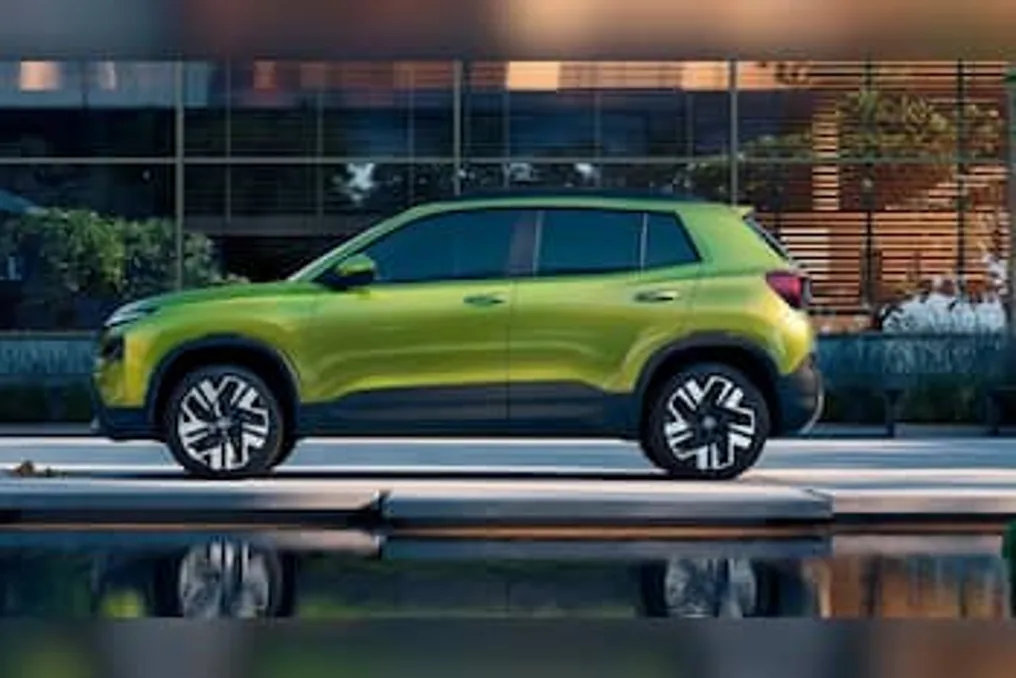
Skoda Auto Volkswagen India (SAVWIPL) announced on Monday that it will not export its compact sports crossover Kylaq, developed in India, to Europe, despite the fact that details of the Free Trade Agreement between India and the EU, published earlier this month, grant preferential access to Indian-origin vehicles in the European market.
In response to questions from Business Standard regarding whether the FTA could make the export of Kylaq or other models produced in India more attractive to the EU, SAVWIPL stated: 'After careful consideration, this will not happen for the Skoda Kylaq.'
SAVWIPL, which manages six automotive brands in India—Skoda, Volkswagen, Audi, Porsche, Lamborghini, and Bentley—reported that the Group continues to explore opportunities to utilize its Indian portfolio in international markets. The Kylaq model is manufactured and sold under the Skoda brand.
This decision came after Skoda publicly stated that the export of Kylaq to Europe was under evaluation. In June, Skoda CEO Klaus Czelmer said that bringing this SUV, manufactured in India, to the European market was 'highly discussed.' Earlier in August, media reports surfaced that the company was considering a European export version, possibly with a 1.5-liter TSI engine.
Nevertheless, SAVWIPL has not completely closed off the possibility of exporting other products developed in India to international markets. The company noted that the Group is constantly 'exploring sensible business opportunities to expand its international presence and offer customers greater choice in accessible mobility.' It added that one option is assessing how to leverage the successful Indian brand portfolio for other regions of the world.
Currently, SAVWIPL manufactures five passenger car models in India: Kylaq, Kushaq, and Slavia under the Skoda brand, as well as Taigun and Virtus under the Volkswagen brand. Launched in November 2024, Kylaq has been a significant success for Skoda in India. In 2025, Skoda sold 72,665 vehicles, marking its highest annual sales volume in the country, showing a 107 percent increase compared to the previous year. Approximately 61 percent of Skoda's total sales in India were attributed to Kylaq.
Demand for this model remains high: in the first eight months of 2026, Kylaq accounted for about 62 percent of the brand's sales. Total Skoda sales in India from January to August reached 50,253 units, which is 7.6 percent higher than in the same period last year.
The company emphasized that, despite this, the FTA creates opportunities for the automotive industry and increases visibility for businesses operating in both markets. SAVWIPL stated: 'As a global company, we strongly support free trade agreements between markets and geographies. The FTA provides greater long-term transparency and opens up opportunities for the industry. But it is important to distinguish between an opportunity created by the FTA and an immediate change to our portfolio.'
The company confirmed that India will remain an important base for the Group's development and production. 'We are firmly committed to India as a center for development and production. The FTA does not change our commitment to building a strong, sustainable, and increasingly localized business in India,' the statement reads.
SAVWIPL also clarified that the Group's commitment to its Indian operations extends beyond exports. The company stressed: 'What remains undeniable is the Group's unwavering commitment to offering high-quality, safe, and competitively priced vehicles, backed by exceptional service and ownership benefits.' It added: 'We continue to develop and manufacture products in India, for India and for the world.'
Negotiations on the FTA between India and the EU were officially concluded on January 27, 2026, but detailed tariff schedules and annexes were published at the beginning of this month following the legal review process. These details are particularly important for the automotive industry. The EU will initially allow up to 250,000 vehicles of Indian origin to be imported annually at preferential tariffs, with the quota increasing to 400,000 by the tenth year. The preferential tariff for eligible vehicles from India will decrease from 8 percent to zero over five years.
The agreement also opens the Indian passenger car market to European manufacturers through a quota-based mechanism. India will allow the import of 100,000 internal combustion engine (ICE) and non-plug-in hybrid vehicles produced in the EU in the first year, with the quota increasing to 160,000 by the tenth year. For vehicles valued between 15,000 and 35,000 euros, the import duty within the quota will decrease from the current 110 percent to 35 percent in the first year and to 10 percent by the fifth year.