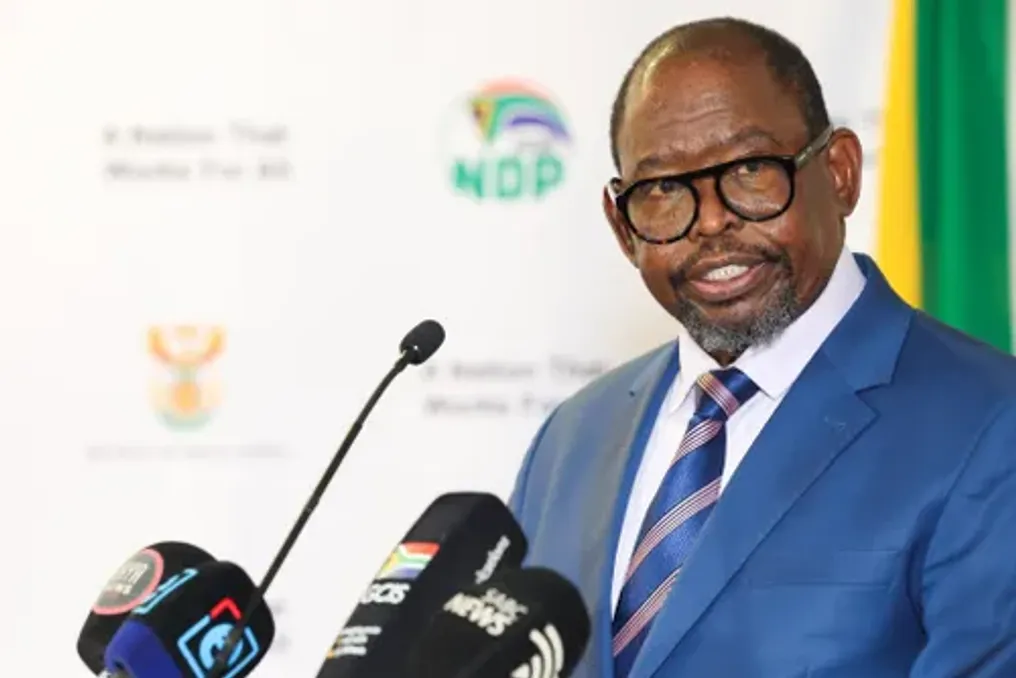
Finance Minister Enoch Godongwana reported that 50 out of 71 municipalities participating in the Municipal Debt Reduction Program failed to pay their current bills to the energy company Eskom as of last month.
These affected municipalities owed the energy company a total of R40.5 billion. This debt accumulated during the period they were part of the Municipal Debt Reduction Program, which was launched in 2023.
Godongwana stated that as of August 7, 2026, 50 participants in the Municipal Debt Reduction Program had not met the condition of paying current Eskom bills, despite inconsistently adhering to other provisions of the Municipal Finance Management Act Circular.
His statement was in response to questions from Parliament by DA MP Kevin Vakelin, following the recent declaration by the South African Auditor-General that municipal debt to Eskom reached R119 billion, and 74% of municipalities did not meet the conditions attached to Eskom's debt restructuring agreements.
Vakelin requested information on the National Treasury's assessment of the respective municipalities, the amount of unpaid debt for each municipality, and the specific intervention measures taken. He also wanted to know if any consequence management measures had been taken against municipal officials and political leaders found responsible for non-compliance.
The National Treasury introduced the Municipal Debt Reduction Program three years ago with the aim of improving Eskom's balance sheet and supporting the proposal for municipal debt write-off under strict conditions.
Emalahleni and Emfuleni are the largest debtors to Eskom
In his response, Godongwana specified that the municipalities defaulting on payments are distributed as follows: 11 in North Cape, 10 in Mpumalanga, nine in Free State, nine in North West, four in KwaZulu-Natal, three in Gauteng and Eastern Cape, two in Limpopo, and one in Western Cape.
Godongwana's report showed that the Emalahleni Municipality in Mpumalanga owes Eskom R6.7 billion, followed by Emfuleni in Gauteng with an amount of R4.7 billion. The list also includes Govand Mbeki Municipality in Mpumalanga (R3.3 billion), Mombela Municipality in Mpumalanga (R2.7 billion), Matjambeng in Free State (R2.3 billion), Madibeng Municipality in North West (R2.1 billion), and Matlosaana in North West (R1.9 billion).
Financial mismanagement led to missed payments
Godongwana explained that the 50 municipalities failed to meet the condition of paying current Eskom bills due to a combination of financial mismanagement factors. These factors include the inability to approve cost-reflective tariffs, failing to bill all consumers for rates and all services, the inability to monitor credit and collect due funds, and the inability to collect local taxes and service charges in Eskom supply areas.
He added that some municipalities lack water supply functions or the functionality of existing reservoirs, which hinders restricting water supply in Eskom supply areas for collecting rates and service charges. Furthermore, municipalities are failing to address water and electricity losses, as well as comply with national limits on free basic services.
Godongwana noted that the National Treasury conducts monthly compliance checks, and in case of non-compliance with the Municipal Debt Reduction Program conditions, the relevant Provincial Treasury or National Treasury issues a certificate of non-compliance to the municipality.
Seven municipalities excluded from the program
Warning letters have also been sent to the debtors. Godongwana announced that the National Treasury has begun a phased exclusion process to allow Eskom to control the recovery of municipal debt and ensure growth after persistent defaulters.
The Minister stated that 27 affected municipalities received 'exclusion letters' as an alternative to extending the Municipal Debt Reduction Program through a five-year service agreement with Eskom. This allows them to continue participating in the debt reduction program while ensuring improved payments to Eskom through the Distribution Agency Agreement (DAA). The license remains with the municipalities according to the DAA.
He continued that out of these 27 municipalities, seven were excluded, and another 20 municipal councils committed to undergoing the necessary procedures in accordance with the Electricity Regulation Act before entering into a service agreement with Eskom. Godongwana emphasized: 'No specific consequence management measures have been taken against municipal officials and political leaders in relation to the Municipal Debt Reduction Program.'