Astronomers have managed to detect a potential candidate for an intermediate-mass wandering black hole. The discovery was made in the dwarf galaxy known as UGCA 320.
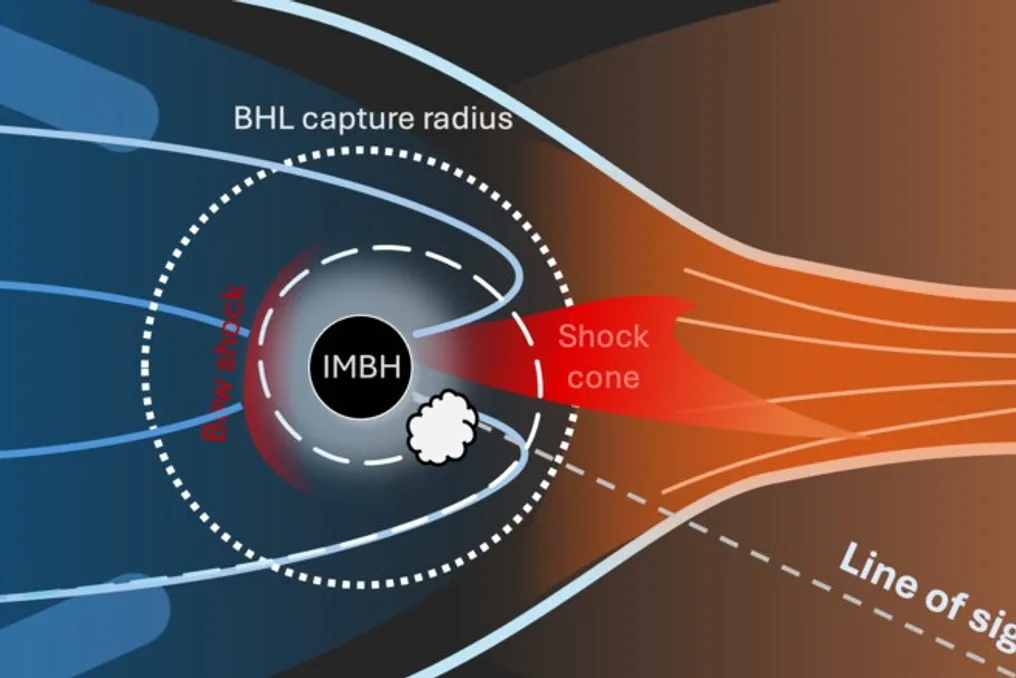
The existence of this black hole was revealed based on the analysis of the characteristics of gas located in its immediate vicinity. These properties match the theoretical model describing the gravitational focusing of interstellar matter absorbed by the moving black hole.
Researchers suggest that this mechanism may have played an important role in the early Universe. It is possible that intermediate-mass black holes gained their mass in this manner before evolving into supermassive black holes.