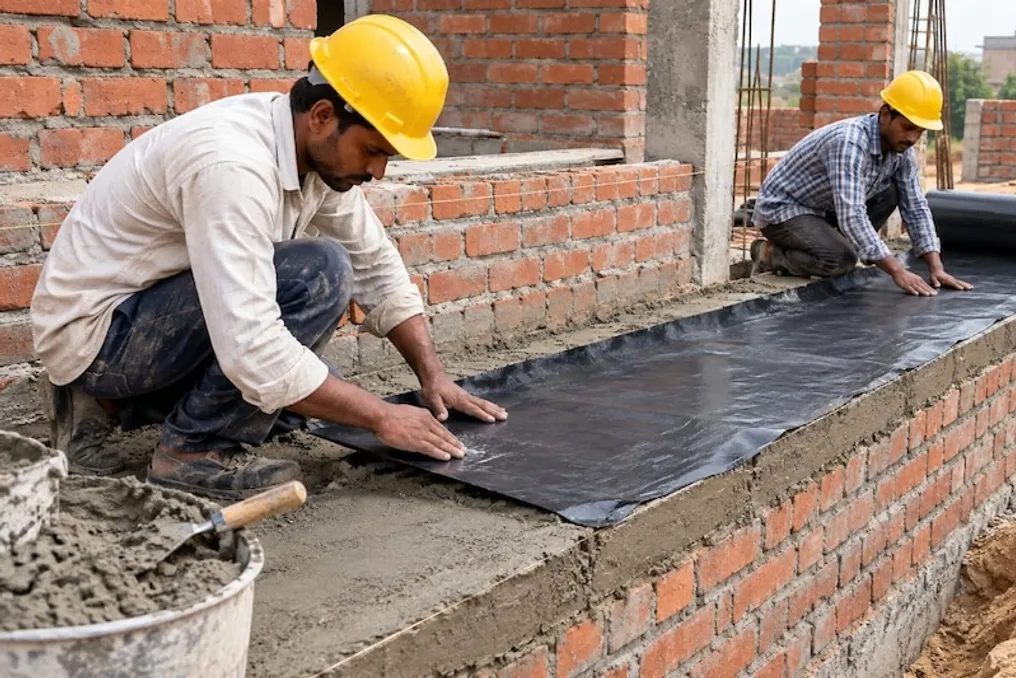
A DPC, which stands for Damp Proof Course, is an essential part of building construction and serves to prevent moisture from rising up the walls. Without using a DPC, house walls can be subject to problems such as dampness or plaster peeling. Currently, there are several methods to ensure the moisture protection of living spaces, one of which is the use of DPC sheets.
There are three main ways to implement DPC: DPC made of cement mortar, bituminous DPC, and DPC sheets or membranes. The essence of DPC is to create a barrier layer on each wall or at the foundation level that prevents moisture penetration. For effective waterproofing at the foundation level, a layer of cement and sand mixture is applied, as well as at the corners. Alternatively, a layer of bituminous mortar consisting of gravel, cement, and sand is used.
Nowadays, a waterproof sheet is often installed over the mortar layer at the foundation level. This is a ready-made barrier that can be placed between masonry layers. It is designed to stop the ingress of dampness or moisture from the ground into the walls.
This sheet is usually made from a special material such as polyethylene, bitumen, coal, or plastic. It blocks the entry of water and moisture present in the soil through capillary action to the walls.
The cost of one roll of DPC sheet or roll ranges approximately from 1000 to 3500 rupees, or about 50 to 150 rupees per meter. The price depends on the quality of the sheet, its thickness in microns, the material, size, or brand. There are various types of DPC sheets.
One of them is the bituminous DPC sheet, which usually starts from 1000 rupees per roll. Heavy polyethylene DPC sheets, made from high-quality plastic or polyethylene, can cost from 2700 to 7500 rupees or even more, depending on length and thickness.
The total cost of installing a DPC sheet in a house is approximately from 50 to 150 rupees per square foot, or about 100 rupees per meter. When using regular concrete and chemical waterproofing agents, the total cost for an average house, including materials and labor, can range from 50,000 to 65,000 rupees.
