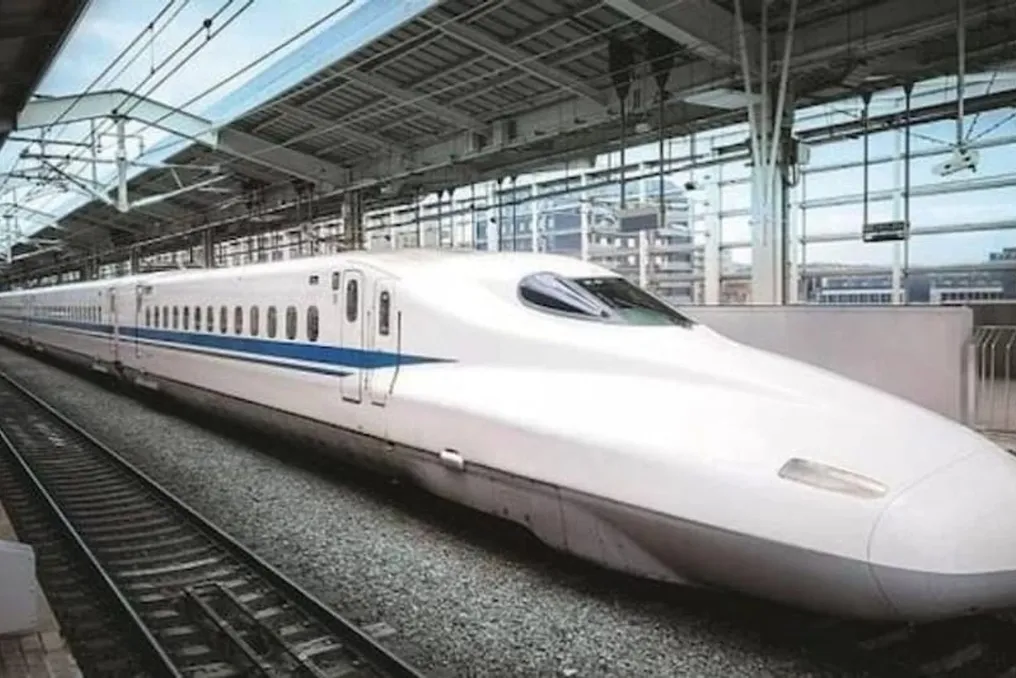
How will high-speed train drivers be recruited in India and what will be the salary difference compared to regular drivers?
Read more
Aaj Tak
www.aajtak.in

How will high-speed train drivers be recruited in India and what will be the salary difference compared to regular drivers?

The first high-speed train project in India, known as the Mumbai-Ahmedabad High-Speed Rail Corridor, is under development. This has raised questions about how drivers for these trains will be selected, how their job differs from that of regular drivers, and what salary they will receive.

The operation of high-speed trains will be carried out by the National High Speed Rail Corporation (NHSRCL). It is anticipated that candidate selection for driver positions will adhere to strict standards. Participants may be tested for medical fitness, visual acuity, quick reaction ability, and through psychometric tests. Special training in train operation will be provided for this role.

The high-speed train differs significantly from a standard train due to modern technologies, high-speed braking systems, and numerous mandatory safety measures. Therefore, selected candidates will need to undergo extensive technical training and practice. Only after completing the training will they be permitted to operate the high-speed train.

Currently, there is no official information regarding the salary of high-speed train drivers. However, experienced regular train drivers, such as those on express and mail services, who have completed various training programs, earn between 60,000 and 90,000 rupees. Nevertheless, there is a possibility that high-speed train drivers will receive a higher salary. According to some media reports, their income could range from 40,000 to 125,000 rupees.

Preparations for the launch of the first high-speed train in India have intensified. For trains operating on the Mumbai-Ahmedabad corridor, a driver, or HSR Pilot, will be required. This duty will be more technical and distinct from the duties of a regular train driver. To become a high-speed train driver, a candidate must possess a diploma or degree in a relevant engineering field. Furthermore, at least three years of experience operating trains with Indian Railways or in a state metro system is required. This means that an individual cannot become a high-speed train driver as a novice.
Similar stories

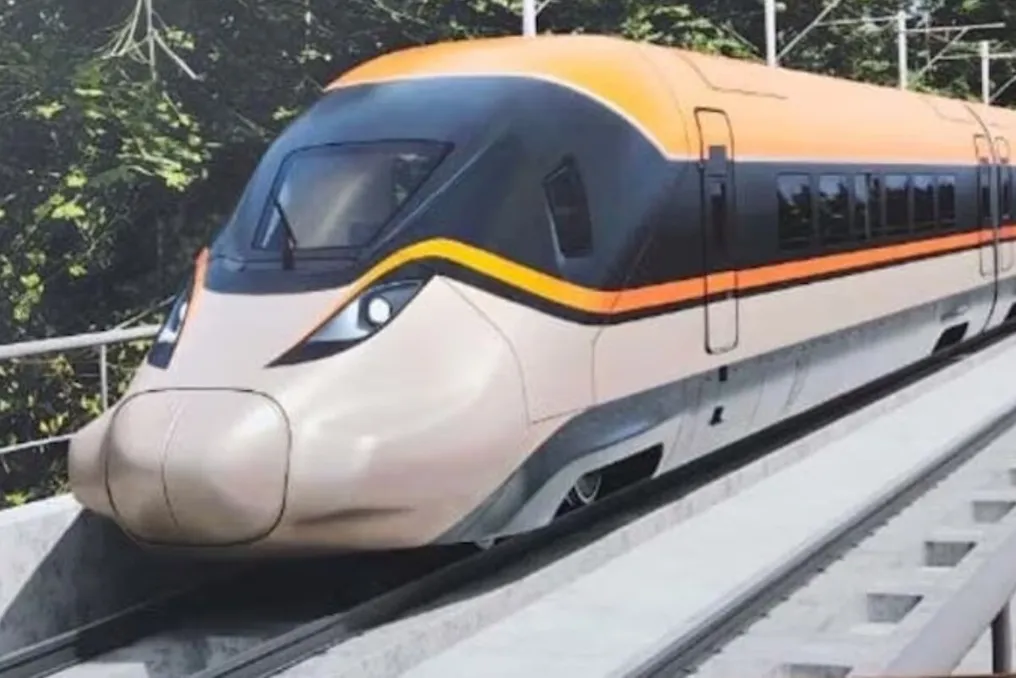
India's first high-speed railway to start operations in a decade; 600 km journey will take 2 hours
Read more
www.aajtak.in

India's first high-speed railway to start operations in a decade; 600 km journey will take 2 hours

India's first high-speed railway is preparing to enter service. Construction work on both tracks and stations is proceeding at an accelerated pace. After ten years since the project began, the launch date for the high-speed train has been virtually determined.

The Bullet Train Project started in India in 2017. Phased operation of the Mumbai-Ahmedabad high-speed rail line is planned to begin on August 15 of next year. Despite the project taking longer than initially anticipated, and according to reports, the cost having roughly doubled, the project continues to gain momentum. Videos of work on tracks and stations are regularly published by Indian Railways on social media, causing widespread resonance.

According to available data, work on launching the first phase of the high-speed train on the Mumbai-Ahmedabad section is scheduled for August 15, 2027. The Surat-Bilimora section may start operating as early as August. Trains will be launched in phases. The speed of these high-speed trains will range from 280 to 350 kilometers per hour. These trains, codenamed B-28, are being built using advanced precision control technology to suit Indian operating conditions.

The Bullet Train project will introduce Japanese Shinkansen technology into Indian Railways. The first train will run between Mumbai and Ahmedabad, significantly reducing travel time between the two major Indian cities. The Mumbai-Ahmedabad corridor is 508 kilometers long. The high-speed train will travel at an average speed of about 300 kilometers per hour between Ahmedabad and Mumbai. Previously, the journey between these cities on the fastest trains took approximately six hours, whereas after the high-speed train launches, this distance can be covered in just two hours.

According to available information, the Mumbai-Ahmedabad corridor will have stops at 12 key stations. These include Mumbai (BKC), Thane, Virar, Boisar, Vapi, Bilimora, Surat, Bharuch, Vadodara, Anand, Ahmedabad, and Sabarmati.

It is important to note that the Mumbai-Ahmedabad project is only part of a broader program of high-speed rail transport for Indian Railways. A total of seven such corridors are planned. These include: Mumbai-Pune, Pune-Hyderabad, Hyderabad-Bengaluru, Hyderabad-Chennai, Chennai-Bengaluru, Delhi-Varanasi, and Varanasi-Siliguri via Patna.

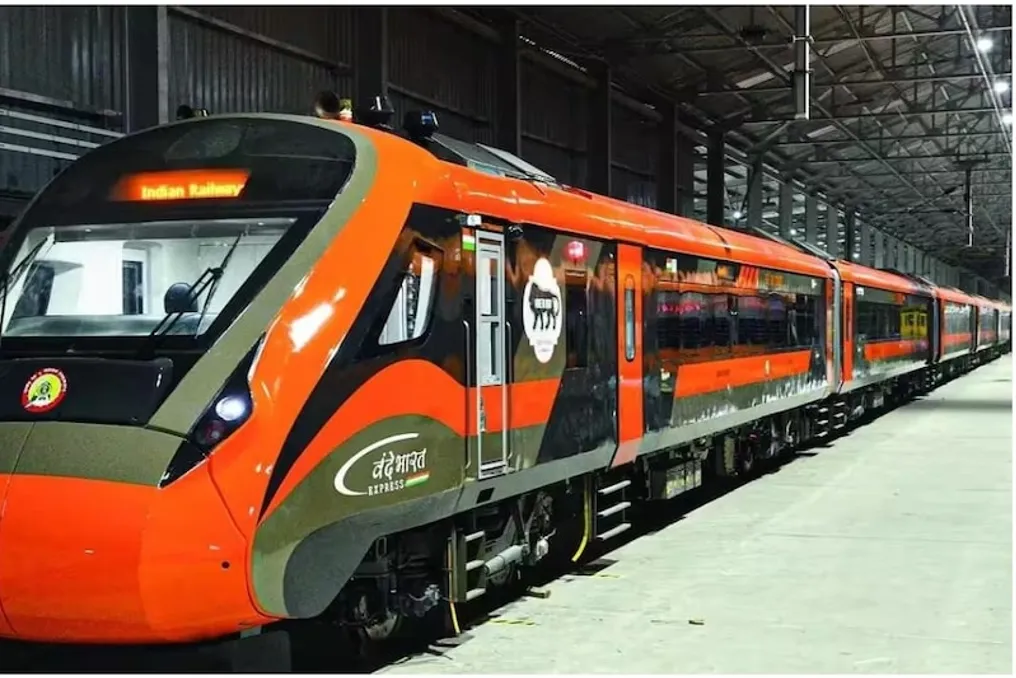
Launch planned for 260 Vande Bharat sleeper trains with improved features
Read more
www.aajtak.in

Launch planned for 260 Vande Bharat sleeper trains with improved features

The Vande Bharat train series, which began its journey in 2019 as a premium daytime service with 'chair-car' class coaches, is now expanding its scope to night routes. It is expected that the introduction of Vande Bharat sleeper trains will enable semi-high-speed rail journeys over longer distances.

The first Vande Bharat Sleeper trains started operating on the Guwahati-Howrah route earlier this year. The second set is undergoing trials; although a potential route between Bangalore and Mumbai was discussed, there is no official confirmation from the railway yet, so the next passenger route has not been determined.

Indian Railways is preparing for a massive expansion of its Vande Bharat sleeper fleet. According to the current plan, a total of 260 Vande Bharat sleeper coaches are to be prepared. This will increase the network of fast and modern trains for long-distance night travel, providing faster service on routes requiring overnight journeys.

Under the existing plan, the 260 Vande Bharat sleeper coaches will be manufactured by various companies and production units. These include: Bharat Earth Movers Limited (BEML) – 10 units, Chennai Integral Coach Factory (ICF) – 50 units, Kinet Railway Solutions (KRS) – 120 units, and Titagarh-BHEL – 80 units.

BEML has been tasked with preparing the first 10 sets, each consisting of 16 coaches. ICF, in turn, will produce 50 sets of 24 coaches, including a restaurant car. Officials stated that the drawings for this have already been developed.

Kinet Railway Solutions, a joint venture between Rail Vikas Nigam Limited (RVNL) and the Russian company Transmashholding (TMH), is responsible for manufacturing 120 sets. All these sets will be assembled in Latur, and each train will have 16 coaches. RVNL reported that production has already begun. At the 23rd Annual General Meeting, Chairman Salim Ahmed noted that the prototype readiness deadline has been changed: the initial deadline of June 2026 has been extended to March 31, 2027.

The Vande Bharat Sleeper is designed as a semi-high-speed night train. Its design speed is 180 km/h, but the actual operational speed can reach 160 km/h depending on the route and railway infrastructure. Unlike traditional locomotive-hauled trains, the Vande Bharat Sleeper uses a distributed power system. With this technology, traction is provided not by a separate engine, but by an acceleration system installed in each coach. This allows the train to reach high speeds and brake quickly. This technology helps the train increase its average speed and reduce travel time.

The Vande Bharat Sleeper is designed as a semi-high-speed night train and incorporates technical features inspired by modern European railway systems. It can be argued that passengers will receive benefits in these trains surpassing those of Rajdhani trains, with a level of luxury comparable to air travel. The existing 16-coach prototype includes 11 AC 3-Tier coaches, 4 AC 2-Tier coaches, and 1 AC First Class coach. A new design with berths and access to upper bunks has been developed for passenger convenience. To make the night journey comfortable, the train is equipped with nighttime lighting, an integrated announcement system, display panels, CCTV cameras, a modular restaurant car, reading lamps, charging points, and lounge tables.

Great attention has also been paid to the safety of the Vande Bharat Sleeper. The train features sealed passages and automatic connecting doors, as well as automatic station doors. For passenger convenience, toilets with a bio-vacuum system and separate showers for people with disabilities are provided. The AC First Class coach also offers shower facilities and hot water. From a safety perspective, the train integrates features such as Kavach, regenerative braking, a centralized coach monitoring system, and an emergency communication system. The expansion of Vande Bharat Sleeper could be a significant change for long-distance passengers. Nevertheless, before launching new services, testing of prototypes, certification, and preparation of relevant routes must be completed.

Popular