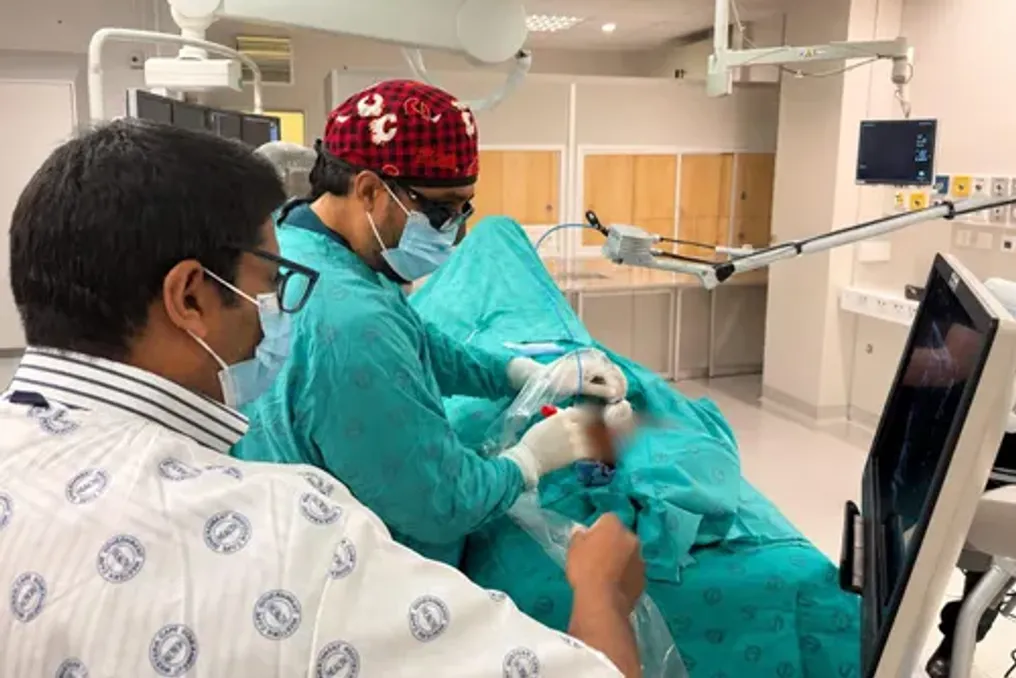
Patients suffering from problematic thyroid nodules have gained a new treatment option after Groote Schuur Hospital reportedly performed the first microwave ablation procedure for the thyroid in Africa within the public healthcare system.
This procedure was successfully carried out on August 26 and offers selected patients a less invasive alternative to traditional thyroid surgery. Previously, the treatment of thyroid nodules was usually limited to monitoring the nodule or surgically removing part or all of the gland.
The microwave ablation method is characterized by doctors using ultrasound guidance to insert a thin probe directly into the nodule and apply microwave energy to affect the target tissue. Over time, the nodule gradually reduces in size.
What are the potential advantages?
For eligible patients, this procedure may allow them to avoid major open surgery and, in many cases, general anesthesia. Furthermore, it promotes faster recovery, less disruption to daily life, and preservation of healthy thyroid tissue. This could potentially reduce the likelihood that some patients will require lifelong thyroid hormone replacement therapy after treatment.
The implementation of this procedure was made possible through collaboration between the departments of endocrine surgery and interventional radiology at Groote Schuur Hospital, as well as with UCT Interventional Radiology and Cape Town Interventional Radiology.
Dr. Dale Krimmer, head of the interventional radiology department at Groote Schuur Hospital, noted that this breakthrough goes beyond simply performing a new procedure.
What are the risks and limitations?
Krimmer stated that participating in the first microwave ablation procedure for the thyroid in Africa is an exceptional achievement not only for Groote Schuur Hospital but also for the future of interventional radiology in Africa. He emphasized that the significance of the moment lies in implementing this advanced, minimally invasive method in the public sector to build sustainable, scalable, and transferable experience.
Krimmer also reported that the hospital aims to develop local expertise and create a Center of Excellence where patients can access modern treatment regardless of whether they can afford private medical care.
Why is this important for public health?
The Western Cape Department of Health and Wellness stated that the introduction of this procedure into the public sector can benefit the entire healthcare system. For carefully selected patients, avoiding open surgery can reduce the burden on operating theaters, anesthesiology services, hospital beds, and postoperative care. This, in turn, helps preserve specialized surgical capacity for patients requiring more complex treatment.
The Department noted that this achievement demonstrates the possibilities of collaborative work for the patient's benefit. It also stressed that the key factor in expanding skills and providing innovative treatment to publicly assisted patients has been the cooperation between public health services, academic institutions, and specialized partners.