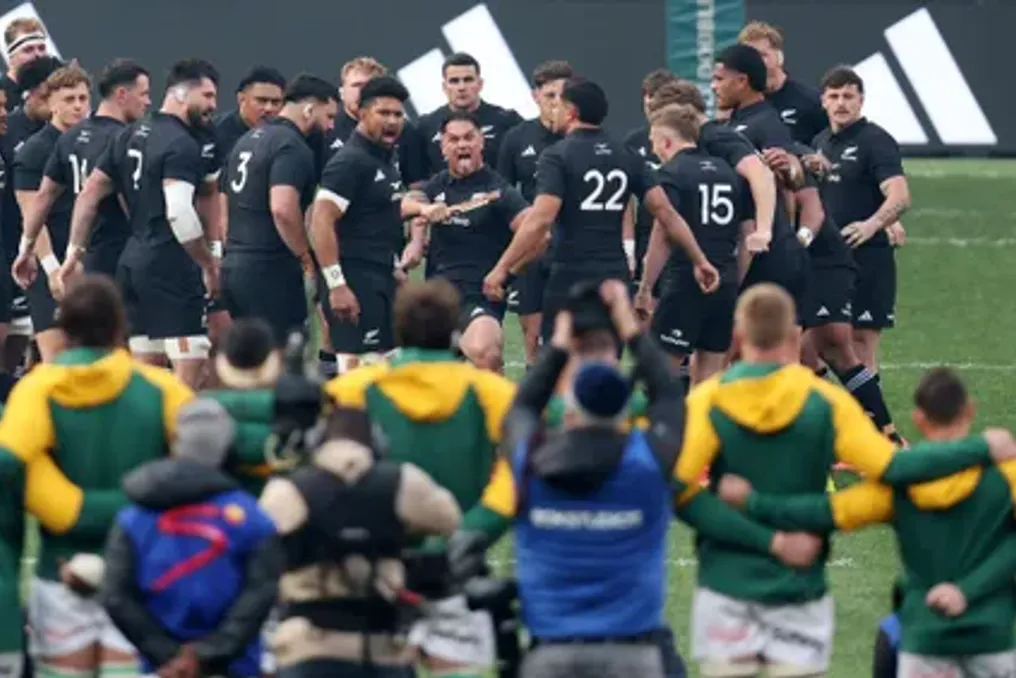
In Baltimore, USA, which transformed into a meeting place of nations, cultures, and sporting traditions that day, the first encounter between South Africa's Springboks and New Zealand's All Blacks on American soil took place in the history of their long-standing rivalry.
The Springboks team defeated the All Blacks with a score of 43–28, concluding an impressive 3–1 series. Beyond the sporting result, the attendance was historically significant: official attendance reached 68,173 people, marking the largest crowd for any rugby match in American history.
This match concluded the four-game 'Greatest Rugby Rivalry' series and marked the first time these historic opponents met in the United States, although both teams had previously played separate matches in America.
The event also demonstrated America's growing connection to rugby, as the country prepares to host the men's Rugby World Cup in 2031 and the women's tournament in 2033.
The significance of this event extends far beyond attendance records, commercial opportunities, or the triumph of the Springboks. It served as a reminder that sport possesses a rare diplomatic language. Nations that may have political disagreements are still capable of meeting within agreed-upon rules. People separated by oceans, history, and customs can recognize courage, discipline, and self-sacrifice in each other.
Sporting competition allows people to compete fiercely without denying each other's humanity. The Springboks understand this truth better than many. South Africa's national rugby team once reflected the racial divisions of the apartheid era, and for many Black South Africans, the Springbok emblem symbolized oppression and exclusion.
Nevertheless, Nelson Mandela understood that the symbol dividing his country could become a tool for its healing. When South Africa hosted and won the Rugby World Cup in 1995, Mandela wore the Springbok jersey. This simple gesture showed white South Africans that they were part of a new nation, and Black South Africans that reconciliation required courage from everyone.
This did not erase the country's painful history, but it created a shared moment where millions of people could envision a different future. This is why the film 'Invictus' continues to resonate; it was not just a film about rugby, but about leadership, forgiveness, and the difficult work of building a nation from people who were taught to fear one another.
The modern Springboks continued this legacy. Captain Siya Kolisi represents a South Africa that apartheid never wanted to show the world: a young Black person of humble origins reaching the pinnacle, leading a diverse national team to consecutive world championships.
The All Blacks demonstrate their powerful culture. Their haka is not an empty spectacle but a declaration of identity, heritage, unity, and readiness. Watching the haka performed before 68,173 people in Baltimore meant witnessing a culture that refuses to leave its heritage behind while entering the modern world.
It also teaches America a lesson: unity does not require uniformity. The Springboks do not abandon their South African identity, and the All Blacks do not dilute their Māori or New Zealand traditions. They stand proudly as themselves, yet share one field, respect one whistle, and exchange handshakes after the battle.
Political culture often teaches us to view disagreements as hatred, and opponents as enemies. Rugby offers a healthier model. Athletes confront astonishing force, but violence is regulated by rules, discipline, and mutual respect. Competition does not eliminate dignity; rivalry does not necessarily have to turn into contempt.
Baltimore proved to be the ideal American host for this historic first time. It is a city too often described through its difficulties, ignoring its beauty, resilience, and international potential. On that Saturday, the world saw a different Baltimore: energetic, hospitable, diverse, and capable of hosting one of the greatest spectacles in world sport.
Sport cannot sign treaties, end wars, or erase injustice. However, it is capable of creating emotional conditions in which people begin to see each other differently. It gives strangers something common to celebrate, and nations a peaceful arena where pride can be expressed without destruction.
South Africa and New Zealand arrived in Baltimore as fierce rivals, and their fans came with different flags. The Springboks left as champions. Nevertheless, inside that record stadium, we all became part of one historic gathering.
In conclusion, the power of sport lies in the fact that for a few precious hours, it does not ask where we come from, but shows who we can become together.