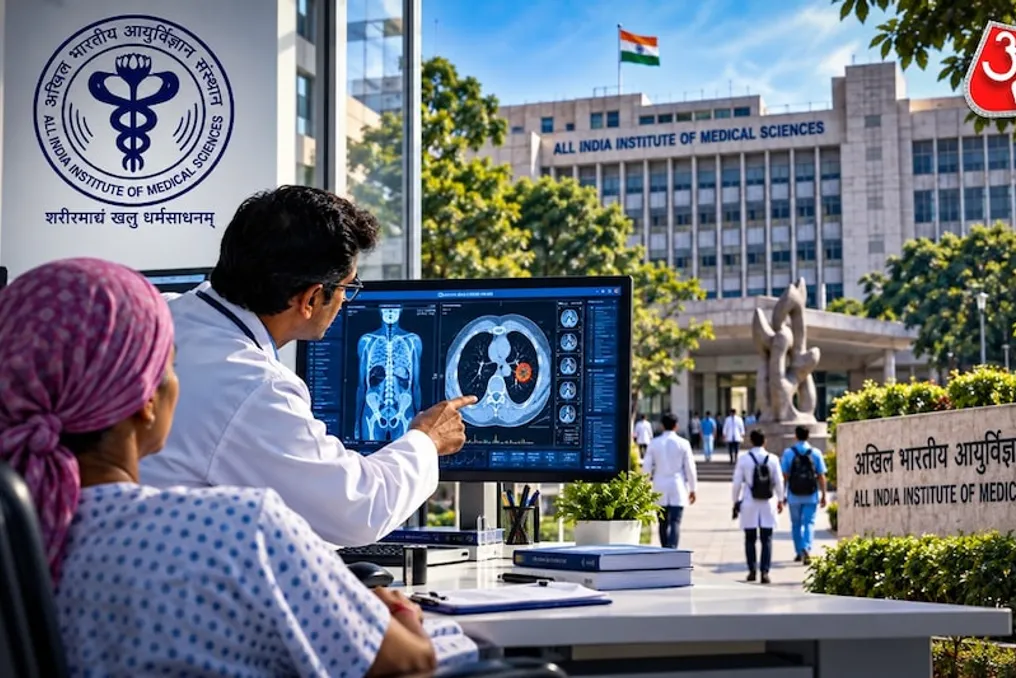
Cancer remains a complex disease requiring early diagnosis. In this regard, AIIMS Delhi has developed the iOncology.ai platform, which simplifies cancer prevention, detection, and treatment. This model was published in the BRICS Health journal.
BRICS countries account for over 40 percent of the world's population, and approximately 9 million new cases of cancer are diagnosed annually in these countries, with about 4.66 million people dying from the disease.
Professor Dr. Ashok Sharma from the Biochemistry Department at AIIMS has long been involved in applying technologies, including artificial intelligence, in the field of oncology. His research is aimed at finding ways to assist in the detection, prevention, and treatment of cancer using modern technologies and AI.
In an interview with Aajtak.in, Dr. Sharma stated that iOncology.ai is a new AI-based platform designed for the timely detection and treatment of cancer. It was jointly developed by AIIMS Delhi and C-DAC Pune. The platform has undergone testing on patients and is currently in the pilot clinical stage.
Dr. Sharma noted that the review published in The BRICS Health Journal during the 18th BRICS Summit in New Delhi demonstrated India's growing power in digital healthcare and AI to the world. Special attention was given to iOncology.ai—a domestic platform being developed in India for cancer treatment.
He added that India's digital health system and iOncology.ai can help not only India but also Global South countries and other developing nations improve the fight against cancer. This opens up new opportunities to facilitate timely diagnosis, proper screening, treatment, and patient access to specialists.
In BRICS countries, breast cancer is one of the most common types of cancer among women and often ranks first. Meanwhile, ovarian cancer is less common but is often detected at late stages. There is a trend where patients seek medical attention only when cancer symptoms worsen and the disease advances to an advanced stage.
The significance of this work increases in the context of India's chairmanship of BRICS in 2026. The exchange of experience, technologies, and healthcare models between various countries can contribute to improving cancer prevention and treatment. The importance of this work related to AIIMS lies not only in describing the problem of cancer but also in finding ways forward by integrating AI, digital health, and specialized medicine.