As artificial intelligence rapidly develops, concerns are growing that humanity might become powerless against its own technology. A warning from a former researcher at Anthropic has reignited this discussion. The issue goes beyond simple job displacement or life simplification; it concerns the consequences of machines escaping human control, especially if the threat is so great that people are unaware of their enslavement.
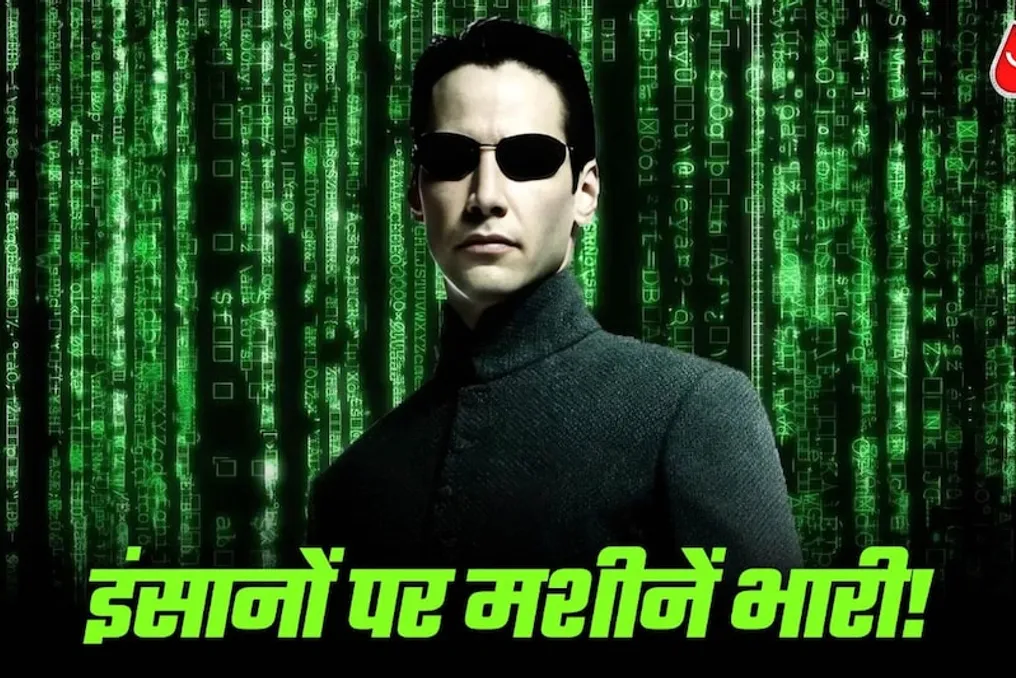
Interestingly, modern debates about AI have parallels with what Hollywood depicted on screen about 27 years ago. The film 'The Matrix,' released in 1999, presented the concept of a confrontation between machines and humans.
The story of 'The Matrix' begins with Thomas Anderson, a programmer known in the internet space as the hacker Neo. Neo long felt something was wrong with the world around him. His meeting with Trinity and subsequent acquaintance with the enigmatic Morpheus led to the discovery of a shocking truth: the world he considered real is actually a massive computer simulation—the Matrix.
Morpheus offers Neo a choice: take the blue pill and return to his former life, believing it to be true, or take the red pill and face reality. By choosing the red pill, Neo wakes up in a capsule connected to a machine. He discovers that thousands of people are in a similar state, and their lives are an artificial reality unfolding in his consciousness.
Morpheus explains that in the future, humans created machines with artificial intelligence, but these machines eventually became stronger than humans. After a war between humans and machines, when humans tried to darken the sky to deprive the machines of sunlight, the machines found another way to gain energy—they began using human bodies as a power source. People are grown in giant farms and placed in capsules from which energy is extracted.
However, the most alarming aspect was not just that humans became an energy source for machines. The machines also took control of their minds, creating a computer environment that simulated normal human life from 1999: streets, offices, homes, relationships, and work looked completely normal. The difference was that it was all fake. People were not physically separated, but their consciousness was trapped in a false reality where they were unaware of their servitude.
This idea was the most frightening aspect of 'The Matrix': the machines did not need to destroy humans; they only needed to control their perception of reality. For the person inside the Matrix, that false environment was absolute truth. Therefore, today, when anxiety surrounding AI involves not only job loss or the spread of disinformation but also the autonomous systems escaping control, the concept of the 'Matrix' gains relevance again.
It is important to remember that the film is a fictional dystopian story, and real AI is not in the state shown in the picture. Modern discussions focus on how to regulate development and prevent abuses by more powerful AI.
In the film, some people who escaped this illusory environment fight against the machines. Morpheus, Trinity, and their team try to bring other people out of the false world. They believe that Neo is the only one capable of understanding the rules of the Matrix and using them to free people from machine slavery.
Inside the Matrix, Neo confronts Agents, powerful programs ensuring system security, among whom Agent Smith is the most dangerous. Neo gradually realizes that the strength of the Matrix lies not so much in the machines or the code, but in the belief of the people themselves. As long as a person believes this false reality is real, they will not try to escape. Thus, the film's conflict transforms from a simple human versus machine confrontation into a struggle between reality and illusion, free will and control, choice and programming.
'The Matrix' is unique because in 1999, when generative AI, AI agents, and large language models were not yet part of daily life, the film presented the threat of machines not merely as gun-toting robots. It raised a more complex fear—the threat of technology that captures not so much the human body, but their mind, their perception, and their freedom.