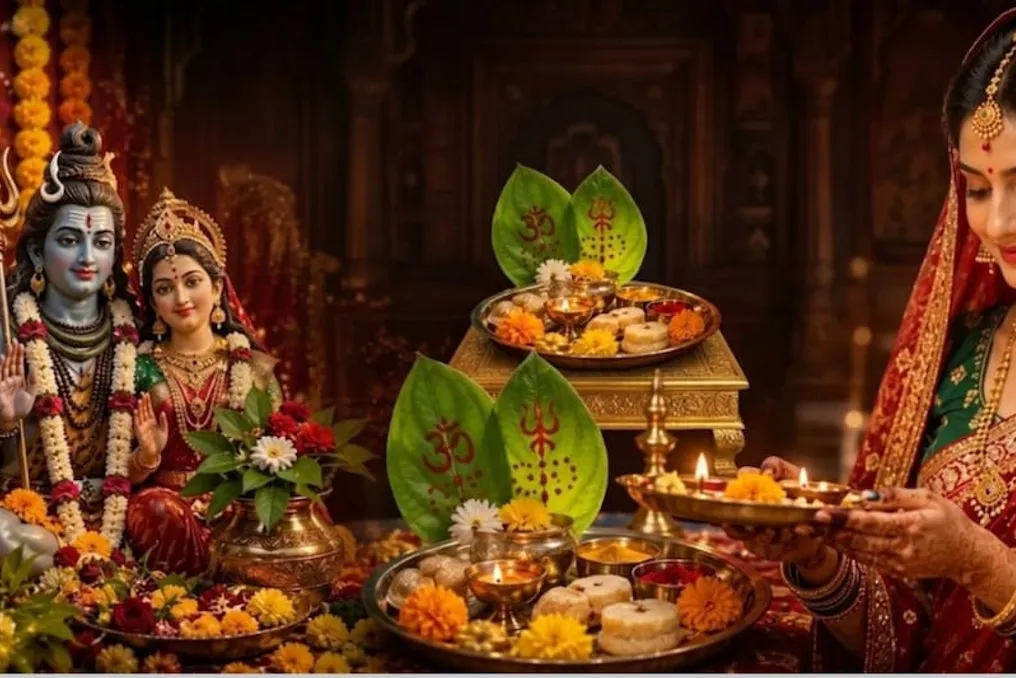
Hartalika Teej is recognized as one of the major fasts associated with marital happiness and family well-being. According to beliefs, this fast is observed in memory of the severe asceticism of Mother Parvati, who sought Lord Shiva as her husband.
Married women observe this fast wishing longevity for their husbands and a happy married life, while unmarried girls celebrate it hoping to find a desired partner.
This year, Hartalika Teej is celebrated on September 14, 2026, which falls on a Monday. This fast is performed during the third day of the Bhadrapada Shukla Paksha month. Since the third day falls on the morning of September 13 and ends on the morning of September 14, the fast is observed on September 14 based on the rising date.
According to the New Delhi Panchang, the auspicious time for morning prayers during Hartalika Teej will be from 6:05 AM to 7:06 AM. It should be noted that due to differences in regional and local Panchangs, there may be time discrepancies. Furthermore, in many places, there is a tradition of worshipping Shiva and Parvati during the evening Pradosha Kala, so it is recommended to check the local time according to your city's Panchang.
According to mythological representations, Mother Parvati undertook severe penance to make Lord Shiva her husband. Her father, Himalaya, wanted to arrange a marriage between Parvati and Lord Vishnu, but Parvati wished for Lord Shiva to be her spouse. It is said that Mother Parvati's companion took her to the forest, where she fasted, worshipping Shiva. She created a Shivling from clay and decided to obtain Shiva as her husband. Thanks to her asceticism, Lord Shiva accepted her as his consort. This story is connected to the Hartalika Teej fast.
The main worship during Hartalika Teej is dedicated to Lord Shiva and Mother Parvati, but there is also a tradition of worshipping Ganesha. To perform the ritual, one can set up a small statue or Shivling of Shiva and Parvati made of clay or sand. After this, water, Panchamrit, akshat, roli, sandalwood, flowers, belapatra, incense, and a lamp are offered. Items related to marital happiness are presented to Mother Parvati, and the story of the Teej fast is heard. Then, Aarti is performed for Shiva and Parvati, praying for family happiness and prosperity.
It is considered auspicious to engage in charity on this day. According to one's means, one can donate clothes, grains, fruits, sweets, and decorative items intended for those in need. Married women can gift saris, bangles, sindoor, bindi, mehndi, or other ornaments to needy women. One can also donate grains or fruits. When making donations, sincerity and capability should be prioritized over ostentation.
During Hartalika Teej, women apply sixteen types of adornments. Sindoor, bindi, bangles, mehndi, mangsutra, and payal are considered symbols of marital bliss. During worship, there is also a tradition of offering items related to marital happiness to Mother Parvati, as it is believed to bring prosperity and a happy married life.
Many women observe the fast without water during Hartalika Teej, meaning they abstain from both food and water throughout the day. However, this is a rigorous fast, and everyone has different physical endurance. If anyone has health problems, is pregnant, taking medication, or has been advised by a doctor against prolonged fasting, it is crucial to consult a physician before observing the waterless fast. It is important to take care of one's health alongside religious faith.
According to several traditions, a vigil is held at night during Hartalika Teej, reading hymns and stories of the fast of Shiva and Parvati. The fast concludes the day after bathing and prayer. The methods of concluding the fast and prayers may vary slightly in different regions.
The story of Hartalika Teej emphasizes the importance of determination, asceticism, and faith. Therefore, the goal of this festival is not merely to observe the fast, but also to remember the reverence for Shiva and Parvati, as well as the ideals of their married life.