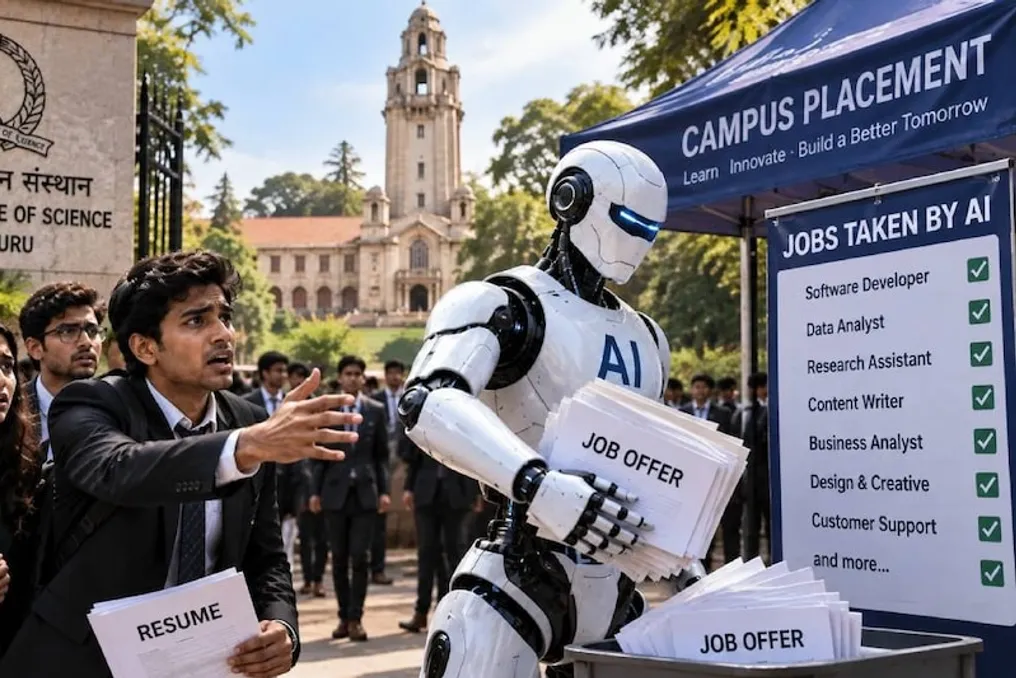
Artificial intelligence is no longer limited to simple tasks such as playing chess or drafting emails. It poses a complex question to humanity: what will be the role of humans when raw intelligence becomes a mass-produced commodity?
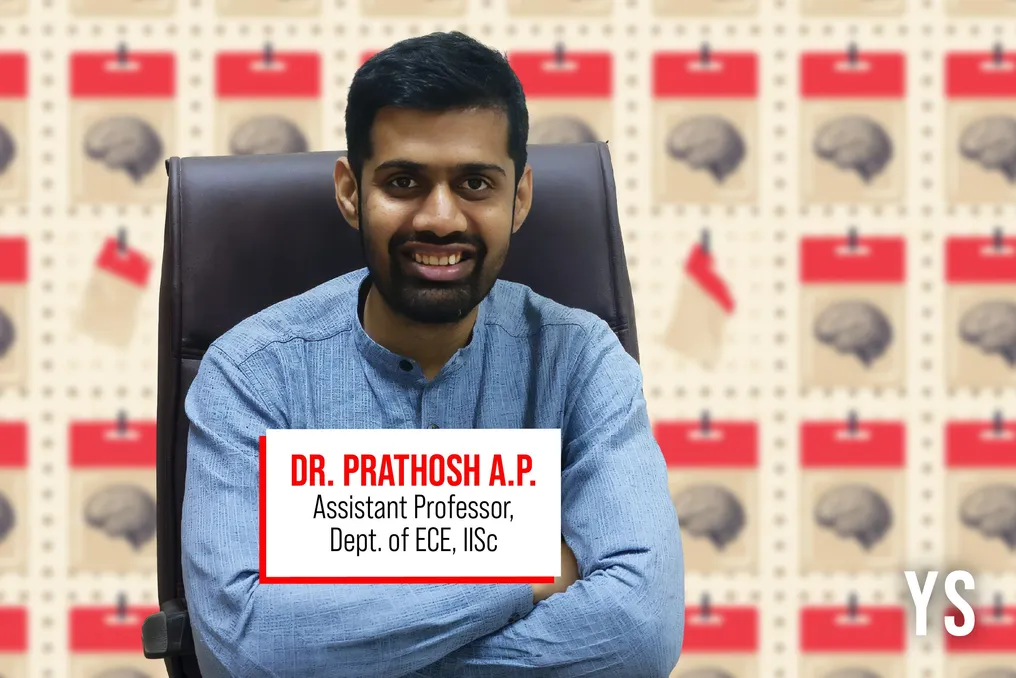
During a recent class discussion, Dr. Prathosh, an assistant professor in the Department of Electrocommunication Engineering at the Indian Institute of Science (IISc) in Bengaluru, openly labeled the current moment a potential 'civilizational crisis.' He questioned: 'If intelligence becomes a commodity, if thinking becomes a commodity, then what is the point of our existence?'
For Dr. Prathosh, this is not just theory. He admitted that he has stopped hiring research assistants for certain tasks because AI agents can simultaneously solve dozens of complex problems, eliminating the need to slow down a project to human speed.
The immediate concern is not only job loss but also who will receive income. While technological optimists predict a future of abundance thanks to AI, the real economy suggests otherwise. Higher productivity alone does not guarantee general prosperity. Within a capitalist system, benefits naturally concentrate among the owners of computers, chips, and algorithms.
Dr. Prathosh warned that without structural changes, society could easily slip into a form of digital feudalism. For a country like India, whose vast workforce depends on intellectually intensive professions, the economic consequences in the coming years could be quite significant.
The question arises regarding the value of standard university degrees if AI can instantly write, code, analyze, and conduct research. Dr. Prathosh shared a personal example: his daughter considers ChatGPT one of the best teachers she has ever known. This tool never shows impatience or disappointment and can explain a concept in ten different ways without judgment.
If AI can personalize education better than a traditional classroom, universities will have to change their operating model. They can no longer sell information; they must focus on what AI cannot offer: community, practical collaboration, and human connection. Dr. Prathosh noted that 'it is enough to write KL divergence; machines will understand it themselves,' urging students and faculty to move away from hyper-technical mechanical skills. Instead of training for competition with AI, people need to learn to solve real scientific and social problems together with it.
The true challenge ahead is not creating a smarter model, but defining the true role of humanity when thinking ceases to be its exclusive prerogative.