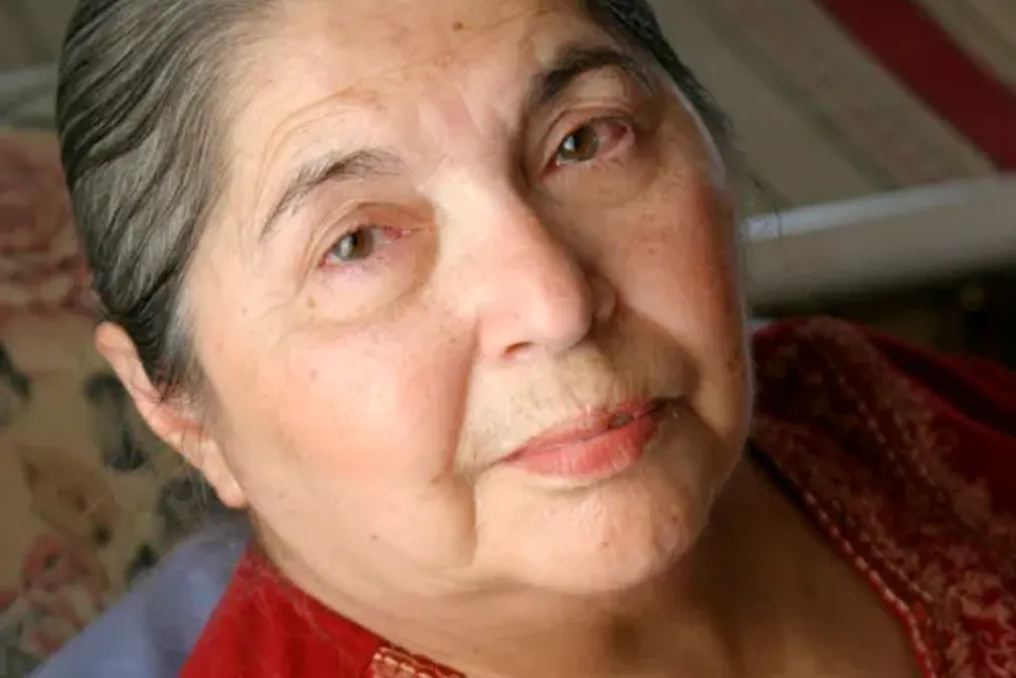
Professor Fatima Mir was a social activist for the majority of her life, and Alt Fatima Mir is known as an anti-apartheid activist, scholar, and writer whose determination and commitment to justice deeply influenced her family and community.
Recently, the University of KwaZulu-Natal hosted the 2026 Professorial Memorial Lecture Forum titled 'Commitment to Truth, Ethical Leadership, and Defending Democratic Spaces.' Mir's daughter, Shamim Mir, shares memories of growing up in a family closely involved in the fight against apartheid, recalling a childhood shaped by activism, culture, theatre, family, and her mother's profound influence.
Lessons Carried into Adulthood
When her siblings, Sheenaz, Rashid, and she herself, were growing up, their mother Fatima Mir was already widely known in Durban, where they lived. At seventeen, she attracted the attention of the politically aware public at her first public speech during the 1946 Campaign of Passive Resistance on Durban's Red Square.
In her memoirs, her mother recalls hearing on a bus after this meeting how one woman told her friend: 'You should have heard this young girl speak.' By the time her children were born, her mother was speaking at numerous protest rallies, organizing women's groups, and participating in protests against all forms of apartheid injustice, including pass laws, arbitrary detention, and land confiscation.
For the three children, it was as ordinary as the sunrise every morning that their mother and father participated in the struggle to liberate the country from apartheid. They understood that this fight was necessary for the recognition of equality for all people, so that children like them would not be forbidden from being in a beach pool just because of the color of their skin.
The idea that this was a just struggle, and that their parents were heroes of the fight, was reflected in the eyes of other members of her community. When she was six years old, she was late for class after visiting her father, who was in Central Durban jail. He was one of many detained during early morning security sweeps following the Sharpeville massacre in 1960. Even while imprisoned on Eid day, Muslim detainees were allowed to visit their children on this special occasion.
When she arrived at class after the visit, the teacher, Mrs. Joseph, called her to the desk, and soon she was surrounded by classmates attentively listening to her answers to Mrs. Joseph's questions about visiting her father. At that moment, she felt like a heroine, shining with her father's heroism.
In Grey Street, Durban, in the 1960s, she was often asked, 'Whose children are you?' When they answered, they were met with looks and comments admiring their mother's courage in opposing apartheid. They were proud of both parents.
At an early age, they learned that fighting injustice was a normal activity. They attended meetings with their mother; listened to her speak from the podium; joined her and other women in 1960 vigils where they sang songs of freedom.
Like most people, her mother had many facets, and the children had the opportunity to get to know most of them. There were also evening stories she read to them at night. Although two of the most memorable books made all three cry, lying in bed lined up, heads on pillows, while they listened in amazement to their mother's voice reading Dickens' 'Tomboy and Son' and Kingsley's 'Water Butterflies.' Perhaps this is why she loves listening to audiobooks so much today!
There were moments when her mother's adventurous spirit broke through her more serious side as a writer and fighter for justice. When she was in sixth grade, one or two hours before the end of the school day, the teacher said, 'Shamim, pack your backpack; your mother is here to pick you up.' She packed her things, feeling anxious. What could have happened? She wondered. When she reached her mother's car near the school gates, she was beaming with a smile. 'We are going to the beach for a picnic,' she said. And the three of them went with their mother to spend the rest of the day at the beach.
Her mother took the three of them, aged ten, eight, and seven, to a spot on a hill overlooking the market gardens below and the Umgeni River winding towards the Indian Ocean. Armed with pencils and paper, all four concentrated on drawing the surrounding landscape. Then, at home, the mother brought out paints and brushes, and they turned the pencil sketches into paintings.
They grew up in a large extended family, centered around their grandparents' home on Ritson Road. This was a place they went to after school every day, where they spent weekends and celebrated Eid. Their two grandmothers, grandfather, and mother's siblings cared for them. Their mother was their beloved daughter and sister, and they loved them all too.
They were immersed in the world of protest theatre at an early age. Among the plays she remembers are Alan Parton's 'Sponono,' Krishna Shah's 'King of the Dark Chamber,' Benji Francis and Maynard Peter's 'Zoo,' with playwrights, producers, directors, and actors spending long hours in their home on Bernwood Road.
Some of these plays they saw in official theatres, attending almost every performance after their nap to stay alert. Some they saw in the garden, which was turned into an amphitheater, where actors performed for what seemed like hundreds of their parents' friends. They attended mushair—poetry evenings—in the homes of their parents' cousins and uncles, who were skilled Urdu poets.
One thing in which her mother excelled as a caring older sister was planning weddings, and she also showed herself in one instance when looking for a match. This happened during the performance of 'King of the Dark Chamber' at Springfield Training College Theatre, when she noticed a beautiful young volunteer steward. Immediately, her mother thought of her unmarried brother and took action. She invited the young woman to meet the family. The young woman, confused, agreed to the invitation to meet her two grandmothers, and at this meeting, the uncle got a chance to see her. He was charmed and proposed, and they gained a new aunt who spent her uncle's entire life with him.
Today, she values that what seemed like an ordinary, taken-for-granted childhood back then was filled with rich experiences that contributed to the formation of her and her siblings in adulthood.