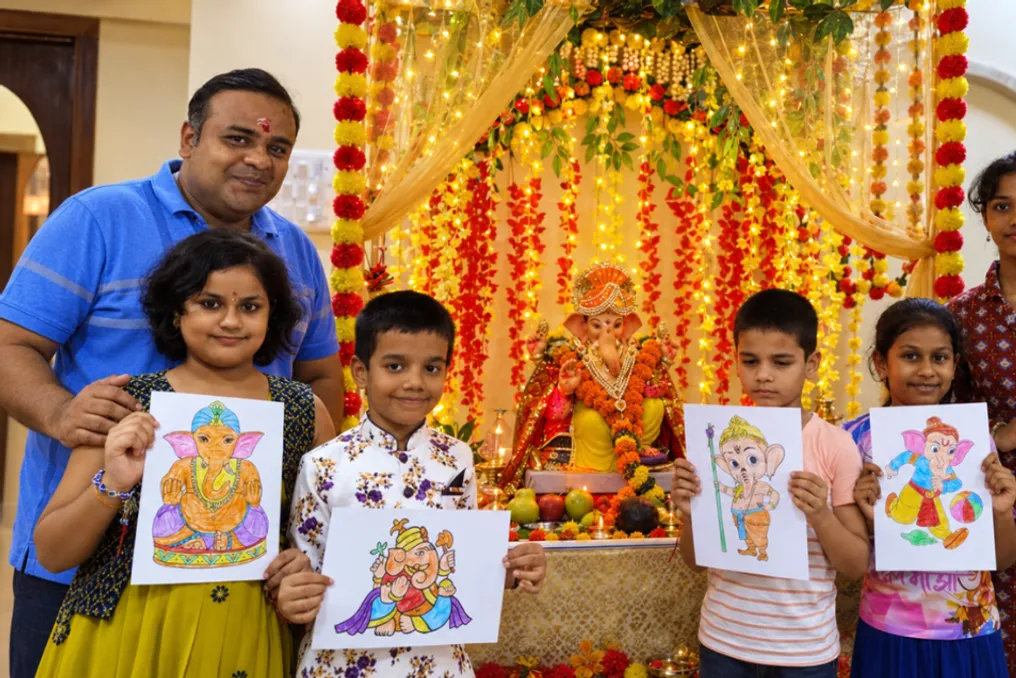
Mumbai couple asks guests to bring stationery instead of sweets for charity benefiting 400 children
Read more
The Better India
thebetterindia.com

Mumbai couple asks guests to bring stationery instead of sweets for charity benefiting 400 children

In celebration of the festival, Puja and Dipesh Dedhia in Mumbai have made an unusual request to guests: instead of traditional festive treats, they are asking people to bring notebooks, pencils, paints, or any other new, unused stationery supplies.

After the festivities conclude, these donations will be directed beyond their own home. The couple plans to use them to create stationery kits for approximately 400 students at Adivisi Ashram Shala in Hadavali, ensuring each child has fresh school supplies for the entire academic year.

For Puja and Dipesh, this is an extension of their Ganesh Chaturthi celebration traditions. Their approach to Bappa is eco-friendly: the immersion ritual is conducted at home, and the water from it, containing seeds, is then used to water their plants.

This year, they aim for the festival to extend beyond their home, transforming into stationery kits that will ultimately end up in children's school bags.

Constant Involvement

Puja, who is qualified as a chef and certified nutritionist, and Dipesh, who works as a banker, are the founders of the Matoshreee Foundation. For this couple, this initiative is not a one-time act of charity. Since July 2023, they have been preparing and distributing breakfasts to over 100 needy people from low-income groups every week.

What started as a small effort has turned into a regular weekly commitment. They have successfully completed 167 consecutive Sundays without missing a single one.

This belief that significant change is achieved through consistent participation is reflected in and shapes their Ganesh celebration.

From 40 Children Last Year to a Goal of 400

During Ganesh Chaturthi last year, Puja and Dipesh decided to add another type of offering to their celebrations. They collected 40 stationery kits for children from the underprivileged community. These included items that many of us might not consider when shopping: notebooks, pencil cases, paints, and other everyday school supplies.

However, how happy the children who received something of their own were deeply moved the couple. This year, they decided to think on a much larger scale. Their goal is to collect kits for about 400 students, including useful items such as notebooks, pencils, pens, paints, drawing albums, and geometry sets.

Nevertheless, preparing 400 kits is not an easy task. It requires coordination with suppliers, discussing requirements, monitoring supplies, and ensuring the delivery of everything needed to the children. Nevertheless, for Puja and Dipesh, every kit justifies all the effort if it helps one child feel slightly better prepared for learning.

How You Can Help—Even If You Are Not in Mumbai!

On September 14th and 15th, when friends and family visit the Dedhia home for Ganesh worship, the couple asks them to bring stationery instead of usual gifts. They accept new, unused stationery until September 20th.

Help can also be provided by those living far from Mumbai. Residents of other parts of Maharashtra, India, or even outside the country can contact Puja and Dipesh. The couple is ready to provide a list of necessary stationery items and supplier contact details, allowing supporters to coordinate their actions directly with the seller and contribute to creating one or more kits.

Since the offering to Bappa does not necessarily have to remain on the altar, it can become a new notebook in a child's hands, paints waiting to fill an album, or a geometry set packed in a school backpack for the coming year. For Puja and Dipesh, this is the essence of the Ganesh Chaturthi celebration: welcoming Bappa into their home while carrying the spirit of generosity beyond it.
Similar stories

Nine Ways to Use Ganesh Chaturthi Festival to Teach Children Sustainable Development Principles
Read more
thebetterindia.com

Nine Ways to Use Ganesh Chaturthi Festival to Teach Children Sustainable Development Principles

The festival of Ganesh Chaturthi generates great enthusiasm in children. Children's involvement is present at every stage of the celebration: from bringing Bappa home and decorating the place of worship to helping prepare modaks and participating in the festivities.

This year, this festival can also serve as a lesson that will stay with children long after the celebrations end, teaching them about caring for the environment. The best thing about this approach is that it shouldn't feel like a lesson. Give children small responsibilities and let them see how a modest choice can contribute to waste reduction and nature protection. Below are ways to incorporate sustainable development into home celebrations.

1. Creating Your Own Ganpati Idol

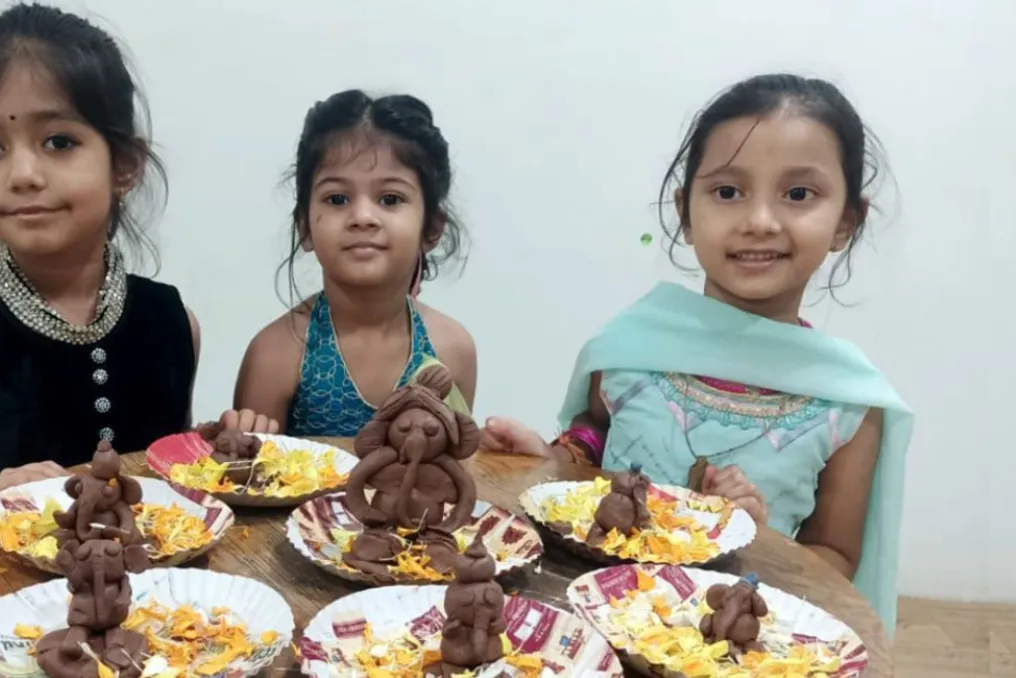
Instead of buying a ready-made Ganpati idol, involve the child in the process of making it at home. Natural clay is a simple option, and children can help knead the clay, shape the body, and add small details. Younger children can perform simpler tasks, while older ones can take on more complex sculpting. After the idol is ready, let them paint it using natural or non-toxic paints.

What children can do: Help prepare the clay, shape the idol, add details, and paint it with eco-friendly paints.

What they learn: Children understand that the materials used for festivals matter. Making their own idol also shows them that meaningful things don't always need to be bought.

2. Turning Decoration into a Creative Activity

Children naturally love to decorate the house, so give them the freedom to create festive decor themselves. Instead of purchasing plastic decorations, gather items that are already at home. Old newspapers, cardboard, paper, fabric scraps, leaves, and dried flowers can be transformed into colorful decorations. An old dupatta can become a backdrop, and cardboard can be cut into festive shapes.

What children can do: Design and make decorations using materials already available at home.

What they learn: Reusing old items helps reduce waste while giving children an opportunity to express creativity.

3. Giving Second Life to Unused Items

Before buying anything new, ask your child to look around the house for items that can be reused. Glass jars, old gift boxes, ribbons, baskets, and leftover craft supplies can become part of the festive decoration. You can set up a small challenge by giving children a box of unused items and asking them to come up with different ways to use them.

What children can do: Find items that are no longer in use and turn them into decorations or useful things.

What they learn: What looks old or useless doesn't necessarily have to go in the trash. Reusing items helps reduce the volume of waste we create.

4. Children's Responsibility for Flower Waste

Flowers play an important role in Ganesh Chaturthi, but after the puja, they are often mixed with other household waste. This is a simple way to introduce children to waste separation. Set aside a separate container for used flowers and let the child collect them after the prayers. They can then be added to a compost heap or used for interesting crafts.

What children can do: Collect used flowers separately and help place them correctly after the celebrations.

What they learn: Waste can be sorted at home, and many things we throw away can be composted or reused.

5. Making Plastic Reduction a Family Task

When guests visit and food is served, there may be a temptation to use disposable dishes, cups, and cutlery. Instead, involve children in setting the table using reusable tableware. Ask them to help arrange plates and cups before guests arrive. You can also explain to the family why choosing reusable items over single-use plastic is important.

What children can do: Help set the table with reusable plates, cups, and cutlery and ensure they are used during the celebration.

What they learn: Avoiding waste is better than creating waste and trying to deal with it later.

6. Asking One Simple Question Before Buying

Festivals can sometimes be an excuse to buy more decorations, lights, and other things. Use this as an opportunity to introduce children to conscious consumption. Before buying anything, ask them: 'Do we already have this at home?' Let them help create the shopping list and determine what the family truly needs.

What children can do: Check what is already available at home and help create the shopping list.

What they learn: Buying only what is necessary saves resources and prevents unnecessary waste.

7. Involving Children in the Kitchen

Food is at the center of most Indian festivals, and Ganesh Chaturthi is no exception. Cooking modaks and prasad together can be a lesson in preventing food waste. Give children age-appropriate tasks, such as weighing ingredients, helping to shape modaks, or determining the number of servings for serving. Encourage them to take only as much food as they can eat.

What children can do: Help cook food, think about portions, and ensure leftovers are stored or shared.

What they learn: Producing food takes time, effort, and resources, so it should not be thrown away.

8. Distributing Shareable Items

This festival can also be a good time to review your child's belongings. Ask them to identify books, toys, clothes, or craft materials that they no longer use but are still in good condition. Instead of throwing these items away, help the child sort them for donation or to pass on to someone who can use them.

What children can do: Choose items they have outgrown or no longer need and help prepare them for donation.

What they learn: Exchanging and reusing can give useful things a second life instead of sending them to the landfill.

9. Concluding with One Green Pledge

After the festival ends, sit down with your child and ask what they enjoyed the most. Then ask what habit they would like to continue at home. This could be composting flower waste, reusing decorations, avoiding single-use products, donating old items, or growing a plant. Let the child choose the habit. When they have their say, they are more likely to view it as something they can practice every day.

What children can do: Choose one sustainable habit to continue after the festival.

What they learn: Sustainability is not limited to festivals. Small actions repeated regularly can become part of daily life.

A festival does not have to lose its joy to become more sustainable. When children help make Bappa, create decorations, sort flower waste, and participate in all activities, they become active participants in the celebration. And through these small tasks, they begin to understand that celebrating with devotion can also mean celebrating with care for the world around us.

Popular