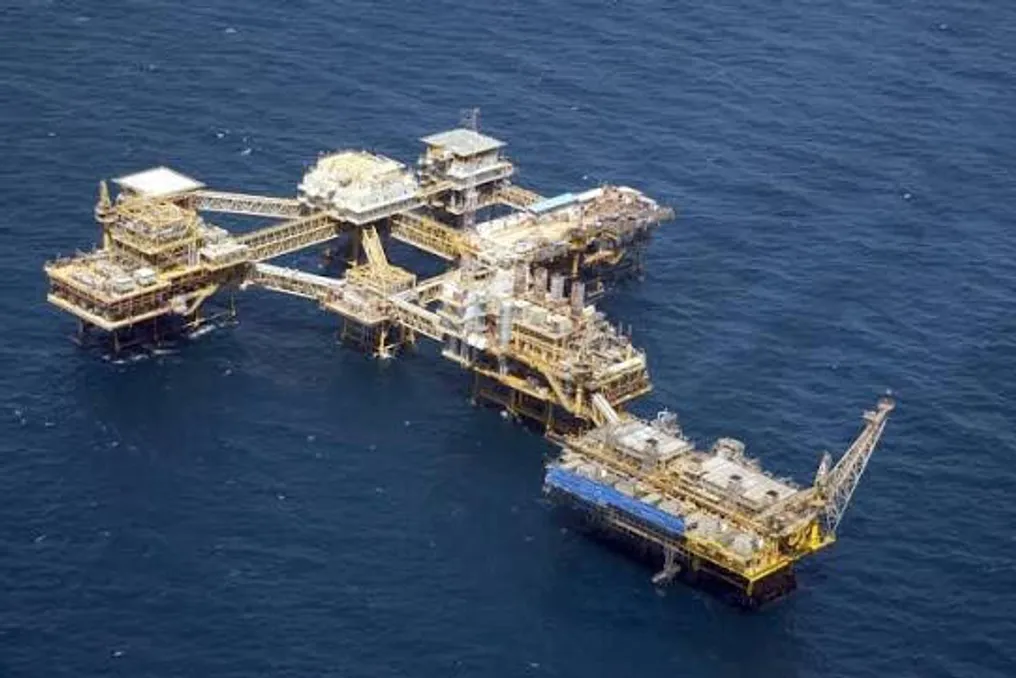
The project for maintaining oil production, collecting associated gas, and developing gas transportation infrastructure at the jointly operated Salman Field is ongoing. According to information provided by Mehr News Agency citing the National Iranian Oil Company, this joint Salman Field is located in the Lavan area.
Since the field has reached the late stage of its resource life, natural oil production here has long ceased. Gas lift is critically important to resume and maintain production. Initially, high-pressure gas for injection was planned to be supplied by turbochargers installed on the Solar Mars 90 platform. However, due to outdated, foreign-made models of equipment, as well as issues caused by sanctions, there have been serious restrictions in spare parts supply and repairs, which has complicated the provision of gas lift.
As a result, to prevent a decline in oil production at the overall Salman Field, high-pressure gas from the Salman gas field has been used for gas lift in recent years. During the period from the Iranian year 1385 (March 21, 2016) to the end of Mordad 1405 (October 20, 2026), the country has received over $21.5 billion from oil production at this field, which has a significantly higher added value compared to the gas from this field. Furthermore, over the two years since the start of the 14th administration, the country has earned $1.2 billion from this field.
Recognizing the importance of preserving oil production at the joint field, using available high-pressure gas for injection into wells was considered a rational, economical, and resource-preserving decision. In addition to gas lift, water injection into the reservoir is also crucial at Salman Field. Fortunately, after the installation and commissioning of the turbogenerator, in addition to existing booster pumps, water injection with main pumps will soon become possible.
Nevertheless, thanks to the efforts of headquarters units and the support of the National Iranian Oil Company, important activities have begun to collect associated gases from Salman. A draft contract with one of the domestic petrochemical companies has been prepared and will soon be signed. Under this agreement, parallel to the modernization of equipment required for the gas lift process at the Salman oil platform, the associated gases from the field will be gradually collected. Currently, while adjusting credits, the search and purchase of necessary turbines are also underway and are in the final stages.
Moreover, the 30-inch Salman pipeline to Sirri Island, approximately 150 kilometers long, is ready for operation, and there are no problems along this route. A plan for building a new pipeline has been defined. Since the pipes required for this project have special characteristics and specifications that cannot be manufactured domestically, the entire volume of 52,000 tons was ordered from China. About 20,000 tons have been produced so far, which accounts for 30 percent of the project's needs. The first shipment weighing 3,800 tons and the second shipment weighing 4,239 tons, totaling 8,039 tons, have arrived in the country and are at the contractor's site at the Mahshahr shipyard. Additionally, 10,655 tons of pipes are undergoing customs clearance at Imam Khomeini Port, and 1,525 tons are ready for loading from the Chinese port into Iran.
A 32-inch gas transmission pipeline from Sirri Island to Assaluye, approximately 315 kilometers long, has also been constructed to transport 500 million cubic feet per day of sour gas from Salman Field to the Fourth Refinery in Assaluye. After numerous difficulties with drying, cleaning, and drying the line, pre-commissioning and commissioning operations were successfully carried out in 1395, and the line began operating. However, this pipeline completely ruptured near Sirri Island on Mordad 26, 1402. After stages of work scope preparation, financing assurance, and tendering, repair and re-commissioning work was assigned to a contractor starting on Shahrivar 10, 1403.
During the project implementation, the contractor prepared a plan for the period from Esfand 1404 to conduct inspection operations using ROV and determine the condition of pigments at the damage site. However, with the start of the imposed Ramadan War on Esfand 9, 1404, offshore and onshore work on this project was suspended. In Ordibehesht of this year, the diving vessel 'Diana' was sent, and pigments with temporary clamps were retrieved from the seabed. But due to the great depth and complexity of the damage site, installing a repair clamp requires saturation diving and an international team. Due to risks related to safety conditions, potential emergencies, and communication and GPS disruptions, deploying this team has not yet been possible.
According to the current plan, if no new leaks occur and conditions are created for saturation diving operations, this pipeline is expected to be ready for commissioning and gas injection within the next 6 months.
Thus, activities at Salman Field have not only continued but the Iranian Offshore Oil Company is simultaneously engaged in maintaining oil production, collecting associated gases, and completing the gas transportation infrastructure of this field.