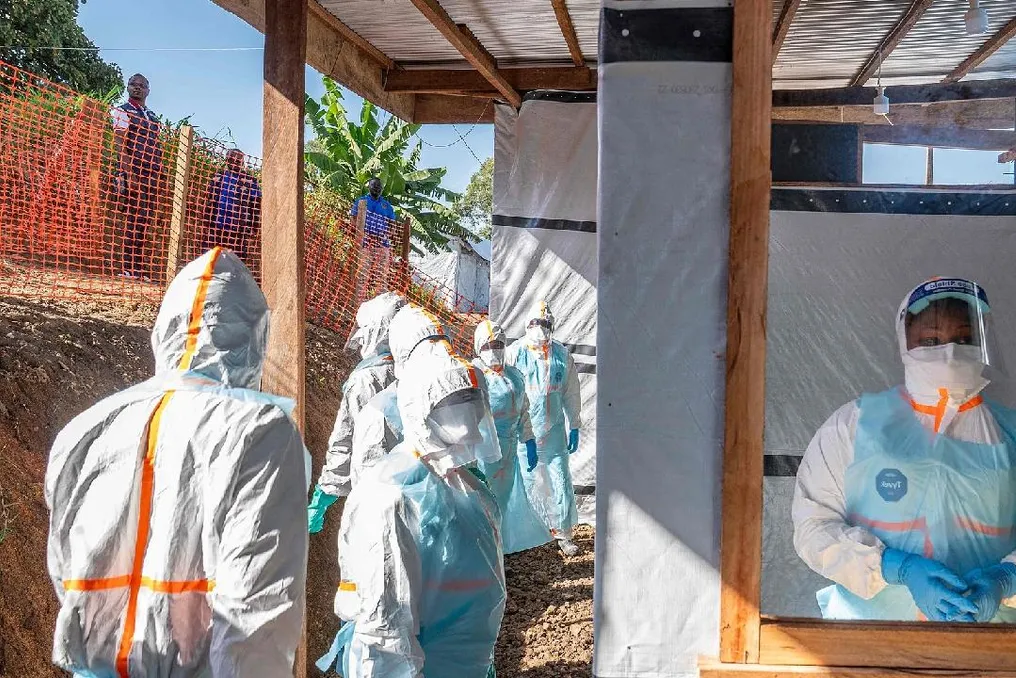
The government of the Democratic Republic of Congo (DRC) reported on Friday that the current Ebola outbreak is under control and has peaked, although local outbreaks, ongoing transmission, and the spread of the disease to the seventh province indicate persistent risks.
State Press Secretary Patrick Muya, quoting Health Minister Roger Kambou, stated during the reading of the report at the cabinet meeting on Friday that 'the 17th Ebola outbreak is under control, and the peak was reached in early third week of August 2026.'
According to the government, all key indicators suggest a decrease in cases. In ten health zones affected before the latest expansion of the outbreak, no new cases have been registered for at least 21 days. Furthermore, transmission has slowed in several regions of the eastern Ituri province, which is the epicenter of the outbreak.
Nevertheless, authorities called for continued vigilance and strict contact tracing, emphasizing that thorough surveillance remains necessary in areas where recent outbreaks have been noted.
Former Congolese Health Minister Jean-Jacques Mbunganu Mbanda, now a member of parliament, urged caution regarding this assessment. On Saturday, he noted that the downward trend in some areas should not be interpreted as complete control of transmission everywhere. He added that with an outbreak having multiple foci of transmission, different areas may reach their peak at different times, and the epidemic curve only reflects detected cases and can be distorted by unregistered infections in communities.
In its latest weekly report from Tuesday, the World Health Organization (WHO) indicated that the outbreak 'remains uncontrolled and is becoming increasingly heterogeneous,' noting that transmission is weakening in some places while intensifying or spreading geographically in others.
The DRC government also confirmed on Thursday the first case of Ebola in the northwest province of Sud-Ubangi, making it the seventh affected province. The Sud-Ubangi province does not border any of the six provinces where confirmed Ebola cases were previously recorded.
According to Mbanda, the patient, a 23-year-old man who later died, traveled extensively before arriving in Sud-Ubangi; his route covered several provinces, neighboring Rwanda and Uganda, and utilized both road and river routes.
As of September 10, the DRC had registered 7,022 confirmed cases of Ebola, including 3,398 deaths, corresponding to a case fatality rate of 48.4 percent. Currently, the outbreak has affected 62 health zones across seven provinces.
The current outbreak, declared in May, is the largest and deadliest Ebola epidemic in DRC history and the second largest in the world after the 2014–2016 epidemic in West Africa.
