Chinese President Xi Jinping called for broader international interaction in the field of new technologies, emphasizing that Global South countries must 'accelerate work on developing a consensus global governance framework for artificial intelligence so that new technologies can pave the way to common prosperity.'
These statements were made by Xi Jinping on Sunday during the Second Session of the 18th BRICS Summit in New Delhi, India. In his speech, he presented five areas for strengthening cooperation within the 'expanded BRICS,' covering AI, trade and investment facilitation, digital industry, intelligent manufacturing, and talent development.
These proposed initiatives come against the backdrop of expanding practical interaction between China and other BRICS countries in areas such as renewable energy and artificial intelligence, enabling technological achievements to be transformed into opportunities for local communities.
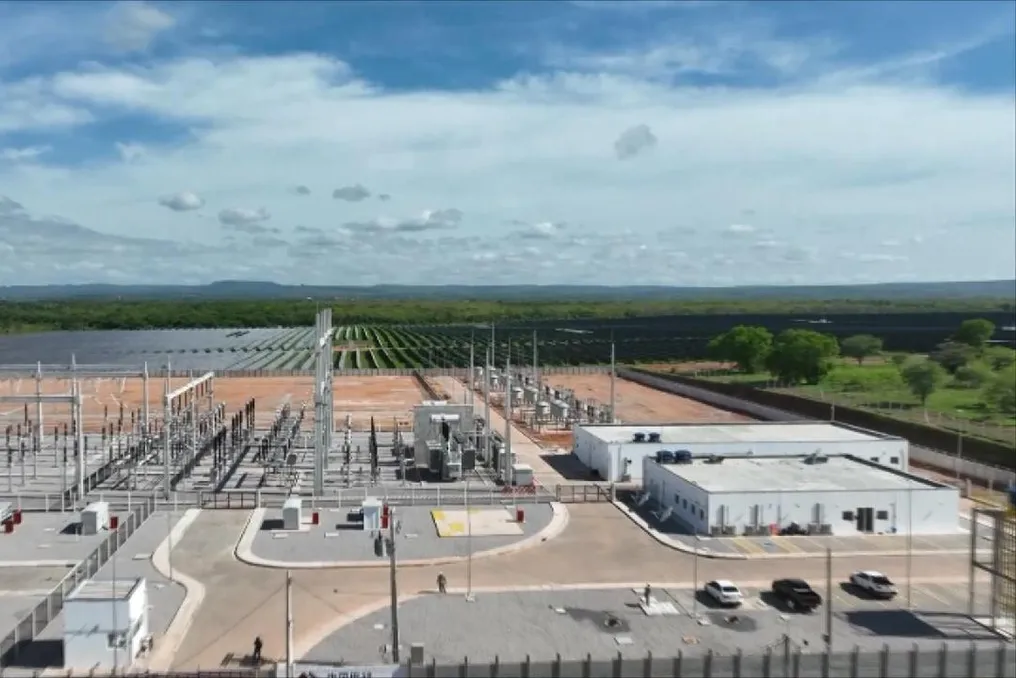
In Mauriti, a town in the state of Ceará in northeastern Brazil, abundant sunlight is converted into clean electricity by a 425-megawatt solar power plant built by PowerChina. Construction of this photovoltaic project began in 2023, with commercial operation starting in 2025. The plant is expected to generate nearly 1 billion kilowatt-hours of electricity annually, while also contributing to job creation and supporting local economic development.
However, the impact on the local population goes beyond just generating electricity. During construction, over 90 specialized training programs were provided, helping local workers acquire technical skills. One such participant is Vinicius Martins, a native of Mauriti, who studied information technology at a local vocational school. Now, as a technical assistant, Martins joined the project in 2023, noting: 'This project changed my career plans.'
The mayor of Mauriti, João Paulo Furtado, reported that local workers underwent training to qualify for the Chinese company's project and gradually became skilled technical specialists. The influx of workers and related business activity also positively affected the city's economy. A local equipment store owner, Guilherme Monteiro, noted that his sales increased by approximately 30% over the last two years.
This example demonstrates how technology and investment can bring benefits beyond the infrastructure itself, including skill development and the emergence of new economic opportunities.
Digital technologies are also forging new connections between China and other BRICS members, as well as partner countries. In June, a BRICS cooperation digital industry ecosystem hub was launched in the Xinjiang Uyghur Autonomous Region in northwestern China. This is the second such hub in China after Xiamen and is intended to strengthen digital interaction with Central Asian and Eurasian countries.
The goal of this hub is to connect Chinese digital technologies and industrial resources with external demand, exploring a model that combines research and development in eastern China, industrial integration in Xinjiang, and digital services for western markets. The task is to transform cooperation from being geographically linked to digitally connected.
In Xiamen, Fujian Province in eastern China, another initiative focuses on increasing AI accessibility for businesses. The BRICS Digital Innovation Center in Xiamen officially opened on Thursday. This center, built around an online platform, offline facilities, and an industrial ecosystem, aims to connect AI technologies with practical applications in fields such as manufacturing, finance, trade, and transportation.
It is also aimed at solving problems companies face when implementing AI, with about 30 companies signing strategic cooperation agreements covering AI application in BRICS markets, embodied intelligence, scenario-based innovation, and digital finance. Projects, from solar energy in Brazil to digital cooperation in western regions of China and AI application in Xiamen, show how new technologies can be more than just tools of technological progress.