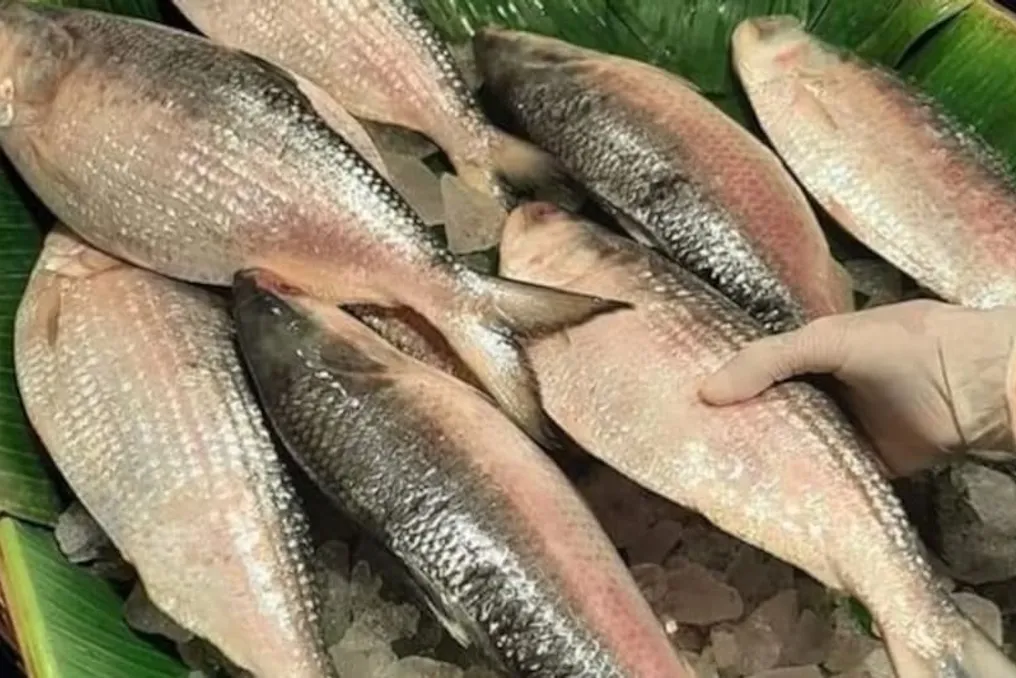
Over the past two months, India has exported approximately 500 tons of hilsa fish to Bangladesh. According to participants in the fish business, this change has fundamentally affected traditional trade relations between the two neighboring countries regarding this expensive fish. It is expected that another 150–200 tons of hilsa will be exported from India to Bangladesh in the coming weeks.
Due to reports of reduced local hilsa production in Bangladesh this year, local fish traders have turned to India to meet domestic demand. According to the traders, the batch of hilsa was mainly sourced from Gujarat and shipped through the port of Bharuch. Part of the supplies was also made through the Hawada wholesale fish market in West Bengal.
Said Anwar Masud, secretary of the Hawada Wholesale Fish Importers Association, stated that Bangladesh is importing hilsa from India for the first time. He noted that India usually sends types of fish such as Bawal, Rohu, Parshe, and Tengra to Bangladesh, but there is a shortage of hilsa in Bangladesh this year. The association representative specified that about 500 tons of hilsa were exported over the last two months, and another 150–200 tons will be sent in the coming weeks.
The demand for hilsa from Gujarat in the Indian domestic market is relatively small because it contains a large amount of roe. Nevertheless, this characteristic makes it attractive to buyers from Bangladesh, especially in Chittagong and Sylhet, where there is high demand for hilsa with roe. Masud emphasized that hilsa from Gujarat is rich in roe, which is highly sought after in Bangladesh. These eggs are separated and processed for subsequent re-export to other countries. Furthermore, some imported batches of hilsa are processed by Bangladeshi traders for sale in foreign markets, and others are dried for sale in the local market as salted hilsa.
Bangladesh traditionally ranks among the world's largest producers of hilsa and holds a significant share of global production. This fish is an important part of the Bengali culinary culture and traditions on both sides of the border. In recent years, before the Durga Puja festival in India, hilsa used to come from Bangladesh. However, there is currently no clarity regarding the export of hilsa from Bangladesh to India during this festive season. Last year, the government of Bangladesh permitted the export of 1200 tons of hilsa to India before the festivals. Currently, the traditional situation has changed, and India is exporting hilsa to Bangladesh, helping to cover the domestic supply deficit.