When black spots began appearing on mango saplings, Shiv Kumar Yadav, the nursery owner, realized something was wrong. The farmer, who owns a four-acre nursery in Varanasi district, Uttar Pradesh, observed white fungal mold spreading across the young plants, causing healthy leaves to drop. He recalled: 'I didn't know what the disease was, but I knew I needed to act fast.'
Like many farmers across India, his initial reaction was to seek advice from local pesticide sellers and neighboring farmers. However, the advice either came too late or was too general to solve the problem. By the time the farmers received the necessary recommendations, damage had already been done.
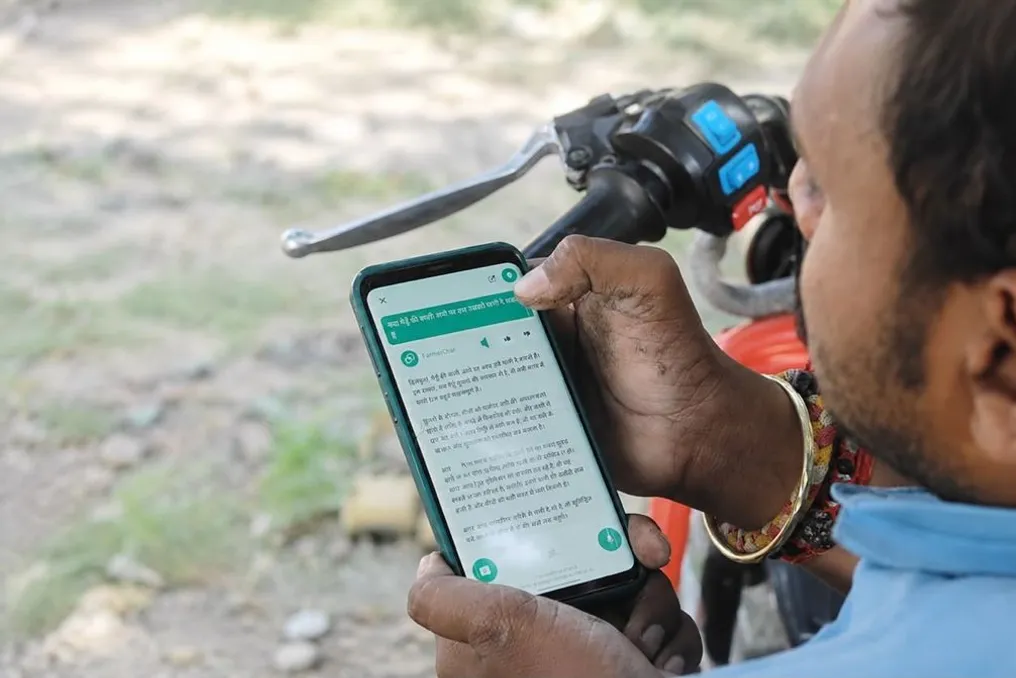
Shiv decided not to rely on luck. Instead of trying another pesticide based on guesswork, he used his smartphone. He photographed the infected saplings, uploaded the image to the app, and described what he saw. Within seconds, he received a diagnosis along with clear instructions on how to handle the issue. He removed the affected parts of the plants, improved drainage, avoided overwatering, and applied the recommended fungicide at the prescribed dose.
He noted: 'Within a few days, the spread of the disease was under control. This helped me save a large number of saplings and reduce my losses.'
For more than 150 million farmers in India, such solutions cannot wait. A sudden pest attack, an unknown disease, or unexpected rain can change the course of an entire season.
Recognizing this problem almost two decades ago, the organization 'Digital Green India' spent years ensuring that expert agricultural knowledge reached farmers at the most critical moment. Their latest development—a free AI-powered application called 'FarmerChat'—has already reached nearly a million users across the country, helping farmers make faster and more informed decisions in the field.
When information exists, but doesn't reach the field
Agricultural knowledge is lacking in India. Research institutions are constantly developing improved farming methods. Agricultural universities study pests, diseases, and climate-resilient cultivation techniques. Government agencies regularly release advisory materials. Despite this vast reservoir of expertise, many small farmers still find it difficult to get practical guidance when problems arise.
According to Nidhi Bhasin, CEO of Digital Green India, the problem has always been timely delivery of information. 'The gap in Indian agriculture was never simply that the information was absent,' she told The Better India. 'The problem was ensuring it reached the farmers in the right language, at the right time, and in a format they could actually use.'
The organization, launched in March 2008, initially focused on strengthening the country's existing agricultural extension system, not replacing it. The non-profit collaborated with state government bodies, State Rural Livelihood Missions, agricultural departments, and grassroots organizations to create video tutorials for farmers, teaching practical farming methods in local languages.
Over the years, these efforts expanded to Bihar, Jharkhand, Odisha, Andhra Pradesh, Telangana, Maharashtra, Karnataka, Madhya Pradesh, and Uttar Pradesh. Today, the organization has released over 10,000 agricultural videos and reached about 6.5 million farmers and extension workers through its various initiatives, with women making up the majority of participants.
As internet access and smartphone penetration improved in rural India, the organization realized it could bring the same proven knowledge directly into farmers' pockets. This led to the launch of FarmerChat in October 2024.
A New Chapter Led by Technology
Nidhi Bhasin is leading this progress, having joined Digital Green India as CEO in September 2024 after more than 25 years working in the social development sector. 'I spent years studying social impact, and years studying how technology can create change,' she says. 'This space allowed me to combine both aspects and solve problems where they matter most. Agriculture supports millions of livelihoods, so even small improvements can make a huge difference.'
Why was FarmerChat created?
The idea for FarmerChat arose from a simple observation: farmers need immediate advice. When making any agricultural decision—whether determining irrigation timing, identifying a pest, selecting seeds, or reacting to weather changes—timing is critical. Waiting for an agricultural inspector's visit for several days can lead to the loss of the entire harvest.
Climate change has only amplified the urgency of these decisions. Unpredictable rainfall, rising temperatures, and the emergence of unfamiliar pest outbreaks have made farming increasingly unpredictable, forcing small farmers to seek reliable information that can help them react immediately.
'This is the gap this platform needed to fill. Agriculture is incredibly time-sensitive. A farmer might need to decide today whether to irrigate, spray, or protect the crop from changing weather. Waiting for advice for several days can lead to devastating losses, so we wanted to put timely and reliable guidance directly into the hands of the farmer, in the language and format they are comfortable with,' states Bhasin.
Unlike many digital platforms that provide general information, this app was designed to offer personalized recommendations based on the farmer's specific situation. The app is available for free on Android via the Google Play Store. Farmers can ask questions via text, record a voice message, or upload a photo of their crop. Currently, the platform supports English, Hindi, Marathi, Kannada, Telugu, and Odia.
'It is an AI-powered agricultural assistant in the farmer's pocket,' she explains. 'It is designed to move the farmer from confusion to action. Regardless of whether someone asks a question by voice, text, or image, they receive advice in the same language and in the same format they are comfortable working with.'
The decision to make the platform free for farmers was a deliberate one. As a non-profit organization, it does not generate revenue from the app. Instead, the costs of creation, maintenance, and expansion of the app are supported by philanthropic organizations, corporate social responsibility partnerships, and ecosystem partners. The CEO states: 'Our goal was never to charge farmers for knowledge. Support from philanthropists and CSR partners allows us to keep the app completely free while continuously improving the platform and making it accessible to more farmers.'
From Photo to Solution in Seconds
A farmer can input a question, record it by voice, or upload a photo of their crop. But behind this simple interface lies a process that integrates multiple layers of information before providing an answer. After submitting a request, the platform first determines the farmer's location, crop, growth stage, and local weather conditions. It then searches a verified agricultural knowledge base, created using government advisories, scientific research, and Digital Green's own learning repository collected over nearly two decades. Only after combining this information is an answer generated in the farmer's preferred language—either as text or an audio message.
'Our goal is not just to answer a query. We integrate local conditions, crop information, and verified agricultural knowledge so that farmers receive timely, reliable, and useful advice in the field,' she clarifies. The app provides consultations on crops, livestock, aquaculture, and smart farming practices, but two types of questions consistently dominate.
When Every Leaf Tells a Story
Crop diseases rarely announce themselves. The first signs are often easy to miss: a few spots on leaves, darkening stems, or fruits that do not develop properly. If no action is taken, these small changes can quickly spread throughout the field.
Previously, farmers mostly relied on guesswork. Some brought infected leaves to local pesticide shops. Others sought advice from neighbors or waited for inspectors to visit. The platform streamlines this entire process. The farmer directly photographs the affected crop and uploads the image. If more information is required, the app asks clarifying questions about the crop or location before analyzing the symptoms against weather conditions and verified agricultural data. It instantly identifies the probable disease or pest attack and recommends suitable treatment. Farmers receive both chemical and organic options, along with the exact quantity to use, the application method, and additional precautions. If doubts remain, they can continue the dialogue. The CEO notes: 'Farmers ask us how much fungicide they should use or if they should spray again in a few days.' 'The app allows them to keep asking questions until they feel confident enough to take action.'
This advice changed Shiv Kumar's nursery. 'Before, diagnostic delays meant rapid disease spread, and I lost valuable saplings. Now I can detect problems early, act immediately, and avoid unnecessary expenses,' he says. In one season, he calculated saving about 10,000 rupees by reducing plant losses and avoiding repeated pesticide applications.
Another farmer, Vishvesh Kumar Singh from Babiuan village in Varanasi, faced something similar after yellow and brown spots appeared on nearly an acre of wheat. He uploaded the symptoms through the app. The platform recommended carbendazim and hexaconazole in the correct dosage, and also advised him on irrigation and field monitoring. 'I avoided repeated pesticide applications and only used the amount that was truly necessary,' he says. 'This reduced my cultivation costs and prevented further disease spread.' He calculated that timely intervention saved him between 8,000 and 10,000 rupees per season.
Sometimes the best advice is to wait
Not every agricultural decision involves treating a disease. Many relate to timing. Should fertilizer be applied today or after the next rain? Should irrigation happen now or can it wait? Is this the right week to plant potatoes? For generations, farmers relied on experience, local observations, and conversations with neighbors to answer these questions. But unpredictable weather has made these decisions much more complex.
Instead of offering one standard recommendation, the platform studies the farmer's location, crop stage, weather forecast, and advisory datasets before suggesting whether to apply fertilizer immediately, divide it into smaller doses, or postpone it altogether. Bhasin recalls the example of Anu Kumari, a farmer from Bihar, who was preparing to plant potatoes when dark clouds started gathering overhead. Instead of relying on intuition, she consulted the app. It predicted rain and advised her to postpone planting. Heavy rain came the next day. 'If she had planted that day, most of the crop would have been washed away,' she says. 'By waiting, she avoided a loss of almost 5,000 rupees.'
A similar experience changed the approach of Urmili Devi, a small farmer from Mirzapur, to managing her wheat and rice fields. She first encountered the platform during a Digital Green meeting in July 2025 while seeking reliable advice on fertilization and irrigation. During the wheat season, the app recommended balanced fertilizer based on the crop's growth stage, suggested the correct time for irrigation, and advised on weed and pest control. 'This helped me use only the resources I truly needed, and compared to the previous season, I earned about 7,000–9,000 rupees more on my wheat,' she says.