Human beings have incorporated the use of psychoactive substances into their traditions for thousands of years, since the beginning of agriculture, when fermentation generated the first alcoholic beverages. However, new discoveries indicate that this consumption may have begun much earlier than previously thought.
A recent analysis of human skeletons recovered in Indonesia provided evidence of drug use in hunter-gatherer communities living at the end of the last glacial era, millennia before agricultural invention.
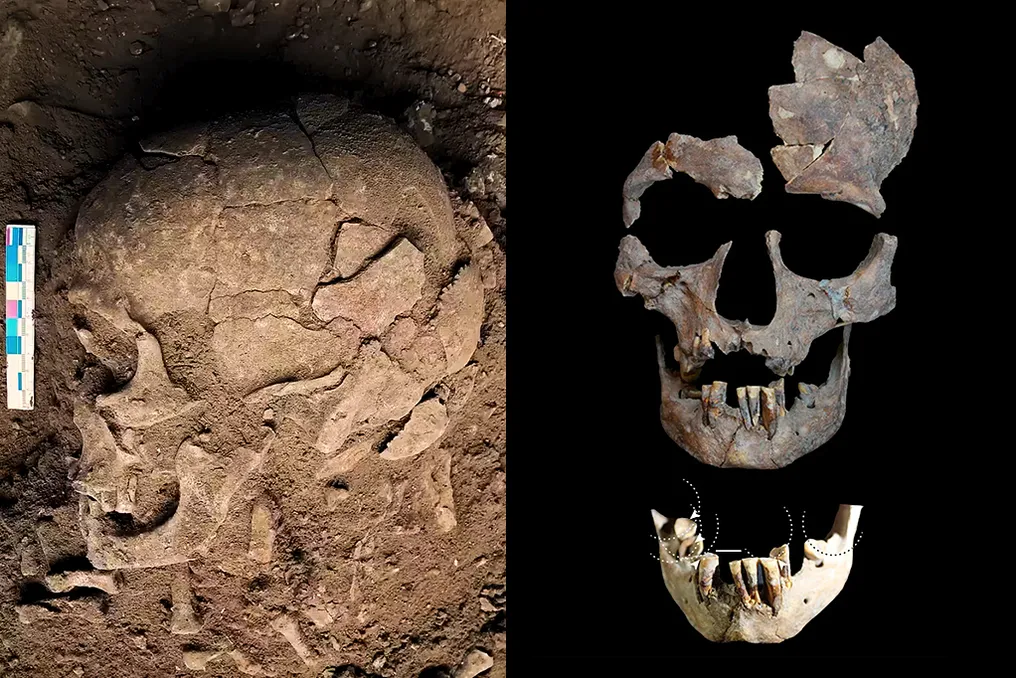
Researchers identified signs of atypical wear on the teeth of two individuals found on the Indonesian island of Sulawesi. The molars of these skeletons exhibited deep and rounded grooves, a feature unprecedented in any prehistoric dental record.
The specific pattern of this wear pointed to the chewing of betel nut, a psychoactive seed with cultural roots in Asia and the Pacific. Subsequent biochemical analyses confirmed this suspicion, detecting traces of arecoline, the psychoactive alkaloid present in the seed, in the teeth.
Betel nut, also known as areca nut, is currently the fourth most consumed psychoactive substance globally, trailing only nicotine, alcohol, and caffeine. It is estimated that one in ten people worldwide uses this substance, whose effects include mild euphoria and increased alertness.
Previously, the oldest evidence of betel nut consumption dated back 3,5 thousand years, based on chemical residues found in the teeth of a person who lived in Thailand. The new findings significantly advance this chronology, placing consumption during the Late Pleistocene, specifically between 16 and 25 thousand years ago, the period when the oldest skeleton would have lived.
This implies that the general use of psychoactive stimulants emerged 3 thousand to 12 thousand years earlier than previously believed. Before that, the oldest records suggested that the first known practices of drug use occurred shortly after the advent of agriculture, 13 thousand years ago, when populations from the Mount Carmel region in Israel began consuming fermented alcoholic beverages.
Adam Brumm, a professor at Griffith University (Australia) and leader of the study, commented that the previous theory did not consider the possibility that the use of drugs in remote eras could be the origin of the most used psychoactive substances today. He stated that by recognizing this ancient practice as the genesis of areca nut consumption, the study suggests that certain modern habits related to drug use are deeply rooted in the traditions of hunter-gatherer groups.
Although the method of betel nut consumption by Late Pleistocene humans was distinct from current use, both in technique and purpose, the authors speculate that in the past, the seed might have served more as an analgesic.
Unlike contemporary users, who generally consume the ground or sliced seed mixed with hydrated lime—an ingredient that accelerates arecoline release—the ancients likely sucked on the pure seed. The dental grooves are proof of this, indicating long periods of contact between the seed and the teeth.
Biochemical analyses showed that this ancient method would result in a lower amount of arecoline, making the effect less pronounced. However, the habit may have led to a vicious cycle: the wear caused by these hard and abrasive seeds eventually exposed the internal pulp chamber completely, causing intense pain, feeding difficulties, and increasing the incidence of chronic dental infections, as warned by Brumm. Thus, the study may offer an early view of a cycle of chemical dependence.